
How to Plan and Procure a Commercial Poultry Farm or Hatchery Project: Supplier Comparison, Project Brief and RFQ Checklist

A buyer's route from production target to comparable quotes: size the whole chain, decide turnkey or separate packages, compare farm, hatchery and processing suppliers on the same scope, and send one complete project brief.
By HatchMatch Group Sourcing Desk · Last updated 2026-10-22
In short
Short answer: plan a commercial poultry farm or hatchery as one production chain, not as separate equipment purchases. Fix the output first (birds, eggs or chicks per week), work backwards to houses, hatchery and processing capacity, then define site, ventilation, biosecurity and utilities. Decide whether one turnkey contractor or separate packages will carry the interfaces, send every supplier the same project brief, and compare proposals line by line on scope, performance basis, delivery, service and whole-life cost.
Key takeaways
- Every capacity decision follows from one line: what leaves the site, how much, and how often.
- Most expensive mistakes come from stages that do not match: a hatchery sized for one placement rhythm and farms running another, or a processing line sized for average weeks instead of peak weeks.
- Biosecurity decides where buildings, roads and doors go, so it belongs in the brief from the start.
- Utilities are where separate quotes most often leave gaps.
- If birds are processed on site or by a partner plant, the stunning and slaughter system decides much of the line layout.
Short answer: plan a commercial poultry farm or hatchery as one production chain, not as separate equipment purchases. Fix the output first (birds, eggs or chicks per week), work backwards to houses, hatchery and processing capacity, then define site, ventilation, biosecurity and utilities. Decide whether one turnkey contractor or separate packages will carry the interfaces, send every supplier the same project brief, and compare proposals line by line on scope, performance basis, delivery, service and whole-life cost.
Who this is for: project owners, integrators, investors and procurement teams preparing a new or expanded broiler, layer, breeder or hatchery project. HatchMatch buyer tools and the sourcing service are free for buyers. HatchMatch is a supplier-neutral procurement platform: it is not a manufacturer, contractor, operator, certifier or regulator.
1. Start from the output you need to sell or supply
Every capacity decision follows from one line: what leaves the site, how much, and how often. Write it down before you speak to any supplier:
- Broiler projects: live birds or processed chicken per week, target live weight, and who buys them.
- Layer projects: eggs per week, egg type (table eggs, liquid or hatching eggs) and the grading or packing standard the buyer expects.
- Hatchery projects: day-old chicks per week, by species and line, and the farms they will supply.
- Integrated projects: all of the above, plus the internal flows between stages.
Want these figures for your own site, capacity and country? A HatchMatch specialist builds the budget with you — no buyer fees.
Start freeIf you also need to buy the product itself — day-old chicks, hatching eggs, eggs or chicken — while the project is being built, that is a separate output-sourcing request. Use the poultry and egg sourcing request; it is assessed on specification, volume, destination and logistics rather than on project value.
2. Link capacity across the chain
Most expensive mistakes come from stages that do not match: a hatchery sized for one placement rhythm and farms running another, or a processing line sized for average weeks instead of peak weeks. Use simple, checkable arithmetic and your own production assumptions — not brochure figures:
| Stage | Working formula | Inputs you must supply | Tool |
|---|---|---|---|
| Grow-out or laying houses | Weekly chick (or pullet) demand ≈ birds placed per house × houses ÷ weeks between placements | Placement plan, stocking density, cycle and clean-out length | Bird density calculator |
| Hatchery | Eggs set per week ≈ chicks needed per week ÷ your expected hatch of eggs set | Hatch rate from your breeder company or your own records | Hatchery capacity calculator |
| Processing | Birds per hour ≈ birds per week ÷ planned operating hours per week | Shifts, peak weeks, product mix | Processing capacity calculator |
| Egg grading and packing | Eggs per hour ≈ eggs per week ÷ planned packing hours per week | Flock plan, lay curve, packing shifts | Egg grading line planner |
| Budget | Total project cost, operating cost and payback | Your prices, financing and output plan | Farm cost calculator |
Size each stage for the peak week, then add a written buffer for holidays, clean-out overlaps and breakdowns. Record every assumption in the brief so each supplier quotes against the same numbers. The farm cost calculator is the single place on this site for CAPEX, profit, break-even and payback estimates; treat supplier ROI claims as their statements, not as part of your budget.
3. Define the site, housing and ventilation basis
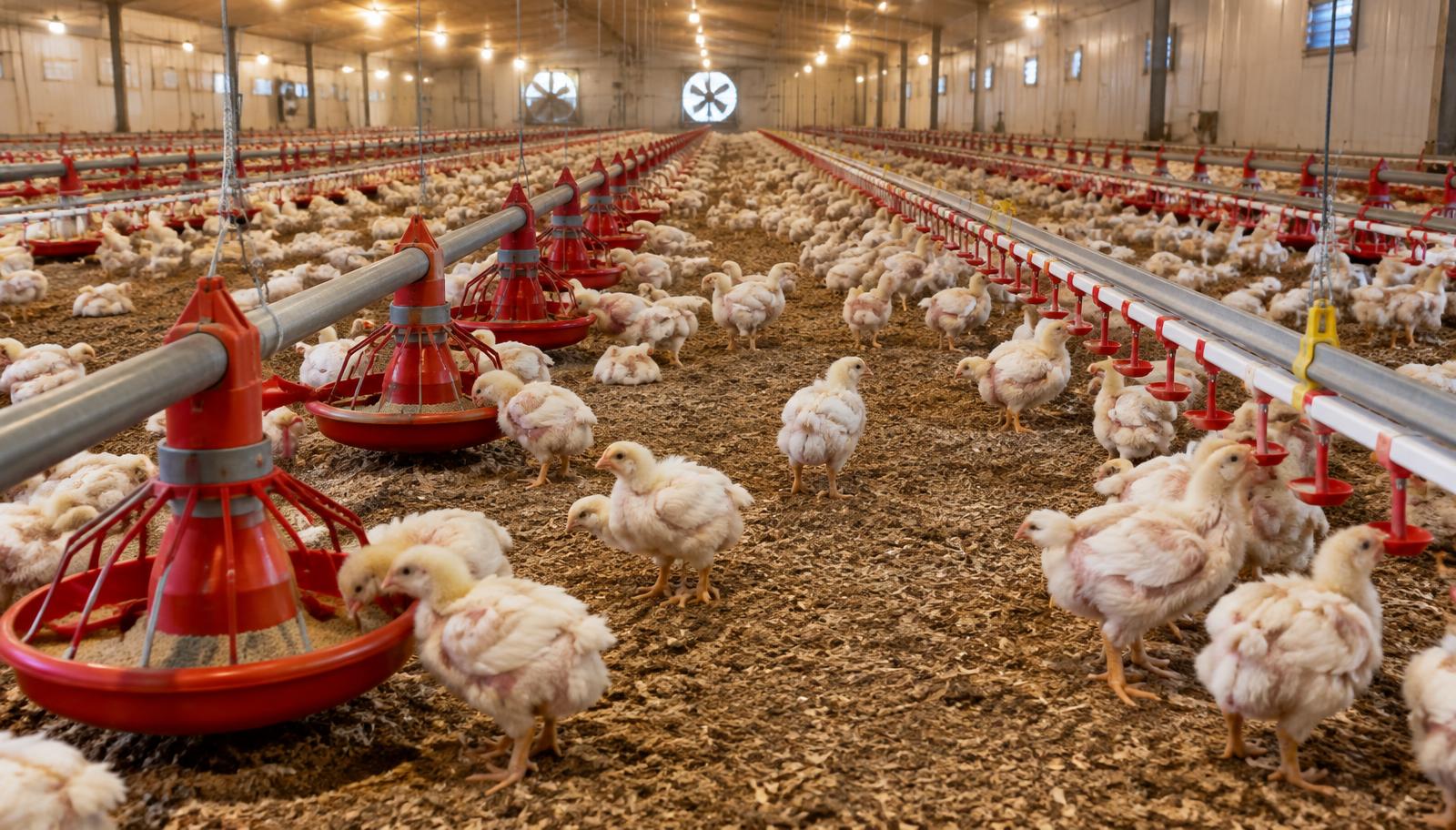
Suppliers can only design ventilation and housing to the conditions you give them. Include:
- Site: location, plot plan, levels, access for feed trucks and livestock vehicles, distance to other poultry sites.
- Climate design basis: design summer and winter temperatures and humidity for the site, and who is responsible for that data.
- House type and dimensions: clear-span steel, concrete or existing buildings; insulation; curtain or solid walls.
- Ventilation and climate: tunnel, cross or minimum ventilation; evaporative cooling; heating; controller and alarm requirements. Use the ventilation calculator to check that proposals are in a sensible range, not to replace the supplier's design.
- Systems per house: feeding, drinking, lighting, cages or aviary for layers, egg collection, manure handling.
For a step-by-step layout, see commercial poultry farm design.
4. Put biosecurity into the layout before equipment is fixed
Biosecurity decides where buildings, roads and doors go, so it belongs in the brief from the start. The international standard for poultry production asks for a one-way flow of eggs and day-old birds in hatcheries, with air flowing the same way, and for egg receipt and storage to be physically separated from incubation and hatching (WOAH Terrestrial Code, chapter 6.5). On farms, define clean and dirty zones, the perimeter fence, vehicle wash and disinfection, staff entry and changing, dead-bird handling and manure removal routes.
Ask every supplier to show how its layout supports these flows. Disease-control and import rules differ by country; confirm them with your veterinary authority. See poultry farm biosecurity for a full checklist.
5. Size utilities and back-up power
Utilities are where separate quotes most often leave gaps. State who provides and connects each one:
- Power: grid connection capacity, standby generator size and automatic changeover — check sizing with the generator sizing calculator.
- Water: source, treatment, storage and peak daily demand — the water consumption calculator gives a starting figure.
- Heating fuel, feed storage and delivery, and wastewater or manure storage and permits.
6. Hatchery-specific scope
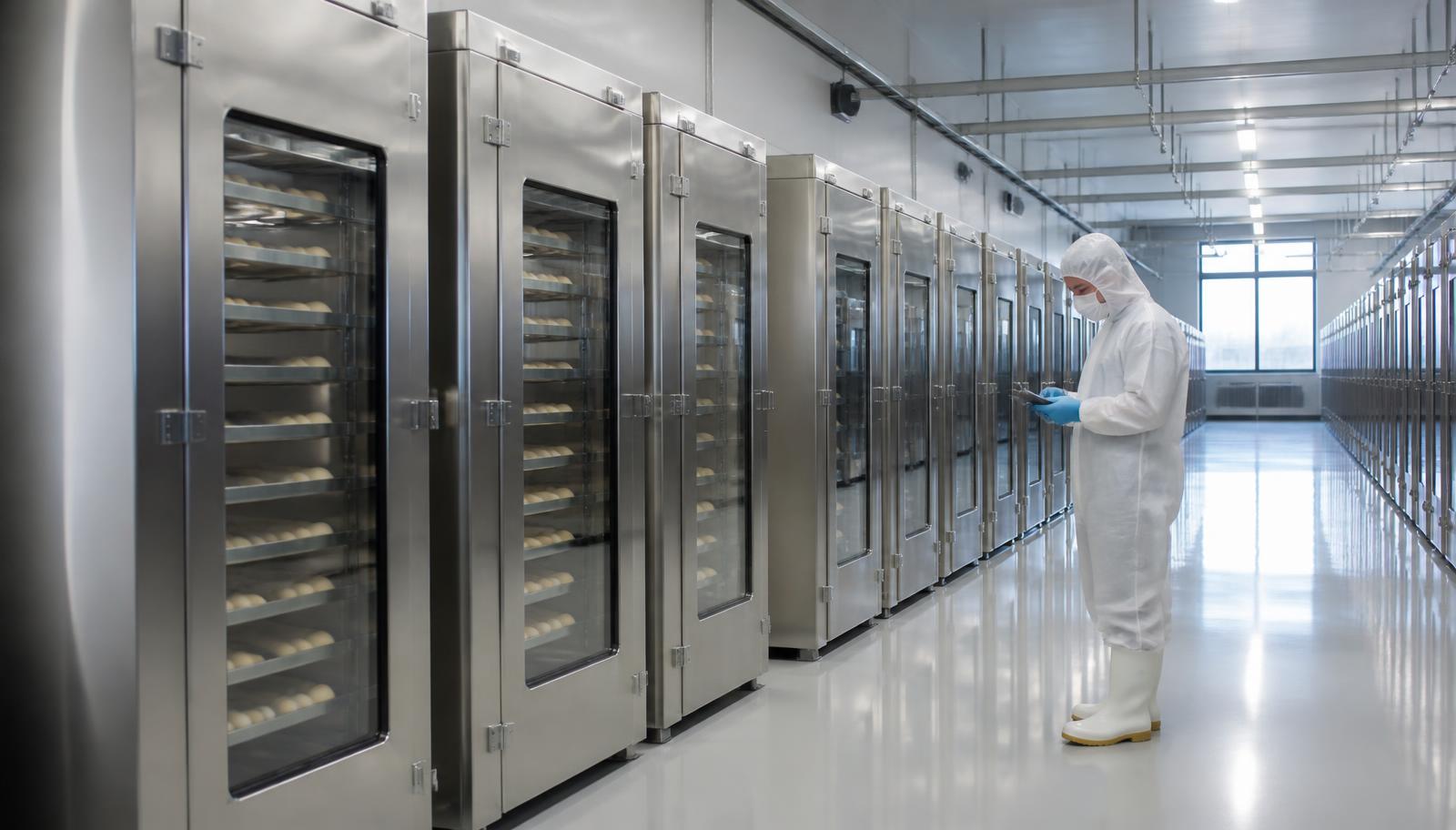
A hatchery is an environmental building as much as a set of machines. The brief should cover single-stage or multi-stage incubation, setter and hatcher numbers, egg-store capacity and conditions, chick handling and dispatch, HVAC and water quality, and cleaning and waste handling. For the egg room, see hatching egg storage and egg-room specification; for the full building, how to plan a commercial hatchery; and for importing chicks or hatching eggs, day-old chick and hatching-egg sourcing.
7. Processing and egg handling scope
If birds are processed on site or by a partner plant, the stunning and slaughter system decides much of the line layout. In the EU, Regulation (EC) No 1099/2009 requires birds to be stunned with an approved method before killing and sets equipment and record-keeping requirements (EUR-Lex); the international standard is WOAH chapter 7.5. List the rules of every market you will sell to in the request — see poultry stunning and slaughter-welfare requirements. For layers, specify egg collection, grading, packing and cold storage capacity in the same brief.
8. Choose the procurement route: turnkey or separate packages
Neither route is better in every case. What matters is who carries the interfaces — between building, ventilation, power, controls, hatchery HVAC and processing — and whether you have the engineering team to manage them.
| Route | Typical scope | Who manages interfaces | Suits buyers who… | Confirm in writing |
|---|---|---|---|---|
| Turnkey poultry farm supplier | Houses, ventilation, feeding, drinking, controls, often installation | The supplier, within its stated scope | Want one accountable party for the farm | Exclusions: civil works, power, water, permits |
| Commercial hatchery equipment supplier | Setters, hatchers, egg and chick handling, sometimes HVAC | You or your engineer, unless HVAC and building are included | Need specialist hatchery equipment | Building, HVAC and water interfaces; performance basis |
| EPC or main contractor | Design, procurement and construction across the site | The contractor | Have a small technical team | Which systems are subcontracted and to whom |
| Separate packages | One contract per system | You or your engineer, using an interface matrix | Have in-house engineering | Interface matrix and schedule responsibilities |
Learn more about the turnkey project route.
9. Compare suppliers on the same basis
Send every supplier the same brief and ask for the same response format. Then compare:
- Scope coverage: every line of the brief is included, excluded or priced as an option.
- Performance basis: design conditions, capacities and assumptions behind each figure. Label supplier figures as supplier statements until they are verified at acceptance.
- Delivery and installation: Incoterm, lead time, installation supervision, commissioning and training.
- Service: warranty terms, spare parts, local service and remote support.
- Documents: drawings, manuals, certificates you will need for permits or export markets — ask for copies and check them with the issuing body.
- Whole-life cost: price, freight, duties, energy, maintenance and spares, run through the farm cost calculator.
Score proposals in the bid comparison tool. The method is set out in how to compare poultry equipment suppliers without guessing.
10. Common mistakes
- Asking for quotes before the output, capacity and climate basis are written down.
- Sizing the hatchery, farms and processing for different placement rhythms.
- Comparing a turnkey price against an equipment-only quote.
- Leaving power, water, civil works or permits unassigned between suppliers.
- Treating brochure hatch rates, feed conversion or ROI figures as guaranteed results.
- Adding biosecurity after the layout is fixed.
- Writing acceptance tests after the contract is signed.
Project brief and RFQ checklist

Use this list on screen, or open the printable poultry RFQ checklist and RFQ template.
| Section | Include | Done when |
|---|---|---|
| Output | Product, volume per week, buyer standard | Written and agreed internally |
| Capacity chain | Placements, hatchery, processing or packing per week, peak week | Calculator results attached |
| Site | Location, plot plan, access, neighbours | Plan attached |
| Climate basis | Design summer and winter conditions | Source of data stated |
| Housing and systems | House type, dimensions, ventilation, feeding, drinking, lighting, layer or egg systems | Listed per house |
| Hatchery | Incubation type, setters and hatchers, egg store, chick handling, HVAC | Listed, or marked not applicable |
| Processing or egg handling | Line capacity, stunning method, grading and packing, cold storage | Listed, or marked not applicable |
| Biosecurity | Zones, fence, vehicle wash, staff entry, dead-bird and manure routes | Marked on the layout |
| Utilities | Power and back-up, water and treatment, fuel, wastewater | Owner named for each |
| Route | Turnkey, EPC or separate packages; interface matrix | Decided |
| Commercial | Incoterm, delivery date, payment structure, currency | Stated |
| Documents | Drawings, manuals, certificates required by your markets | Listed |
| Acceptance | Tests, records, training, who signs off | Written before contract |
| Response format | Same price breakdown and exclusions table for all suppliers | Attached |
How HatchMatch can help
Send your project brief through the project request form. Every brief is reviewed by a person before any supplier is contacted, and HatchMatch aims to reply within two business days. Assisted sourcing for infrastructure and equipment projects is for projects of USD 250,000 or more; it is free for buyers. HatchMatch contacts suitable manufacturers on your behalf and helps you compare the proposals received; it does not share your contact details with suppliers or promise prices, delivery dates, financing, approvals or results. You decide whether and whom to select.
Confirm locally: structural design, electrical safety, water and environmental permits, animal-health and welfare rules and import requirements must be confirmed with qualified local engineers, the competent authorities and your veterinarian. This article is general information, not engineering, legal or veterinary advice.
Sources
- WOAH Terrestrial Animal Health Code, chapter 6.5: biosecurity procedures in poultry production (2024 edition) - WOAH Terrestrial Animal Health Code, chapter 7.5: slaughter of animals (2024 edition) - Council Regulation (EC) No 1099/2009 on the protection of animals at the time of killing (EUR-Lex) Sources checked 22 October 2026. Check the current consolidated texts and national rules before relying on them.
Frequently asked questions
How do I plan a commercial poultry farm project? Start from the output you will sell, work backwards to placements, house numbers, hatchery and processing capacity, then define the site, climate basis, biosecurity layout and utilities before asking suppliers to quote.
Should I choose a turnkey poultry farm supplier or separate packages? Choose turnkey or EPC when you want one party to own the interfaces and have a small technical team; separate packages can suit buyers with in-house engineering who can manage an interface matrix. Compare both against the same brief.
How do I compare commercial hatchery equipment suppliers? Give each supplier the same incubation type, eggs set per week, egg-store and HVAC basis, and compare scope, performance assumptions, building interfaces, service and whole-life cost. Treat hatch-rate figures as supplier statements, not guarantees.
What should a poultry farm RFQ include? Output, capacity chain, site and climate basis, housing and systems, hatchery and processing scope where relevant, biosecurity, utilities, procurement route, commercial terms, required documents, acceptance tests and a fixed response format.
Is there a minimum project size for HatchMatch sourcing? Assisted sourcing for infrastructure and equipment projects starts at USD 250,000 in total project value. Requests to buy chicks, eggs or chicken are assessed on specification, volume, destination and logistics instead.
Does HatchMatch guarantee prices, delivery or results? No. HatchMatch is a supplier-neutral procurement platform. It helps you specify and compare proposals; prices, delivery dates and performance come from suppliers and must be confirmed in your contract.
Frequently asked questions
- How do I plan a commercial poultry farm project?
- Start from the output you will sell, work backwards to placements, house numbers, hatchery and processing capacity, then define the site, climate basis, biosecurity layout and utilities before asking suppliers to quote.
- Should I choose a turnkey poultry farm supplier or separate packages?
- Choose turnkey or EPC when you want one party to own the interfaces and have a small technical team; separate packages can suit buyers with in-house engineering who can manage an interface matrix. Compare both against the same brief.
- How do I compare commercial hatchery equipment suppliers?
- Give each supplier the same incubation type, eggs set per week, egg-store and HVAC basis, and compare scope, performance assumptions, building interfaces, service and whole-life cost. Treat hatch-rate figures as supplier statements, not guarantees.
- What should a poultry farm RFQ include?
- Output, capacity chain, site and climate basis, housing and systems, hatchery and processing scope where relevant, biosecurity, utilities, procurement route, commercial terms, required documents, acceptance tests and a fixed response format.
- Is there a minimum project size for HatchMatch sourcing?
- Assisted sourcing for infrastructure and equipment projects starts at USD 250,000 in total project value. Requests to buy chicks, eggs or chicken are assessed on specification, volume, destination and logistics instead.
- Does HatchMatch guarantee prices, delivery or results?
- No. HatchMatch is a supplier-neutral procurement platform. It helps you specify and compare proposals; prices, delivery dates and performance come from suppliers and must be confirmed in your contract.
More buyer questions are answered in our poultry procurement FAQ — also available in Español, Français, Português, Deutsch, العربية, Русский, Türkçe, Tiếng Việt.
From this article to a procurement-ready RFQ
HatchMatch Group is an independent sourcing desk — not a manufacturer or EPC contractor. These are the four steps we actually use with commercial poultry and hatchery buyers. If you are still deciding scope, start with what commercial poultry equipment includes and how suppliers are compared.
- 1. Plan the projectCapacity, climate and house layout in one guided workflowOpen
- 2. Build the RFQScope, specifications and comparable line itemsOpen
- 3. Submit the requestReviewed manually before HatchMatch contacts any supplier on the buyer's behalfOpen
- 4. Track and compareFollow status and normalise supplier responsesOpen
Prefer the numbers first? Start with the poultry project cost calculator or browse the project planning guides.
HatchMatch Intelligence · Email updates
Get poultry sourcing and project updates by email
A short digest of newly published HatchMatch articles, guides and center updates on the topics you choose — with links to the full pieces.