Start with the operational problem, then ask what evidence a technology needs to earn a place in your project. Explore procurement questions for hatcheries, farms and processing—not vendor endorsements.
For planning purposes only. General procurement guidance, not veterinary, food-safety, engineering or legal advice. No production, energy, cost, yield or ROI outcome is promised. Inclusion and ranking cannot be bought.
English evidence edition. Technical review and translated editions are pending; no translated technology claims are published.
Explore project questions
Two source-backed manufacturer notes; eight editorial research placeholders. Species and setting filters indicate planning scope, not proven suitability. Research, pilot or commercial maturity is assigned only when evidence supports that specific use case.
10 of 10 topics
Source-backed note · Technical review pending
Automated egg and chick handling
Planning scope: Broiler / Layer · Hatchery
Where could repeated handling steps constrain the hatchery's planned flow?
Evidence & procurement checklist
How it works — source scope
Petersime's manufacturer documentation describes equipment for washing, chick counting, and egg candling and transfer. These are tasks to specify, not a recommended vendor or a promised labour reduction.
Maturity & limitations
Manufacturer information only. No independently measured outcomes or named deployment verified. Maturity is not assessed; broiler/layer tags describe planning scope, not species-specific validation.
Procurement implications
Compare egg/chick routing, manual exception handling, hygiene access and interfaces against your own hatchery layout before specifying an automated step.
Ask vendors and engineers
What egg and chick formats can the line handle, and how are exceptions routed?
Who owns interfaces, cleaning access, manual fallback and acceptance testing?
Include in the existing RFQ
Egg/chick formats and planned operating schedule
Layout, interfaces, utilities and cleaning method
Acceptance-test conditions, exclusions, training and service scope
Could a camera system support observation between physical flock inspections?
Evidence & procurement checklist
Research gap — not a published technology brief
A primary source, plain-language mechanism, species-specific evaluation and scoped maturity assessment are still needed. No factual capability, vendor result or deployment claim is made here. These are planning prompts only.
Ask vendors and engineers
Which flock, housing and lighting conditions were evaluated?
How are false alarms, occlusion and loss of connection handled, and who acts on alerts?
Include in the existing RFQ
Camera coverage, lighting and species-specific validation
Alert review responsibilities and false-alarm acceptance criteria
Data ownership, export, retention and offline operation
What evidence would justify including an in-ovo sexing step in a layer hatchery?
Evidence & procurement checklist
Research gap — not a published technology brief
A primary source, plain-language mechanism, species-specific evaluation and scoped maturity assessment are still needed. No factual capability, vendor result or deployment claim is made here. These are planning prompts only.
Ask vendors and engineers
Which genetic lines, egg characteristics and incubation stage were tested?
What happens to uncertain results, sampled eggs and interrupted batches?
Include in the existing RFQ
Genetic line, egg specification and process stage
Written accuracy-test method and handling of uncertain results
Biosecurity, welfare/local-rule review and line integration
Which specific repetitive task needs a solution, rather than automation for its own sake?
Evidence & procurement checklist
Research gap — not a published technology brief
A primary source, plain-language mechanism, species-specific evaluation and scoped maturity assessment are still needed. No factual capability, vendor result or deployment claim is made here. These are planning prompts only.
Ask vendors and engineers
Is there evidence for this bird species and housing system?
How are bird interactions, obstacles, sanitation and recovery handled?
Include in the existing RFQ
Task boundary and housing geometry
Bird interaction and sanitation assessment
Manual recovery and independently witnessed task acceptance
Which measurements and control responsibilities belong in the house specification?
Evidence & procurement checklist
How it works — source scope
ROTEM's Trio documentation describes monitoring temperature, humidity, CO₂ and ammonia and managing poultry-house climate. This documents described functions, not an independently validated production or welfare outcome.
Maturity & limitations
Manufacturer information only; no independent result or named deployment verified. Maturity is not assessed. Broiler/layer/turkey tags indicate questions to investigate, not validated suitability for each species.
Procurement implications
Specify measurement locations, control interfaces, calibration and failure response. Have the design checked for the actual species and house conditions.
Ask vendors and engineers
Where will sensors be installed and how will calibration be checked?
What happens during power failure, sensor failure or loss of communications?
Include in the existing RFQ
Site climate, housing dimensions and bird-specific design review
Measurement locations, calibration and alarm responsibilities
Control interfaces, independent backup and commissioning checks
Which observation requires human follow-up, and what evidence validates an alert?
Evidence & procurement checklist
Research gap — not a published technology brief
A primary source, plain-language mechanism, species-specific evaluation and scoped maturity assessment are still needed. No factual capability, vendor result or deployment claim is made here. These are planning prompts only.
Ask vendors and engineers
Has the system been evaluated for the stated species and condition?
How does a trained person confirm alerts without treating them as a diagnosis?
Include in the existing RFQ
Observation definition and species-specific evidence
Human escalation protocol and veterinary oversight
What measured baseline would make two energy proposals comparable?
Evidence & procurement checklist
Research gap — not a published technology brief
A primary source, plain-language mechanism, species-specific evaluation and scoped maturity assessment are still needed. No factual capability, vendor result or deployment claim is made here. These are planning prompts only.
Ask vendors and engineers
Were figures measured at comparable loads and local design conditions?
Which loads, installation works and maintenance assumptions are excluded?
Include in the existing RFQ
Buyer-entered operating hours, energy tariff and baseline
Which water stream and intended use need an independently reviewed specification?
Evidence & procurement checklist
Research gap — not a published technology brief
A primary source, plain-language mechanism, species-specific evaluation and scoped maturity assessment are still needed. No factual capability, vendor result or deployment claim is made here. These are planning prompts only.
Ask vendors and engineers
Which quality requirements apply to each intended use?
Who validates treatment, cross-connection prevention and monitoring?
Include in the existing RFQ
Water-source tests, intended uses and separate flow map
What storage, removal and downstream-use requirements must the project address?
Evidence & procurement checklist
Research gap — not a published technology brief
A primary source, plain-language mechanism, species-specific evaluation and scoped maturity assessment are still needed. No factual capability, vendor result or deployment claim is made here. These are planning prompts only.
Ask vendors and engineers
What material characteristics and seasonal conditions were tested?
Who owns emissions, worker protection and local environmental review?
Include in the existing RFQ
Buyer-input material volume, moisture and removal cadence
Storage/site constraints and downstream handling scope
Local environmental review and acceptance criteria
Which product, task and line interface need a documented comparison?
Evidence & procurement checklist
Research gap — not a published technology brief
A primary source, plain-language mechanism, species-specific evaluation and scoped maturity assessment are still needed. No factual capability, vendor result or deployment claim is made here. These are planning prompts only.
Ask vendors and engineers
Which product forms and operating conditions were actually evaluated?
Who handles hygiene validation, official inspection and rejected-product routing?
Include in the existing RFQ
Species, product forms, line interfaces and buyer-entered schedule
Hygiene, inspection responsibilities and local-rule review
Task acceptance, exception handling and service scope
Keep existing tools and your own assumptions as the starting point. The farm-cost calculator remains the financial-scenario owner; this radar introduces no price benchmarks or savings model.
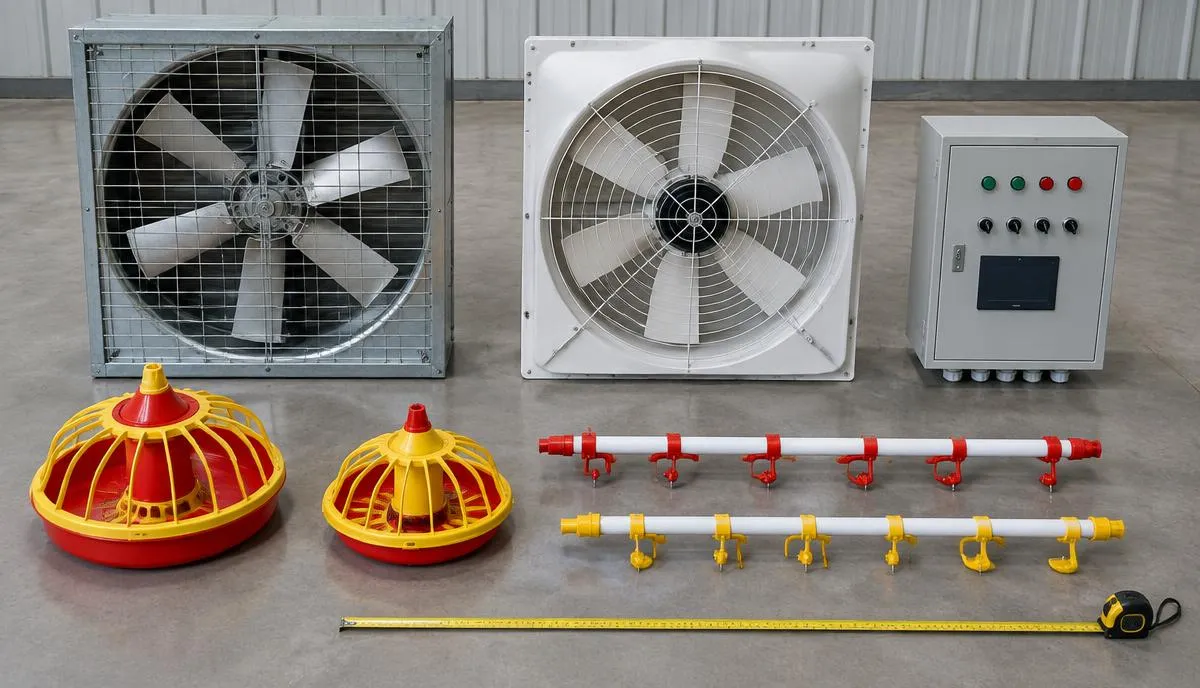
HatchMatch editorial illustration; not an installation or customer reference.
Before requesting proposals
Managed infrastructure RFQs require USD 250,000+. Buyer planning tools and the buyer service are free and supplier-funded. HatchMatch reviews briefs and coordinates sourcing; it does not operate, inspect, certify or guarantee your project.
No. The cited manufacturer pages document described functions. Deployment needs evidence of a specific operational use case; it is not inferred here.
Can chicken evidence be used for turkey?
Not automatically. Species, genetic line, housing, climate and process stage belong in the validation scope. Planning tags are not proof of transferability.
What would support a performance claim?
Request the underlying study or test record, conditions, measurement method, exclusions and independent review. No performance claim is presented in this collection.