
The Next Generation of Poultry Farms: Innovation That Actually Pays Back
Precision sensing, AI flock monitoring, in-ovo sexing, solar-hybrid power and robotics are moving from pilot projects to standard specification. This engineering brief explains which innovations pay back on a commercial poultry project, what they cost per bird place, and how to write them into an RFQ without over-specifying.
By HatchMatch Group Engineering Desk · Last updated 2026-08-17
In short
The next generation of poultry farms is not defined by a single breakthrough machine. It is defined by houses that measure themselves, hatcheries that decide earlier, and energy systems that stop being a silent 20–30% of operating cost. In 2026 a well-specified commercial project buys three things at once: biological performance, verifiable data, and resilience.
Key takeaways
- Next-generation poultry technology means closed-loop systems: sensors that measure the bird's actual environment, software that converts those measurements into decisions, and actuators that execute them without waiting for a manager's walk-through.
- Climate remains the largest controllable driver of feed conversion and mortality.
- Water intake is the earliest biological signal available on a poultry farm, and metering it is inexpensive.
- The hatchery is where innovation compounds fastest, because every gram of error is multiplied across the downstream flock.
- In most emerging markets, energy and backup power are the second-largest operating cost after feed, and the largest source of catastrophic risk.
The next generation of poultry farms is not defined by a single breakthrough machine. It is defined by houses that measure themselves, hatcheries that decide earlier, and energy systems that stop being a silent 20–30% of operating cost. In 2026 a well-specified commercial project buys three things at once: biological performance, verifiable data, and resilience. The equipment list looks similar to five years ago; the control layer, the sensors and the power architecture do not.
This brief is supplier-neutral. It covers the innovations we now see written into serious tender documents, the indicative CAPEX bands attached to them, and the realistic payback windows. Figures are ranges — real quotations move with country, house size, import duty and Incoterms — and every project should be validated with the broiler ROI calculator and a formal request for quote.
What counts as next-generation poultry technology in 2026?
Next-generation poultry technology means closed-loop systems: sensors that measure the bird's actual environment, software that converts those measurements into decisions, and actuators that execute them without waiting for a manager's walk-through. Practically, five families are now mainstream on new commercial builds — precision climate and air-quality sensing, AI-based flock monitoring, water and feed telemetry, hatchery automation including in-ovo sexing, and solar-hybrid power with intelligent load management.
The dividing line is simple. A conventional house records what happened. A next-generation house predicts what is about to happen — a ventilation shortfall at 03:00, a water-intake drop 18 hours before clinical signs, a feed bin that will run empty on a Sunday — and either corrects it or escalates it.
Want these figures for your own site, capacity and country? A HatchMatch specialist builds the budget with you — no buyer fees.
Start free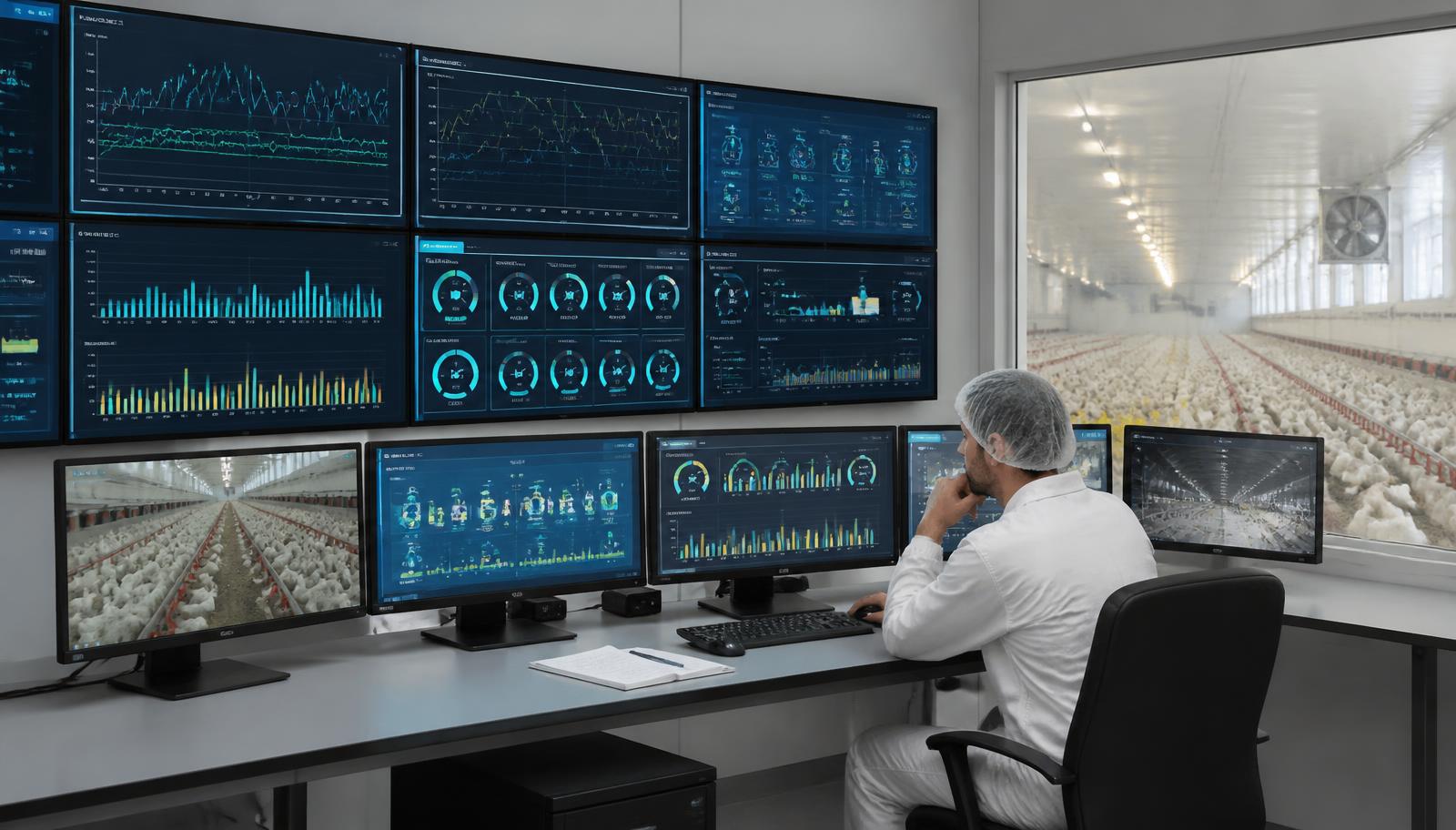
Precision climate control: the highest-certainty upgrade
Climate remains the largest controllable driver of feed conversion and mortality. The upgrade path is not more fans; it is more measurement points and better control logic. A modern specification places temperature and relative-humidity sensors every 15–25 m along the house, adds CO2 and NH3 sensing at bird level, and uses static-pressure control tied to minimum-ventilation timers rather than fixed schedules.
Indicative CAPEX: USD 0.15–0.40 per bird place for controller, sensor network and commissioning on a new build; USD 4,000–12,000 per house as a retrofit. Typical benefit is 1–3 points of FCR improvement and lower first-week mortality. On a 40,000-bird broiler house running 6.5 cycles a year, a 2-point FCR gain is often worth USD 6,000–14,000 annually — a payback measured in months, not years. Compare configurations in the ventilation and climate guide.
AI flock monitoring: from novelty to standard sensor
Camera and audio analytics have matured. Vision systems now estimate flock uniformity and live weight without a weighing platform, detect huddling and floor-egg patterns, and flag lameness. Audio systems classify respiratory sound and can raise a health alert one to three days before a farm manager would.
Indicative CAPEX: USD 3,000–9,000 per house including cameras, edge compute and a first year of software. The honest caveat: these systems do not replace stockmanship, and their value collapses if nobody acts on the alert. They pay back where labour is scarce, where a single manager supervises six or more houses, or where a contract requires documented welfare monitoring.
Water, feed and silo telemetry: the cheapest data you can buy
Water intake is the earliest biological signal available on a poultry farm, and metering it is inexpensive. Pulse water meters per line, load cells under feed silos, and a bin-level view across the farm typically cost USD 800–3,000 per house and eliminate two chronic losses: undetected leaks and emergency feed deliveries at premium freight rates.
For integrators, silo load cells also close the loop with the feed mill — order triggers become automatic, and batching accuracy becomes auditable. That is the practical bridge to feed mill automation, where batching software and truck scheduling take the same telemetry.
Hatchery innovation: earlier decisions, fewer wasted inputs
The hatchery is where innovation compounds fastest, because every gram of error is multiplied across the downstream flock. Three technologies dominate current specifications: single-stage incubation with embryo-temperature feedback, in-ovo vaccination, and in-ovo sexing for layer operations.
In-ovo sexing has moved from a European regulatory response to a genuine cost decision: identifying male layer embryos before hatch removes the cull step, reduces incubator loading waste and answers a retailer requirement that is spreading beyond the EU. CAPEX is significant — USD 1.2–3.5 million for a commercial-scale line — so it belongs in projects above roughly 30 million eggs per year, or in markets where the regulation is already scheduled. Smaller hatcheries get better returns from single-stage retrofits and hatchery climate zoning; see the hatchery equipment guide.
Energy: solar-hybrid is now an engineering decision, not a green gesture
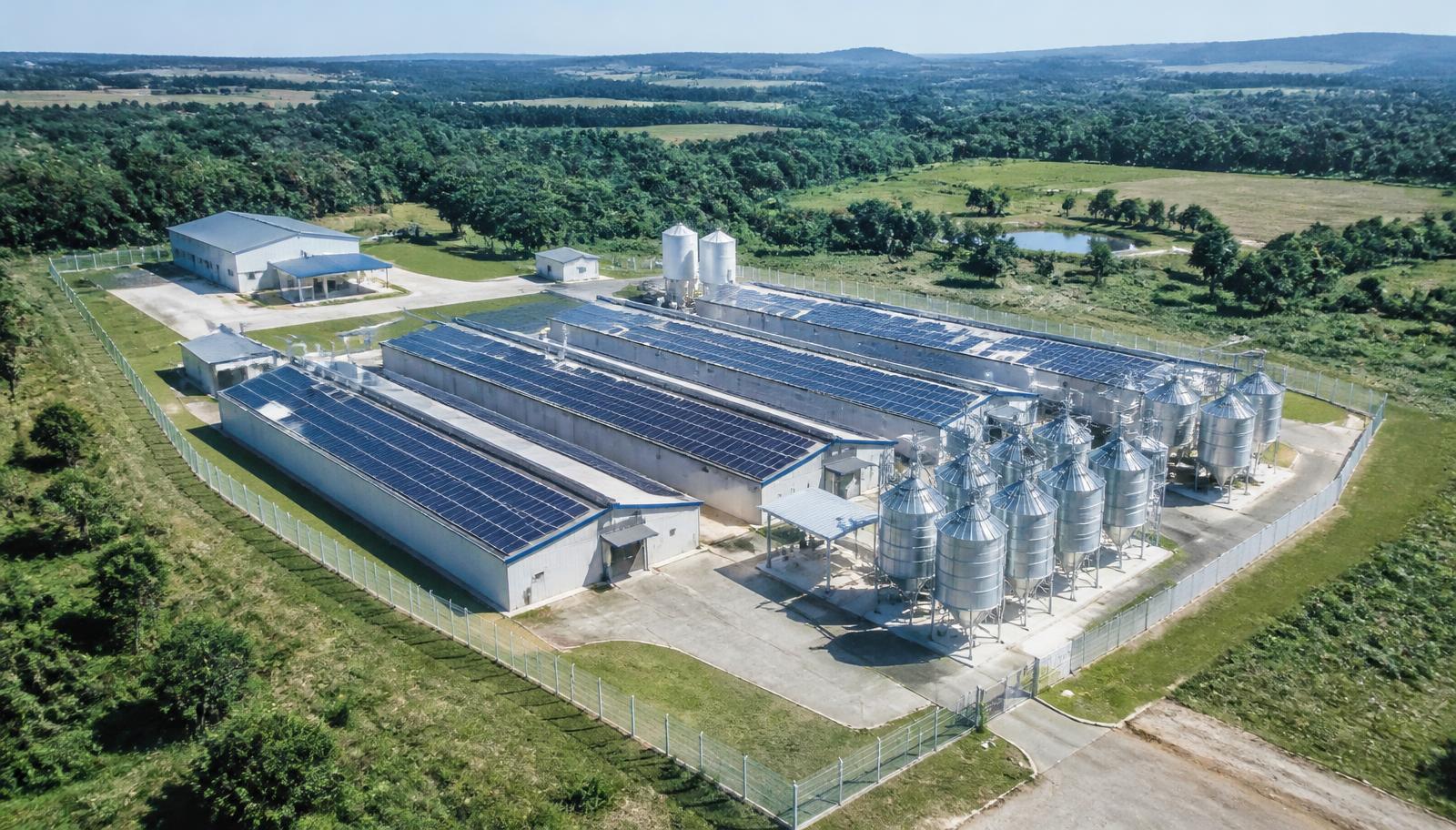
In most emerging markets, energy and backup power are the second-largest operating cost after feed, and the largest source of catastrophic risk. A tunnel-ventilated house that loses power at 40 °C loses the flock in under an hour. The 2026 answer is a hybrid architecture: rooftop or ground-mount PV sized to daytime ventilation load, battery storage sized to bridge the switchover, and a right-sized generator as the final layer rather than the primary one.
Indicative CAPEX: USD 700–1,100 per installed kWp for PV plus mounting, with batteries adding USD 250–450 per kWh. On farms paying USD 0.14/kWh or more, payback typically lands in the 3.5–6 year range, and shorter where diesel is the baseline. Model your own case with the solar-hybrid power guide before sizing an array.
Robotics and labour-replacing automation
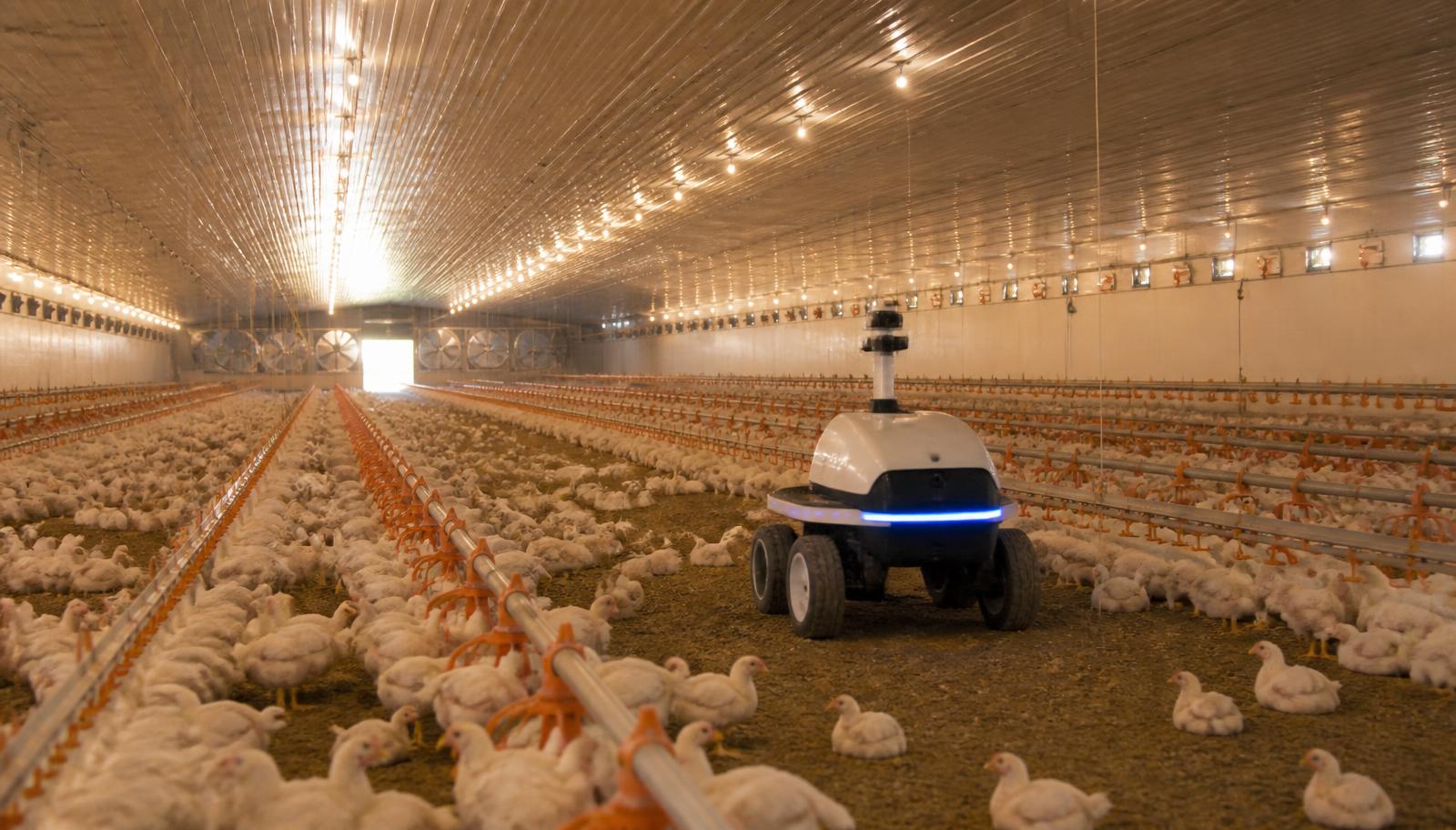
Autonomous house robots — litter agitation, floor-egg collection, mortality detection — are past the demonstration phase but remain economically marginal below a certain scale. At USD 15,000–45,000 per unit, they justify themselves where labour costs exceed roughly USD 1,200 per month per worker, or where biosecurity policy limits human entries. In layer operations, the stronger automation case is still egg handling, grading and packing, where throughput and breakage rates translate directly into margin.
How much does a next-generation poultry house cost?
Adding the full technology stack to a new commercial broiler house typically increases CAPEX by 8–15% over a conventional equivalent — roughly USD 1.20–2.60 per bird place for sensing, monitoring and control, before energy systems. Solar-hybrid power is a separate line and can add another USD 0.80–2.00 per bird place depending on climate and grid quality.
The mistake we see most often is not overspending — it is spending in the wrong order. The sequence that consistently returns capital is: climate control and sensing first, water and feed telemetry second, energy resilience third, AI monitoring fourth, robotics last. Buying a robot before a functioning static-pressure control loop is a common and expensive inversion.
Will these technologies work in hot and emerging markets?
Yes, with two conditions. First, specify for the actual ambient envelope: controllers and sensors rated for 50 °C and high dust, IP-rated enclosures, and surge protection sized for an unstable grid. Second, contract the service layer explicitly — spare-part stock on site, a named regional service partner, remote diagnostics access, and a defined response window. Technology fails in emerging markets far more often through unsupported maintenance than through design.
Country-specific CAPEX and payback assumptions differ sharply; our market briefs for Nigeria, Kenya and other markets set out the local ranges we quote against.
What should a buyer put in the RFQ?
Write outcomes, not brand names. A strong innovation-ready RFQ states target stocking density and bird weight, the design ambient temperature and humidity, the required minimum-ventilation rate and static-pressure control range, the data points to be exposed and the export format, whether an open protocol such as Modbus or MQTT is mandatory, the guaranteed uptime and spare-part lead time, and the training and commissioning scope. This lets three manufacturers compete on engineering rather than on datasheet vocabulary.
Data portability deserves particular attention. Ask explicitly whether raw sensor data is exportable and whether the platform is subscription-locked. A controller that traps your production history is a liability at the next expansion or refinancing round.
The strategic view: data becomes a financing asset
The quiet innovation of 2026 is not on the farm floor at all — it is in the finance file. Lenders and development-finance institutions increasingly ask for documented environmental control, mortality and traceability data before approving expansion facilities. Farms that produce clean, exportable operating data secure better terms, faster. Technology that started as a production tool has become the evidence base for credit, insurance and offtake contracts. That is the real compounding return, and it is why we advise clients to treat the data layer as infrastructure rather than a software subscription.
Innovation only pays when it is specified in the right order, sized to the real climate and grid, and backed by a service contract that survives year three. If you are planning a new build or a retrofit, our engineers will map the technology stack against your capacity, country and budget and put it into a comparable multi-supplier quotation — no buyer fees. Start your project for free or plan the full scope with the commercial farm planner.
Frequently asked questions
- What counts as next-generation poultry technology in 2026?
- Next-generation poultry technology means closed-loop systems: sensors that measure the bird's actual environment, software that converts those measurements into decisions, and actuators that execute them without waiting for a manager's walk-through. Practically, five families are now mainstream on new commercial builds — precision climate and air-quality sensing, AI-based flock monitoring, water and feed telemetry, hatchery automation including in-ovo sexing, and solar-hybrid power with intelligent load management. The dividing line is simple. A conventional house records what happened. A next-generation house predicts what is about to happen — a ventilation shortfall at 03:00, a water-intake drop 18 hours before clinical signs, a feed bin that will run empty on a Sunday — and either corrects it or escalates it.
- How much does a next-generation poultry house cost?
- Adding the full technology stack to a new commercial broiler house typically increases CAPEX by 8–15% over a conventional equivalent — roughly USD 1.20–2.60 per bird place for sensing, monitoring and control, before energy systems. Solar-hybrid power is a separate line and can add another USD 0.80–2.00 per bird place depending on climate and grid quality. The mistake we see most often is not overspending — it is spending in the wrong order. The sequence that consistently returns capital is: climate control and sensing first, water and feed telemetry second, energy resilience third, AI monitoring fourth, robotics last. Buying a robot before a functioning static-pressure control loop is a common and expensive inversion.
- Will these technologies work in hot and emerging markets?
- Yes, with two conditions. First, specify for the actual ambient envelope: controllers and sensors rated for 50 °C and high dust, IP-rated enclosures, and surge protection sized for an unstable grid. Second, contract the service layer explicitly — spare-part stock on site, a named regional service partner, remote diagnostics access, and a defined response window. Technology fails in emerging markets far more often through unsupported maintenance than through design. Country-specific CAPEX and payback assumptions differ sharply; our market briefs for Nigeria, Kenya and other markets set out the local ranges we quote against.
- What should a buyer put in the RFQ?
- Write outcomes, not brand names. A strong innovation-ready RFQ states target stocking density and bird weight, the design ambient temperature and humidity, the required minimum-ventilation rate and static-pressure control range, the data points to be exposed and the export format, whether an open protocol such as Modbus or MQTT is mandatory, the guaranteed uptime and spare-part lead time, and the training and commissioning scope. This lets three manufacturers compete on engineering rather than on datasheet vocabulary. Data portability deserves particular attention. Ask explicitly whether raw sensor data is exportable and whether the platform is subscription-locked. A controller that traps your production history is a liability at the next expansion or refinancing round.
More buyer questions are answered in our poultry procurement FAQ — also available in Español, Français, Português, Deutsch, العربية, Русский, Türkçe, Tiếng Việt.
From this article to a procurement-ready RFQ
HatchMatch Group is an independent sourcing desk — not a manufacturer or EPC contractor. These are the four steps we actually use with commercial poultry and hatchery buyers. If you are still deciding scope, start with what commercial poultry equipment includes and how suppliers are compared.
- 1. Plan the projectCapacity, climate and house layout in one guided workflowOpen
- 2. Build the RFQScope, specifications and comparable line itemsOpen
- 3. Submit the requestReviewed manually before any supplier introductionOpen
- 4. Track and compareFollow status and normalise supplier responsesOpen
Prefer the numbers first? Start with the poultry project cost calculator or browse the project planning guides.