
AI Agents Can Now Run a Poultry Equipment RFQ — Here Is How It Works
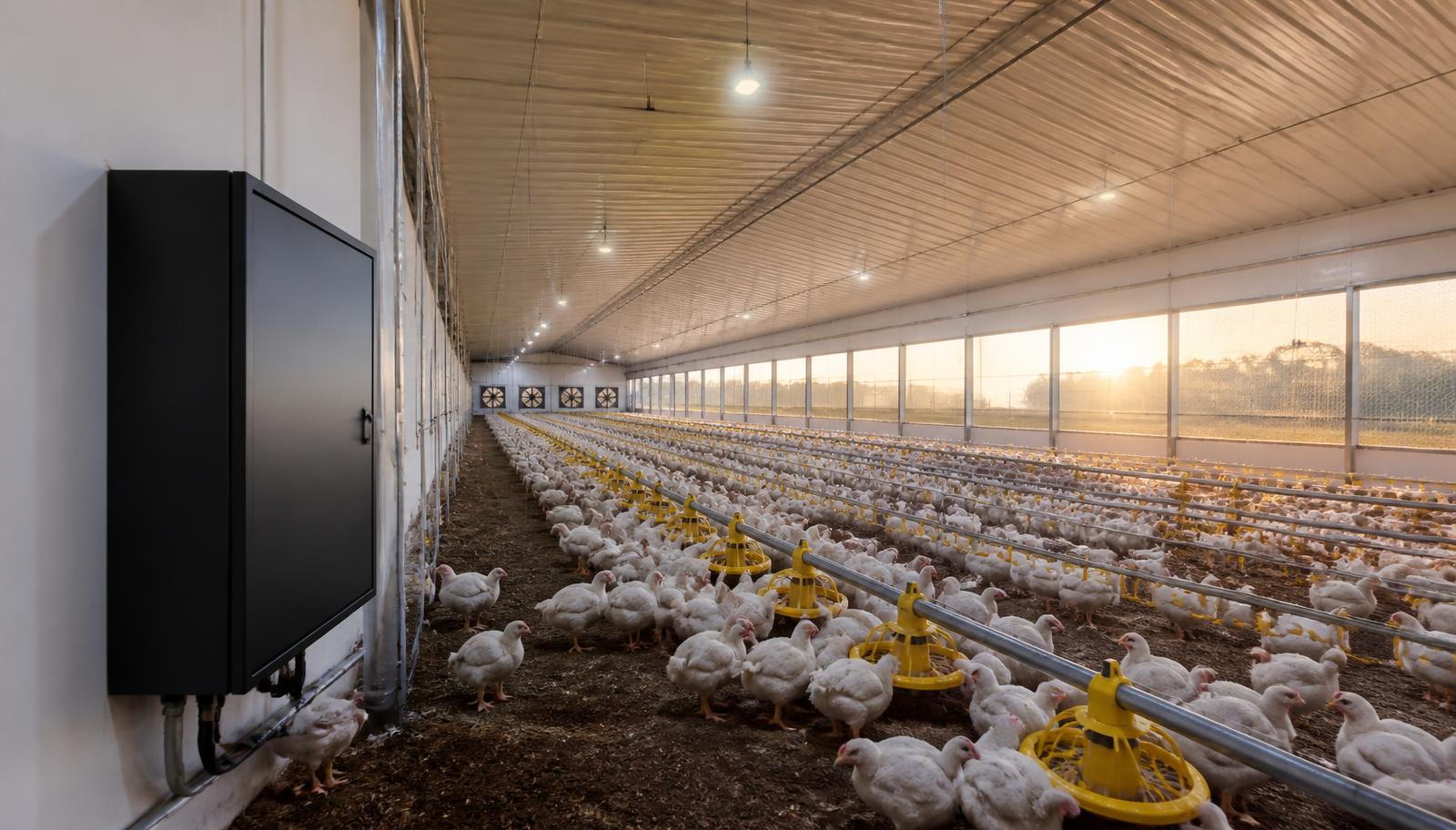
Buyers no longer research alone. Their AI assistant does the first pass. HatchMatch Group now exposes its poultry calculators, supplier index and RFQ engine as tools an AI agent can call directly — so a broiler, layer or hatchery brief can be sized, structured and submitted machine-to-machine, and still land with a human sourcing desk.
By HatchMatch Group Engineering Desk · Last updated 2026-08-19
In short
Something changed quietly in commercial procurement during 2026. The first hour of a poultry equipment search is no longer spent on a search engine. It is spent inside an AI assistant — ChatGPT, Claude, Gemini, Copilot or an in-house procurement agent — where a project manager types "I need to budget a 40,000-bird broiler house in Nigeria" and expects a structured answer, not ten blue links.
Key takeaways
- An authorised AI agent can call the same engineering logic our own site runs on.
- Because the expensive failures in poultry projects are specification failures, not price failures.
- HatchMatch exposes its tools over the Model Context Protocol (MCP) — the open standard AI assistants use to call external systems.
- No, and any platform claiming otherwise is misleading you.
- Multi-house broiler programmes, where the same geometry repeats and consistency across bids is worth more than any single negotiation.
Something changed quietly in commercial procurement during 2026. The first hour of a poultry equipment search is no longer spent on a search engine. It is spent inside an AI assistant — ChatGPT, Claude, Gemini, Copilot or an in-house procurement agent — where a project manager types "I need to budget a 40,000-bird broiler house in Nigeria" and expects a structured answer, not ten blue links. By the time that buyer contacts a supplier, the shortlist, the ballpark CAPEX and half the specification already exist.
HatchMatch Group built for that. Our calculators, supplier index and RFQ engine are exposed as machine-callable tools, so an AI agent acting for a buyer can size the project, price the scope and open a real request for quote with manufacturers researched on capability — without a human retyping a single field. This article explains what the agents can do, what they deliberately cannot, and why an engineering-grade tool layer beats a chatbot bolted onto a contact form.
What can an AI agent actually do on HatchMatch?
An authorised AI agent can call the same engineering logic our own site runs on. In practice that means four capabilities: query the capability-researched supplier index by segment and region; run project calculators (broiler CAPEX, house sizing, ventilation and cooling load, heating and fuel demand, feed consumption, egg production and grader sizing); assemble a structured RFQ with bird numbers, house geometry, climate, power situation and Incoterms; and track the resulting project through the buyer's own workspace.
The output is not prose. It is structured data — line items, ranges, units, assumptions — which is exactly what an agent needs to compare two configurations or hand a clean brief to a human. A buyer's agent can therefore go from a one-line intent to a comparable, supplier-ready specification in a single session.
Want these figures for your own site, capacity and country? A HatchMatch specialist builds the budget with you — no buyer fees.
Start free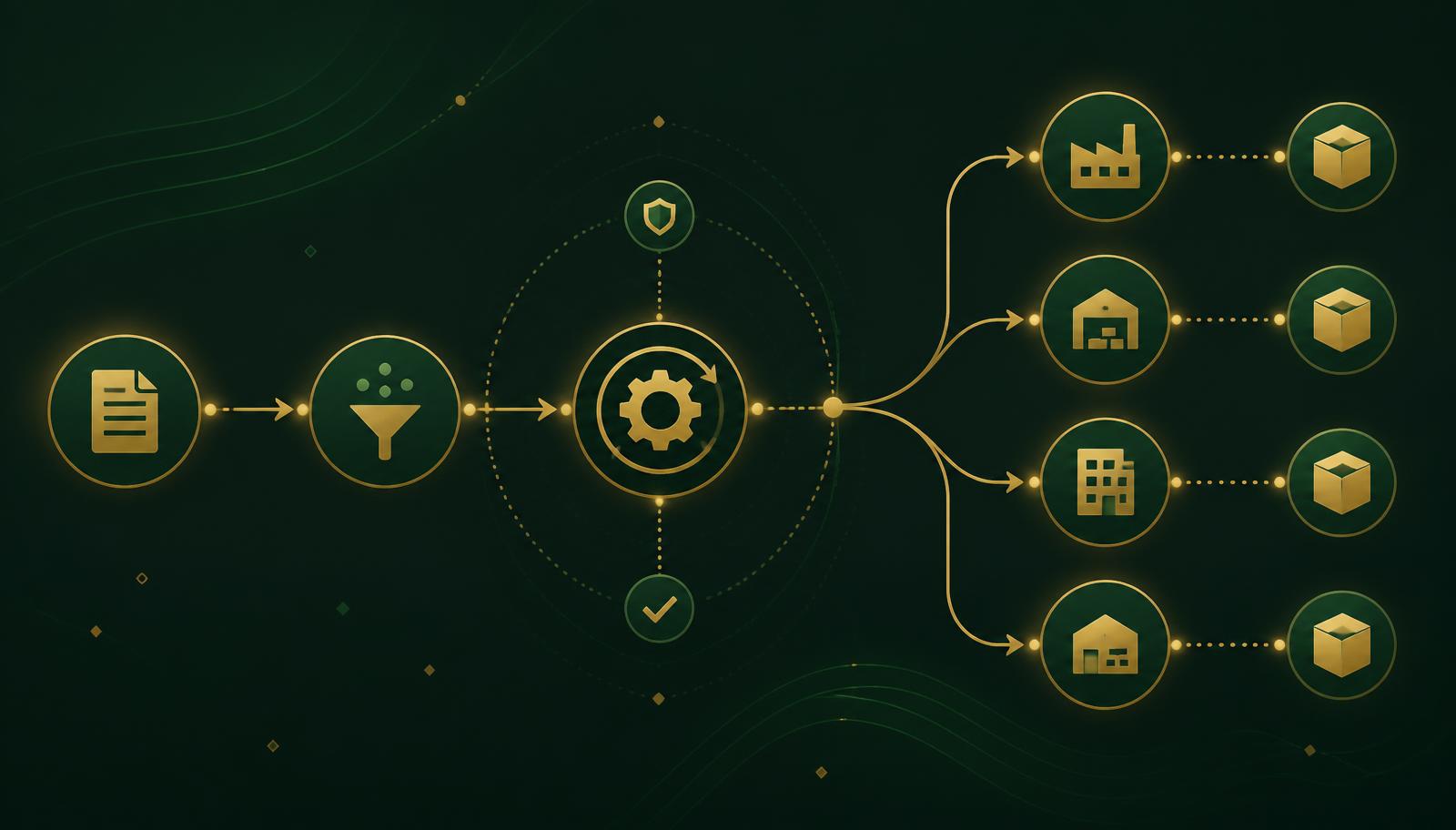
Why does agent-readable sourcing matter for poultry buyers?
Because the expensive failures in poultry projects are specification failures, not price failures. Three quotations arrive for "a 40,000-bird broiler house" and none of them describe the same house: one prices 3 feed lines, another 4; one quotes tunnel ventilation at 2.5 m/s air speed, another at 3.0; one is EXW factory, another CIF Lagos. The buyer compares totals and picks wrong.
An agent that calls a shared calculator fixes the geometry first. Pan count, line count, fan count, static pressure target, heater kW, water flow and connected load are computed once, then written into every bidder's brief. The bids become comparable because the specification is identical. That is not automation for novelty — it is the single change that most reliably removes 10–20% of avoidable cost and the majority of change orders.
How does the AI agent integration work technically?
HatchMatch exposes its tools over the Model Context Protocol (MCP) — the open standard AI assistants use to call external systems. An agent connects to our endpoint, authenticates through OAuth so every call is attributable to a real account, discovers the available tools, and calls them with typed arguments. There is no scraping, no brittle form-filling, no hallucinated supplier names: the agent receives the same capability-researched records our sourcing desk works from.
Three design decisions matter to buyers. Authentication is mandatory, so nobody can flood the supplier network anonymously. Calculator outputs are returned with their assumptions attached, so an agent cannot quietly present a range as a firm price. And every RFQ an agent opens lands in a human-reviewed queue at the sourcing desk — an agent can prepare and submit, but a person still validates before manufacturers are approached.
Can an AI agent get a binding price for poultry equipment?
No, and any platform claiming otherwise is misleading you. Calculators return planning ranges built from published engineering data and observed project budgets. Real prices move with steel, freight, duty, house geometry, electrical standards and delivery terms. What the agent gets instantly is a defensible budget band and a complete scope; what follows is a genuine quotation from manufacturers, returned on a single comparison sheet within 2 business days of a complete brief. Equipment supply, financing and delivery terms remain subject to third-party approval.
That boundary is deliberate. The value of agentic sourcing is compressing the six weeks of scoping that precede a quotation — not pretending a machine can commit a factory to a number.
Which projects benefit most from agent-driven RFQs?
Multi-house broiler programmes, where the same geometry repeats and consistency across bids is worth more than any single negotiation. Layer and cage-free conversions, where equipment options branch quickly and an agent can price four configurations in the time a human prices one. Hatcheries, where setter and hatcher capacity, ventilation and standby power interlock and are easy to under-specify. Feed mills, where throughput, grinding, mixing and storage must balance before anyone quotes. And retrofits, where the buyer needs to know fast whether an existing shell can carry the new ventilation and power load at all.
Investors and lenders benefit too. A structured brief with stated assumptions is the document a bank wants: bird numbers, cycles per year, CAPEX band, energy load, and a named comparison basis — not a supplier's brochure total.
What does this mean for equipment manufacturers?
It raises the quality of incoming enquiries. A manufacturer receiving a HatchMatch RFQ prepared through the agent layer gets bird count, target weight, house dimensions, climate design temperatures, grid reliability, required certifications and Incoterms in a fixed format — not a two-line email. Quotation time drops, clarification rounds drop, and the win rate on qualified leads rises because the buyer is comparing like with like instead of guessing.
It also protects the supplier network. Access is authenticated and rate-limited, so the manufacturers in our index are not exposed to automated noise. Agents accelerate serious buyers; they do not open a firehose.
How do buyers and developers get started?
Buyers do not need to do anything technical. Ask your AI assistant to plan a poultry project, connect it to the HatchMatch tool endpoint when prompted, and let it run the numbers — or simply use the same engines yourself through the poultry project planner, the broiler ROI calculator and the ventilation and cooling calculators. The output is identical; only the interface differs.
Procurement teams running their own agents can connect directly and wire our calculators and RFQ engine into an internal workflow — for example, generating a costed scope automatically whenever a new site is approved. When the brief is ready, send it through the request for quote flow and the sourcing desk takes it from there.
Key takeaways
Buyers now arrive with AI-prepared shortlists, so the first hour of research happens machine-to-machine. HatchMatch exposes its calculators, supplier index and RFQ engine as authenticated tools an agent can call. Fixing the geometry before bidding is what makes offers comparable and removes most avoidable cost. Agents produce budget bands and complete scopes, never binding prices. Every agent-submitted RFQ still passes a human sourcing desk before manufacturers are approached.
The next generation of poultry projects will not be won by whoever answers the phone fastest. It will be won by whoever gives the buyer — and the buyer's AI — a specification precise enough to bid against. That is the platform we are building. Start with the planner, or open an RFQ and we will return comparable offers within 2 business days.
Frequently asked questions
- What can an AI agent actually do on HatchMatch?
- An authorised AI agent can call the same engineering logic our own site runs on. In practice that means four capabilities: query the capability-researched supplier index by segment and region; run project calculators (broiler CAPEX, house sizing, ventilation and cooling load, heating and fuel demand, feed consumption, egg production and grader sizing); assemble a structured RFQ with bird numbers, house geometry, climate, power situation and Incoterms; and track the resulting project through the buyer's own workspace. The output is not prose. It is structured data — line items, ranges, units, assumptions — which is exactly what an agent needs to compare two configurations or hand a clean brief to a human. A buyer's agent can therefore go from a one-line intent to a comparable, supplier-ready specification in a single session.
- Why does agent-readable sourcing matter for poultry buyers?
- Because the expensive failures in poultry projects are specification failures, not price failures. Three quotations arrive for "a 40,000-bird broiler house" and none of them describe the same house: one prices 3 feed lines, another 4; one quotes tunnel ventilation at 2.5 m/s air speed, another at 3.0; one is EXW factory, another CIF Lagos. The buyer compares totals and picks wrong. An agent that calls a shared calculator fixes the geometry first. Pan count, line count, fan count, static pressure target, heater kW, water flow and connected load are computed once, then written into every bidder's brief. The bids become comparable because the specification is identical. That is not automation for novelty — it is the single change that most reliably removes 10–20% of avoidable cost and the majority of change orders.
- How does the AI agent integration work technically?
- HatchMatch exposes its tools over the Model Context Protocol (MCP) — the open standard AI assistants use to call external systems. An agent connects to our endpoint, authenticates through OAuth so every call is attributable to a real account, discovers the available tools, and calls them with typed arguments. There is no scraping, no brittle form-filling, no hallucinated supplier names: the agent receives the same capability-researched records our sourcing desk works from. Three design decisions matter to buyers. Authentication is mandatory, so nobody can flood the supplier network anonymously. Calculator outputs are returned with their assumptions attached, so an agent cannot quietly present a range as a firm price. And every RFQ an agent opens lands in a human-reviewed queue at the sourcing desk — an agent can prepare and submit, but a person still validates before manufacturers are ap
- Can an AI agent get a binding price for poultry equipment?
- No, and any platform claiming otherwise is misleading you. Calculators return planning ranges built from published engineering data and observed project budgets. Real prices move with steel, freight, duty, house geometry, electrical standards and delivery terms. What the agent gets instantly is a defensible budget band and a complete scope; what follows is a genuine quotation from manufacturers, returned on a single comparison sheet within 2 business days of a complete brief. Equipment supply, financing and delivery terms remain subject to third-party approval. That boundary is deliberate. The value of agentic sourcing is compressing the six weeks of scoping that precede a quotation — not pretending a machine can commit a factory to a number.
- Which projects benefit most from agent-driven RFQs?
- Multi-house broiler programmes, where the same geometry repeats and consistency across bids is worth more than any single negotiation. Layer and cage-free conversions, where equipment options branch quickly and an agent can price four configurations in the time a human prices one. Hatcheries, where setter and hatcher capacity, ventilation and standby power interlock and are easy to under-specify. Feed mills, where throughput, grinding, mixing and storage must balance before anyone quotes. And retrofits, where the buyer needs to know fast whether an existing shell can carry the new ventilation and power load at all. Investors and lenders benefit too. A structured brief with stated assumptions is the document a bank wants: bird numbers, cycles per year, CAPEX band, energy load, and a named comparison basis — not a supplier's brochure total.
- What does this mean for equipment manufacturers?
- It raises the quality of incoming enquiries. A manufacturer receiving a HatchMatch RFQ prepared through the agent layer gets bird count, target weight, house dimensions, climate design temperatures, grid reliability, required certifications and Incoterms in a fixed format — not a two-line email. Quotation time drops, clarification rounds drop, and the win rate on qualified leads rises because the buyer is comparing like with like instead of guessing. It also protects the supplier network. Access is authenticated and rate-limited, so the manufacturers in our index are not exposed to automated noise. Agents accelerate serious buyers; they do not open a firehose.
More buyer questions are answered in our poultry procurement FAQ — also available in Español, Français, Português, Deutsch, العربية, Русский, Türkçe, Tiếng Việt.
From this article to a procurement-ready RFQ
HatchMatch Group is an independent sourcing desk — not a manufacturer or EPC contractor. These are the four steps we actually use with commercial poultry and hatchery buyers. If you are still deciding scope, start with what commercial poultry equipment includes and how suppliers are compared.
- 1. Plan the projectCapacity, climate and house layout in one guided workflowOpen
- 2. Build the RFQScope, specifications and comparable line itemsOpen
- 3. Submit the requestReviewed manually before any supplier introductionOpen
- 4. Track and compareFollow status and normalise supplier responsesOpen
Prefer the numbers first? Start with the poultry project cost calculator or browse the project planning guides.