
What International Buyers Need From Poultry and Egg Producers: Planning Supply Around Buyer Requirements

A buyer-side map of what commercial poultry and egg buyers specify, which hatchery, farm, egg-handling, feed and climate systems stand behind each answer, and how a structured request turns it into comparable supply.
By HatchMatch Group Editorial Desk · Last updated 2026-10-23
In short
Short answer: international buyers of eggs and poultry ask for five things before they talk price: an exact product specification, a reliable volume, a delivery schedule, documents that show biosecurity and traceability, and proof the product can enter the destination market. A producer's hatchery, farm, egg-handling, feed and climate systems are what make those answers credible. Write the requirements down first, then plan and compare supply against them.
Key takeaways
- The OECD-FAO Agricultural Outlook 2026-2035 projects world poultry consumption to reach 177 million tonnes (ready-to-cook) by 2035, about 29 million tonnes or roughly 20% more than the 2023-2025 base, and about two-thirds of the additional meat consumed worldwide.
- A specification on paper is only as good as the systems that produce it.
- Producers and exporters are responsible for the products they offer and supply meeting applicable safety, quality, animal-health, labelling, traceability, export and documentation requirements in the origin and destination countries.
- A structured request puts every requirement above into one format, so producers answer on the same basis and offers can be compared.
- Product, specification and grade mix, written per destination.
Short answer: international buyers of eggs and poultry ask for five things before they talk price: an exact product specification, a reliable volume, a delivery schedule, documents that show biosecurity and traceability, and proof the product can enter the destination market. A producer's hatchery, farm, egg-handling, feed and climate systems are what make those answers credible. Write the requirements down first, then plan and compare supply against them.
Who this is for: importers, distributors, food manufacturers and project owners buying or planning commercial supply of table eggs, hatching eggs, day-old chicks or poultry meat. HatchMatch, part of Global B2B Group, coordinates buyer-first sourcing: buyers submit a structured request and the team contacts suitable producers and suppliers and organises the communications. HatchMatch does not operate farms, hatcheries or processing plants and does not certify compliance.
Why buyer requirements come first
The OECD-FAO Agricultural Outlook 2026-2035 projects world poultry consumption to reach 177 million tonnes (ready-to-cook) by 2035, about 29 million tonnes or roughly 20% more than the 2023-2025 base, and about two-thirds of the additional meat consumed worldwide. It expects most of the additional demand in Asia, Latin America, and the Middle East and North Africa, and notes that poultry exports are expanding beyond traditional destinations, supported by pricing and by compliance with import-market requirements.
That is a projection for poultry meat, not a forecast for any producer, product or price, and it says nothing about eggs. What it does show is that access depends on meeting each market's requirements. For an individual supply programme, the useful question is narrower: what does this buyer, in this destination, need — and can this producer show it?
Want these figures for your own site, capacity and country? A HatchMatch specialist builds the budget with you — no buyer fees.
Start freeThe five requirements buyers specify
1. Product and specification
- Table eggs: weight or size bands, shell colour, shell and internal quality, the share of each grade, and packing format.
- Hatching eggs: breed or strain, flock age range, egg weight, storage age at dispatch and flock health records.
- Day-old chicks: breed or strain, sex, vaccination programme as required by the importing country, and transport conditions.
- Poultry meat: whole birds or cuts, chilled or frozen, weight ranges, slaughter method (including any religious requirement the buyer sets), packing and labelling.
2. Volume and continuity
Buyers state weekly or monthly volume, peak periods and contract length. A producer must show it can supply that volume after grade-outs and losses, flock after flock — not a single peak week.
3. Production timing
Flock placement, laying cycles and hatch dates fix when product exists. Chicks and hatching eggs move on narrow windows; table eggs and meat depend on storage and cold-chain capacity. The first realistic shipment date belongs in the request, not in a later email.
4. Biosecurity and traceability documentation
Buyers increasingly ask how flocks are protected and how a lot can be traced back. The WOAH Terrestrial Code chapter on biosecurity in poultry production covers farm and hatchery measures, including hygiene for hatching eggs and record-keeping. The Codex principles for traceability describe being able to follow a product one step back and one step forward. Typical evidence includes flock and lot records, vaccination and health records, cleaning and visitor logs, and lot coding on every pack.
5. Destination requirements
The importing country decides what may enter and on which conditions: establishment approval or listing, veterinary or health certificates issued by the exporting country's competent authority, labelling language and import permits. The WTO SPS Agreement lets countries set such measures, and the WOAH chapter on certification explains how official veterinary certificates work. Requirements differ by product, origin and destination, and can change with disease events, so no single checklist applies everywhere. Check current conditions with the importing country's authority; our trade-rule register and market pages are a starting point, not a clearance.
The producer systems behind each answer
A specification on paper is only as good as the systems that produce it. When you compare producers — or plan your own project — ask which system delivers each requirement and what record proves it.
| Buyer requirement | Producer system that delivers it | Evidence a buyer can request |
|---|---|---|
| Chick quality and hatch dates | Hatchery: setters, hatchers, egg storage, chick handling | Hatch and set records, egg storage logs, flock source |
| Egg grade and freshness | Egg collection, grading, packing and cool storage | Grading results, storage temperature logs, lot codes |
| Consistent bird or egg weight | Feeding programme and feed quality | Feed specification and batch records from the feed supplier |
| Flock health and welfare | Ventilation, heating, cooling and back-up power | Climate and alarm records, mortality records |
| Biosecurity | Site layout, hygiene, visitor and vehicle control | Biosecurity plan, cleaning and visitor logs |
| Traceability | Flock, lot and dispatch record keeping | Lot coding and one-step-back, one-step-forward records |
Hatchery and farm systems
Hatchery capacity, egg storage and chick-handling equipment set how many chicks or hatching eggs are available and when. See hatchery projects and hatchery equipment for what a well-specified hatchery includes.
Egg handling
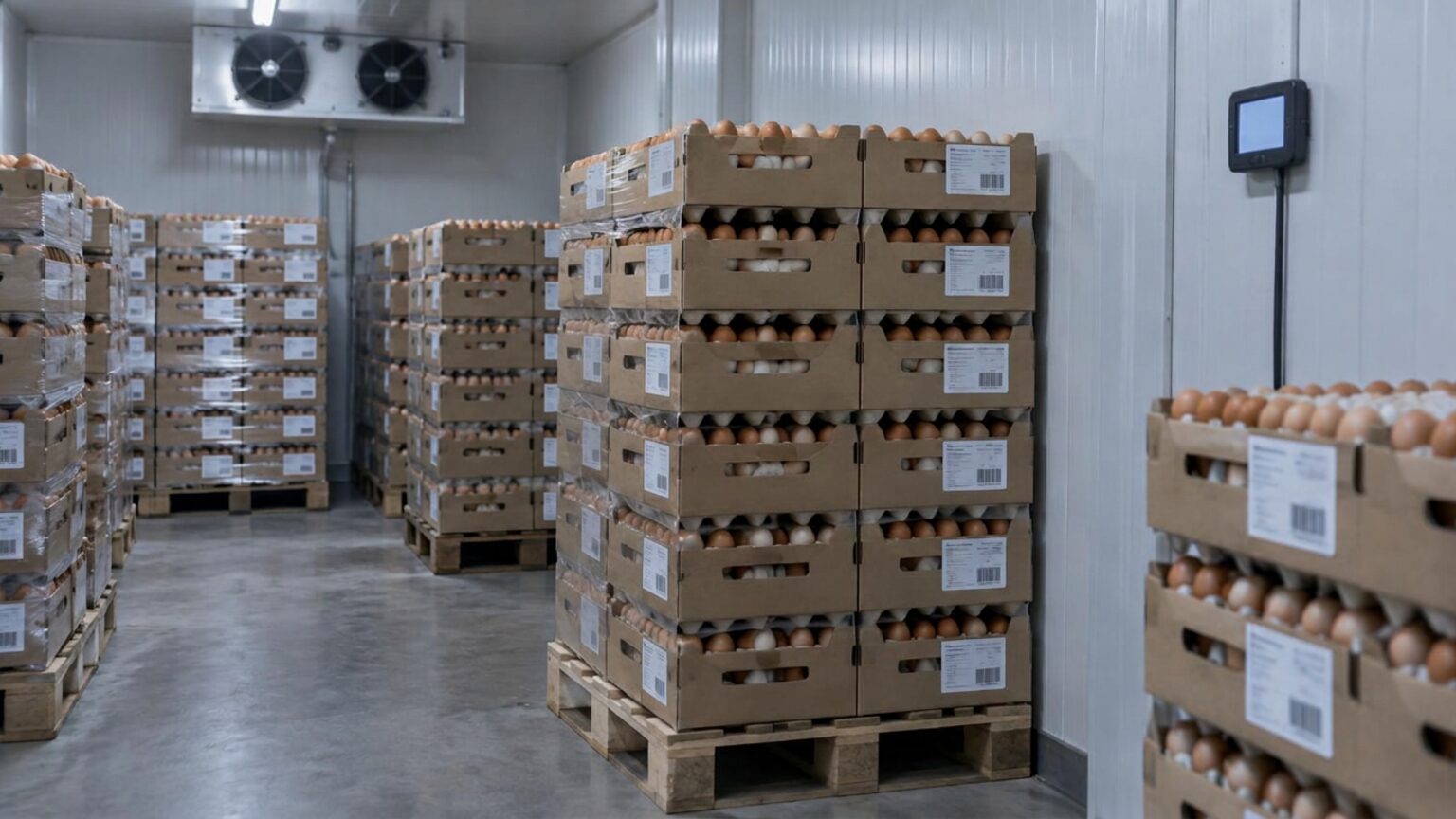
The Codex Code of Hygienic Practice for Eggs and Egg Products is the common international reference for collection, handling, storage and transport. Collection frequency, grading accuracy, packing and cool storage decide whether eggs arrive at the grade the buyer ordered. See egg handling and grading systems.
Feeding
Feed drives growth, egg weight and shell quality, and it is also a food-safety input: the Codex Code of Practice on Good Animal Feeding sets the general reference. Buyers can ask how feed is specified and traced; formulation itself belongs to the producer's nutritionist. Commercial compound feed is sourced through our sister platform FeedMatch Group.
Ventilation and climate control
Air quality, temperature and humidity affect flock health, welfare and performance. The WOAH chapter on broiler welfare treats ventilation, air quality and back-up systems as welfare measures. See ventilation systems and poultry house climate control, and biosecurity solutions for site measures.
Who is responsible for what
- Producers and exporters are responsible for the products they offer and supply meeting applicable safety, quality, animal-health, labelling, traceability, export and documentation requirements in the origin and destination countries.
- Buyers and importers remain responsible for their own import permits, local requirements and due diligence.
- Competent authorities of the exporting and importing countries set and certify the official conditions.
- HatchMatch facilitates sourcing and requests; it does not produce, export or certify products, and no notice or contract replaces legal advice. See our compliance information.
How a structured buyer request works
A structured request puts every requirement above into one format, so producers answer on the same basis and offers can be compared. A person at HatchMatch reviews every brief and screens it against the published trade-rule register, holding unclear cases for review. The team then contacts suitable producers and suppliers on the buyer's behalf and organises questions, documents and responses. Producers decide whether to respond; HatchMatch does not promise a number of offers, prices, availability or orders, and contact details are shared only with your agreement to a specific step. See how it works.
Qualified egg and poultry producers who want to be considered for international requests can apply through the supplier application. Large commodity programmes are handled with our parent marketplace, Global B2B Group; temperature-controlled logistics is the focus of our sister platform ColdMatch Group.
Buyer and project checklist
- Product, specification and grade mix, written per destination.
- Weekly volume, peak volume and contract length.
- First shipment date, delivery rhythm and seasonality.
- Packing, labelling language and lot coding.
- Destination country, import conditions and the authority that sets them.
- Health certificates and establishment approvals expected for each shipment.
- Biosecurity and traceability records you will ask the producer for.
- Hatchery, farm, egg-handling, feed and climate systems behind the supply.
- Storage and cold-chain requirements from farm to destination.
- Incoterms® place, payment terms and currency.
- For new projects: budget checked in the farm cost calculator.
- Open questions, each with an owner.
The RFQ checklist turns this list into a request producers and suppliers can answer on the same basis.
Next step: submit a sourcing request
Use the poultry and egg sourcing request for eggs, hatching eggs, chicks or poultry meat, or the project request form for hatchery, farm or equipment projects. Assisted sourcing is free for buyers. Project requests start at USD 250,000 in project value; product-sourcing requests are qualified by specification, volume, destination and logistics. A person reviews every brief and HatchMatch aims to reply within two business days.
Sources
- OECD-FAO Agricultural Outlook 2026-2035 — Meat chapter - WOAH Terrestrial Animal Health Code — Biosecurity procedures in poultry production - WOAH Terrestrial Animal Health Code — Animal welfare and broiler chicken production systems - WOAH Terrestrial Animal Health Code — General obligations related to certification - Codex — Code of Hygienic Practice for Eggs and Egg Products (CXC 15-1976) - Codex — Principles for Traceability/Product Tracing (CXG 60-2006) - Codex — Code of Practice on Good Animal Feeding (CXC 54-2004) - WTO — Agreement on Sanitary and Phytosanitary Measures These organisations publish general guidance; none of them reviews, certifies or endorses HatchMatch. Sources checked 23 October 2026.
Frequently asked questions
What do international buyers require from poultry and egg producers? An exact specification, reliable volume, a delivery schedule, biosecurity and traceability records, and the documents the destination country requires.
What should a poultry or egg sourcing request include? Product and grade, volume and contract length, first shipment date, packing and labelling, destination, expected documents, Incoterms® and payment terms.
Does HatchMatch certify producers or guarantee compliance? No. HatchMatch coordinates sourcing and communications; certificates are issued by competent authorities or certification bodies, and producers and exporters remain responsible for compliance.
Who is responsible for import permits? The buyer or importer, under the rules of the destination country. Exporters are responsible for the export side and for supplying products that meet the agreed requirements.
Are export requirements the same in every country? No. They differ by product, origin and destination, and can change after disease events. Always check current conditions with the importing country's authority.
Is there a minimum size for a request? Assisted sourcing is free for buyers. Project requests start at USD 250,000; product-sourcing requests are qualified by specification, volume, destination and logistics.
Frequently asked questions
- What do international buyers require from poultry and egg producers?
- An exact specification, reliable volume, a delivery schedule, biosecurity and traceability records, and the documents the destination country requires.
- What should a poultry or egg sourcing request include?
- Product and grade, volume and contract length, first shipment date, packing and labelling, destination, expected documents, Incoterms® and payment terms.
- Does HatchMatch certify producers or guarantee compliance?
- No. HatchMatch coordinates sourcing and communications; certificates are issued by competent authorities or certification bodies, and producers and exporters remain responsible for compliance.
- Who is responsible for import permits?
- The buyer or importer, under the rules of the destination country. Exporters are responsible for the export side and for supplying products that meet the agreed requirements.
- Are export requirements the same in every country?
- No. They differ by product, origin and destination, and can change after disease events. Always check current conditions with the importing country's authority.
- Is there a minimum size for a request?
- Assisted sourcing is free for buyers. Project requests start at USD 250,000; product-sourcing requests are qualified by specification, volume, destination and logistics.
More buyer questions are answered in our poultry procurement FAQ — also available in Español, Français, Português, Deutsch, العربية, Русский, Türkçe, Tiếng Việt.
From this article to a procurement-ready RFQ
HatchMatch Group is an independent sourcing desk — not a manufacturer or EPC contractor. These are the four steps we actually use with commercial poultry and hatchery buyers. If you are still deciding scope, start with what commercial poultry equipment includes and how suppliers are compared.
- 1. Plan the projectCapacity, climate and house layout in one guided workflowOpen
- 2. Build the RFQScope, specifications and comparable line itemsOpen
- 3. Submit the requestReviewed manually before HatchMatch contacts any supplier on the buyer's behalfOpen
- 4. Track and compareFollow status and normalise supplier responsesOpen
Prefer the numbers first? Start with the poultry project cost calculator or browse the project planning guides.
HatchMatch Intelligence · Email updates
Get poultry sourcing and project updates by email
A short digest of newly published HatchMatch articles, guides and center updates on the topics you choose — with links to the full pieces.