
Tunnel-Ventilated Broiler Farm in the Philippines: How to Scope, Permit and Compare Supplier Quotes

Before asking for prices on a tunnel-ventilated broiler farm in the Philippines, decide who sets the house specification, confirm registration and environmental permits, write typhoon, power and delivery terms into one RFQ, and compare every offer delivered to the same site.
By HatchMatch Group Sourcing Desk · Last updated 2026-10-22
In short
Short answer: a tunnel-ventilated broiler farm in the Philippines is easier to price fairly when four things are settled before suppliers quote: who sets the house specification (you or the integrator you will grow for), which registrations and environmental permits the site needs, how the structure and ventilation are designed for typhoon winds and humid heat, and the delivery point every quote must reach. Put those in one written RFQ, ask every supplier to price the same packages, and compare offers delivered to your site — not FOB prices.
Key takeaways
- The USDA Foreign Agricultural Service's 2025 Philippines poultry annual forecasts 2026 chicken meat production at 1.
- - Growing for an integrator: ask the integrator, in writing, for its house and equipment requirements — dimensions, ventilation and cooling basis, controller and alarm requirements, drinker and feeder type, brooding, biosecurity and any approved-equipment list.
- Permits change the site layout, the drainage and manure plan and sometimes the house count, so confirm them before suppliers fix drawings.
- Most cost surprises come from what falls between packages.
- - Typhoon winds: ask suppliers to state the design wind speed and code basis their structure, roofing and fixings are engineered for, and have a licensed structural engineer check it against the National Structural Code of the Philippines for your site.
Short answer: a tunnel-ventilated broiler farm in the Philippines is easier to price fairly when four things are settled before suppliers quote: who sets the house specification (you or the integrator you will grow for), which registrations and environmental permits the site needs, how the structure and ventilation are designed for typhoon winds and humid heat, and the delivery point every quote must reach. Put those in one written RFQ, ask every supplier to price the same packages, and compare offers delivered to your site — not FOB prices.
Who this is for: independent growers, contract growers expanding for an integrator, investors and procurement teams planning a commercial broiler farm in Luzon, the Visayas or Mindanao. HatchMatch is a buyer-first sourcing service: it does not manufacture or sell equipment, and its team contacts independent suppliers on the buyer's behalf.
The market context, and what it means for your RFQ
The USDA Foreign Agricultural Service's 2025 Philippines poultry annual forecasts 2026 chicken meat production at 1.81 million tonnes ready-to-cook, about 7% above its 2025 estimate, and links the expected growth to the commercial rollout of a vaccine against highly pathogenic avian influenza and other biosecurity measures. Trade press notes that large national integrators still lead the industry while regional integrators are growing. These are forecasts and observations, not promises about any single farm.
For a buyer the practical point is narrower: some growers raise birds under an integrator programme, while others sell independently and carry their own offtake risk. Either way, house performance depends on ventilation, cooling, power and biosecurity working as one system — which is why the scope has to be written down before prices are compared.
Want these figures for your own site, capacity and country? A HatchMatch specialist builds the budget with you — no buyer fees.
Start freeFirst decision: who owns the house specification?
- Growing for an integrator: ask the integrator, in writing, for its house and equipment requirements — dimensions, ventilation and cooling basis, controller and alarm requirements, drinker and feeder type, brooding, biosecurity and any approved-equipment list. Quote against that document so you do not buy equipment the programme will not accept.
- Selling independently: you set the specification yourself. Write down the offtake plan first — who buys the birds, at what live weight and how often — because placement rhythm drives house count and feed, water and power demand.
- Mixed plans: if you might switch between the two, specify the stricter requirement so the house remains usable either way.
Registrations and permits to confirm before drawings are fixed
Permits change the site layout, the drainage and manure plan and sometimes the house count, so confirm them before suppliers fix drawings. The list below is a starting point, not legal advice; requirements depend on location and project size.
| Item | Who to ask | Why it matters for the quote | Reference |
|---|---|---|---|
| Poultry farm registration | Bureau of Animal Industry (BAI) | Registration of poultry farms is set out in BAI rules issued under the Animal Welfare Act; plan the registration file alongside the design | BAI Administrative Circular No. 04, s. 2015 |
| Environmental coverage (ECC or non-coverage) | DENR Environmental Management Bureau regional office | Whether an Environmental Compliance Certificate is needed depends on project size and location; screening affects layout, waste handling and timing | EMB ECC process |
| Building permit and local clearances | Local government unit | Structural drawings, electrical plans and zoning clearance usually have to be ready before construction; suppliers must deliver drawings a licensed engineer can sign | Local government office |
| Agricultural engineering standards | Your design engineer | DA Administrative Order No. 06, s. 2004 enforces the Philippine Agricultural Engineering Standards (PAES) for agricultural buildings and facilities; PAES 402:2001 covers broiler housing | DA AO No. 06, s. 2004 |
| Good Animal Husbandry Practices (GAHP) certification | BAI | Certification is granted to applicants; check whether your buyer or integrator expects it and design records and facilities for it | BAI DC No. 06, s. 2017 |
What a tunnel-ventilated broiler house RFQ must cover
Most cost surprises come from what falls between packages. Ask every supplier to price the same list and to mark each line as included, excluded or optional.
| Package | Include in the RFQ | Interface to assign |
|---|---|---|
| Structure and roof | Steel frame, purlins, roofing and cladding with the design wind basis stated | Foundations and slab (civil contractor or supplier) |
| Envelope | Insulation, ceiling, airtightness, light-proofing if required | Doors, curtains and service openings |
| Tunnel ventilation | Exhaust fans with shutters, side or tunnel inlets, stated design air speed and air exchange basis | Electrical supply to each fan bank |
| Evaporative cooling | Pad area, pad frames, pumps, water recirculation and pad-wetting controls | Water supply, treatment and drainage |
| Controls and alarms | Climate controller, sensors, alarm dial-out and failsafe behaviour | Generator start signal and power monitoring |
| Feeding and drinking | Feeder lines, nipple drinker lines, regulators, medicators, silo-to-house augers | Feed silos and delivery access |
| Brooding and lighting | Heaters or brooders, lighting and dimming | Fuel or gas supply where used |
| Standby power | Generator sized for full ventilation load, automatic transfer switch, fuel storage | Grid connection and earthing |
| Biosecurity | Perimeter, vehicle and personnel entry, footbaths or changing area | Site layout and clean/dirty routes |
| Delivery and installation | Delivery to the named site, installation, commissioning, training, spares and warranty | Lifting, storage and site security during installation |
If the house will be built by a local contractor and equipped by an importer, ask both to work from the same drawings and name one party responsible for the interfaces. The broiler house equipment checklist and the poultry RFQ template give a line-by-line starting point.
Typhoons, humid heat and power: the three things that change the price
- Typhoon winds: ask suppliers to state the design wind speed and code basis their structure, roofing and fixings are engineered for, and have a licensed structural engineer check it against the National Structural Code of the Philippines for your site. Fan shutters, pad frames, curtains and doors need the same attention — a structure that survives while the openings fail still loses the flock.
- Humid heat: evaporative cooling removes less heat when the air is already humid, so air speed over the birds and inlet control carry more of the load. The tunnel ventilation guide for hot, humid climates explains the design logic; the tunnel ventilation calculator helps you check a supplier's fan count against your house size.
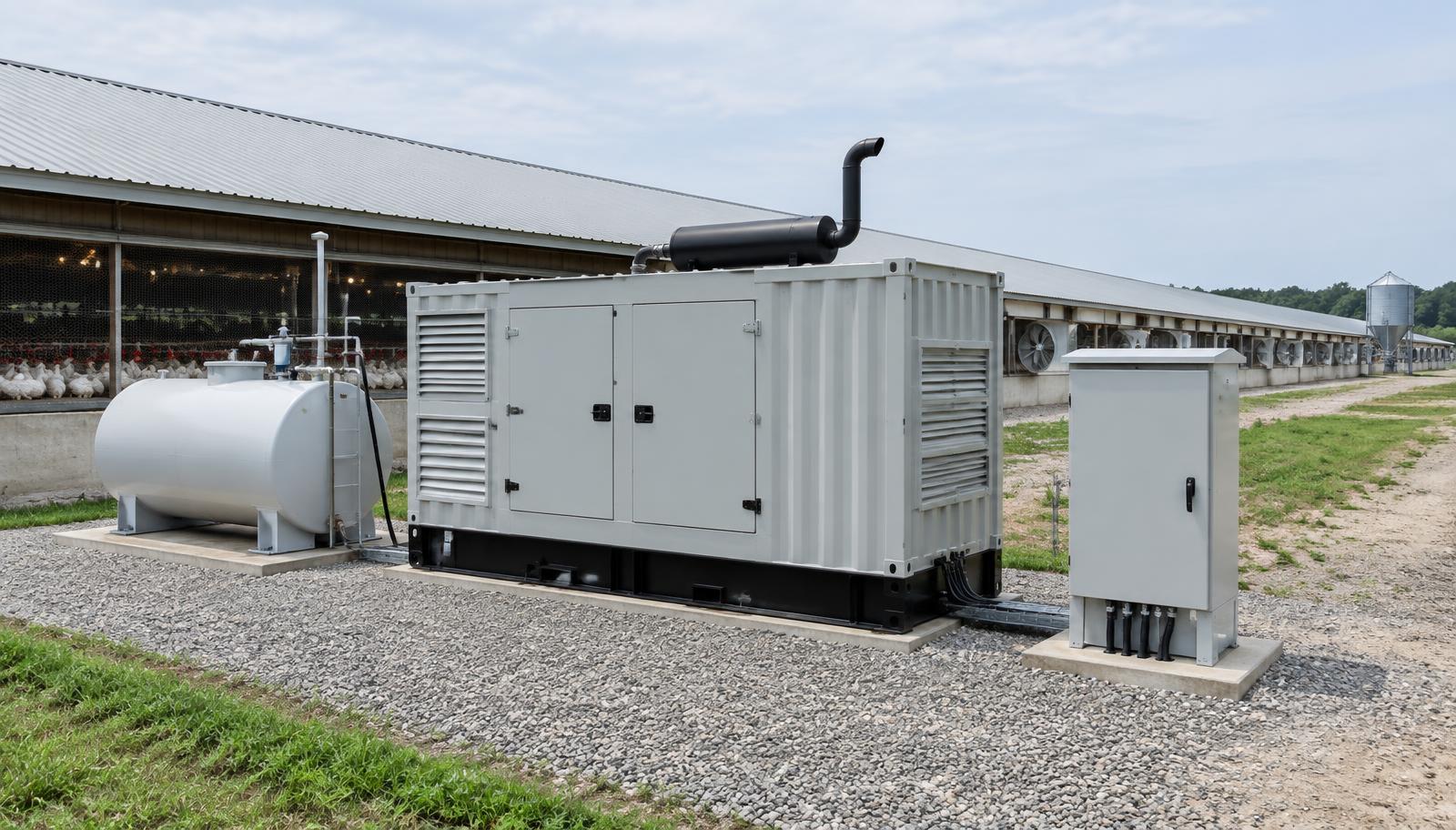
- Power: a closed house depends on ventilation every minute the birds are inside. Specify a generator that can carry the full ventilation and cooling load, an automatic transfer switch, alarms, and a commissioning test under load. See generator for a broiler farm before you accept a generator line priced as an optional extra.
Sizing a farm before you ask for prices
Search questions such as how much capital a 36,000-bird tunnel-ventilated farm needs cannot be answered with one number: the answer depends on house count, construction method, equipment level, site works, power and delivery. Size first, then estimate, then request quotes:
- Fix weekly or per-cycle placements from the offtake plan and convert them into house count with the birds-per-house calculator.
- Check ventilation capacity for the house dimensions with the tunnel ventilation calculator.
- Build a budget range with the farm cost calculator, which is HatchMatch's single source for CAPEX, operating cost and payback estimates.
- Attach those results to the RFQ so every supplier quotes the same basis.
Comparing quotes on the same delivered basis
Offers become comparable only when they reach the same point and cover the same scope:
- Same delivery point: name the farm site, island and nearest port. Ask for prices delivered to site, or ask each supplier to split ex-works or FOB price, freight, insurance and inter-island transport so you can rebuild a delivered figure.
- Duties, taxes and clearance: customs classification, duty, VAT and clearing charges depend on each tariff line. Confirm them with a licensed customs broker and the official sources — the Tariff Commission and the Bureau of Customs — rather than a supplier's estimate. The landed cost calculator shows the structure.
- Same Incoterm, currency and validity date: state them in the RFQ.
- Installation and commissioning: who installs, how many days on site, and which tests prove the house works — static pressure, air speed at bird level, pad wetting, alarm dial-out and generator changeover under load.
- Service and spares: where the nearest service technician is based, which spares are stocked in the country and the warranty start date (delivery, installation or acceptance).
- Training language: English, Filipino or both, written into the scope.
Score the offers with the bid comparison tool once scope gaps have been priced. Treat any performance figure a supplier quotes as a supplier statement until you have checked references in a comparable climate.
Biosecurity and trade risks to manage in the contract
- Disease risk: the WOAH Terrestrial Animal Health Code chapter on biosecurity in poultry production sets out principles for site location, entry control, cleaning and flock separation. Design entry routes, vehicle washing and clean/dirty zones into the layout before equipment is fixed — see poultry farm biosecurity layout.
- Used or demonstration equipment: state that equipment must be new unless you agree otherwise in writing, and that anything previously used on a farm arrives cleaned and disinfected with documentation.
- Packaging and documents: ask suppliers to confirm the packing list, commercial invoice, certificate of origin and any treatment required for wooden crates before shipment, so goods are not held at the port.
- Payment and delivery milestones: tie payments to documents and milestones — order, shipment, arrival and acceptance — rather than to calendar dates alone.
Common mistakes
- Asking for a price per bird before house count, site works and power have been defined.
- Comparing an FOB equipment price with a competitor's delivered and installed price.
- Leaving the generator, water treatment or feed silos out of the scope and buying them later under time pressure.
- Accepting a structure without a stated design wind basis.
- Buying equipment an integrator programme does not accept.
On-page checklist
| Item | Ready when |
|---|---|
| Offtake plan or integrator specification | Written and attached |
| Site, island and nearest port | Named in the RFQ |
| Registration and environmental screening | Responsible person and timeline agreed |
| House count and dimensions | Calculated and attached |
| Ventilation, cooling and controller basis | Stated, with design air speed |
| Structural design wind basis | Stated by each supplier and checked by an engineer |
| Standby power | Full-load generator, transfer switch and load test in scope |
| Delivery basis | Same Incoterm, currency, validity and delivery point |
| Commissioning tests and acceptance | Listed with pass/fail criteria |
| Service, spares, training and warranty | Written into each offer |
How HatchMatch can help
Send your brief through the project request form. Every brief is reviewed by a person before any supplier is contacted, and HatchMatch aims to reply within two business days; supplier response times vary, and suppliers decide whether to respond. Assisted sourcing for farm and equipment projects is for projects of USD 250,000 or more and is free for buyers. HatchMatch's team contacts independent suppliers on your behalf, so you do not need to share your project with every supplier yourself. For wider context see poultry farm equipment in the Philippines and poultry and hatchery projects in the Philippines.
Confirm locally: registration, environmental, building, import and tax requirements depend on the site, the project and current rules. Confirm them with the competent authorities, a licensed engineer and a licensed customs broker. This article is general information, not legal, engineering, tax or veterinary advice.
Sources
- USDA Foreign Agricultural Service — Philippines: Poultry and Products Annual 2025 (GAIN report RP2025-0039) - Bureau of Animal Industry Administrative Circular No. 04, s. 2015 — registration of animal facilities including poultry farms - Bureau of Animal Industry Department Circular No. 06, s. 2017 — revised guidelines on GAHP certification - Department of Agriculture Administrative Order No. 06, s. 2004 — enforcing the Philippine Agricultural Engineering Standards - DENR Environmental Management Bureau — issuance of Environmental Compliance Certificates - WOAH Terrestrial Animal Health Code — chapter 6.5, biosecurity procedures in poultry production - Asian Agribiz — Can regional broiler producers win on a national scale? (August 2024) - National Structural Code of the Philippines (NSCP) 2015, wind load provisions — published by the Association of Structural Engineers of the Philippines. Sources checked 22 October 2026. Rules and forecasts change; check the current official texts before relying on them.
Frequently asked questions
Should the building, generator and silos be in the same quote as the equipment? They do not have to come from one supplier, but they must be in one scope. List them in the RFQ and ask each bidder to mark them as included, excluded or optional, then price the gaps before comparing offers.
What permits does a commercial poultry farm need in the Philippines? Commonly a Bureau of Animal Industry farm registration, environmental screening by the DENR Environmental Management Bureau (an ECC or a certificate of non-coverage, depending on size and location) and a local building permit. Confirm the current requirements for your site with each office.
How do I make a structure typhoon-ready? Ask each supplier to state the design wind basis of the frame, roofing and fixings, and have a licensed structural engineer check it against the National Structural Code of the Philippines for your location. Include doors, fan shutters, pad frames and curtains in that check.
Can HatchMatch tell me what a 36,000-bird farm costs? HatchMatch does not publish fixed prices. Use the farm cost calculator for a budget range based on your own inputs; actual figures come from supplier quotations for your defined scope.
Can I keep my integrator's preferred equipment brand? Yes. Put the integrator's requirements in the RFQ; independent suppliers can then quote equipment that meets them, and you compare like with like.
Does HatchMatch arrange financing? No. HatchMatch does not lend or guarantee financing. A complete brief and comparable quotations are documents lenders usually ask for; any financing depends on the lender's own criteria and approval.
Frequently asked questions
- Should the building, generator and silos be in the same quote as the equipment?
- They do not have to come from one supplier, but they must be in one scope. List them in the RFQ and ask each bidder to mark them as included, excluded or optional, then price the gaps before comparing offers.
- What permits does a commercial poultry farm need in the Philippines?
- Commonly a Bureau of Animal Industry farm registration, environmental screening by the DENR Environmental Management Bureau (an ECC or a certificate of non-coverage, depending on size and location) and a local building permit. Confirm the current requirements for your site with each office.
- How do I make a structure typhoon-ready?
- Ask each supplier to state the design wind basis of the frame, roofing and fixings, and have a licensed structural engineer check it against the National Structural Code of the Philippines for your location. Include doors, fan shutters, pad frames and curtains in that check.
- Can HatchMatch tell me what a 36,000-bird farm costs?
- HatchMatch does not publish fixed prices. Use the farm cost calculator for a budget range based on your own inputs; actual figures come from supplier quotations for your defined scope.
- Can I keep my integrator's preferred equipment brand?
- Yes. Put the integrator's requirements in the RFQ; independent suppliers can then quote equipment that meets them, and you compare like with like.
- Does HatchMatch arrange financing?
- No. HatchMatch does not lend or guarantee financing. A complete brief and comparable quotations are documents lenders usually ask for; any financing depends on the lender's own criteria and approval.
More buyer questions are answered in our poultry procurement FAQ — also available in Español, Français, Português, Deutsch, العربية, Русский, Türkçe, Tiếng Việt.
From this article to a procurement-ready RFQ
HatchMatch Group is an independent sourcing desk — not a manufacturer or EPC contractor. These are the four steps we actually use with commercial poultry and hatchery buyers. If you are still deciding scope, start with what commercial poultry equipment includes and how suppliers are compared.
- 1. Plan the projectCapacity, climate and house layout in one guided workflowOpen
- 2. Build the RFQScope, specifications and comparable line itemsOpen
- 3. Submit the requestReviewed manually before HatchMatch contacts any supplier on the buyer's behalfOpen
- 4. Track and compareFollow status and normalise supplier responsesOpen
Prefer the numbers first? Start with the poultry project cost calculator or browse the project planning guides.
HatchMatch Intelligence · Email updates
Get poultry sourcing and project updates by email
A short digest of newly published HatchMatch articles, guides and center updates on the topics you choose — with links to the full pieces.