
The Cost of Sourcing Alone: How a Wider Procurement Network Helps Poultry Buyers Make Better Decisions

A practical guide to turning a one-off purchase into a structured, buyer-first sourcing decision — comparing suppliers, total cost, delivery, documents and risk together, without promises of savings.
By HatchMatch Group Editorial Desk · Last updated 2026-10-22
In short
Short answer: buying alone, you see only your own contacts, quotes and deadline. A structured, buyer-first process widens the search, puts every offer on one specification and weighs price with delivery, terms, documents and risk. It can improve a decision; it cannot guarantee a lower price, supply or outcome.
Key takeaways
- A layer farm must replace its egg collection system before the next flock.
- Narrow discovery: the shortlist is whoever you know, not who fits best.
- The difference is a method, not a secret supplier list:
- Delivered cost at a named Incoterms® place.
- A wider network — sometimes called collective market intelligence — means more relevant options and shared learning about which questions and terms matter.
Short answer: buying alone, you see only your own contacts, quotes and deadline. A structured, buyer-first process widens the search, puts every offer on one specification and weighs price with delivery, terms, documents and risk. It can improve a decision; it cannot guarantee a lower price, supply or outcome.
Who this is for: commercial poultry and egg procurement teams. HatchMatch coordinates buyer-first sourcing; it is not the manufacturer, producer, seller of record, importer, inspector or carrier, and the buyer decides.
A familiar situation
A layer farm must replace its egg collection system before the next flock. The manager asks two known suppliers and a trade-fair contact. One quote excludes installation, one omits the controller, the third never answers. As placement nears, the lowest headline figure wins, though nobody knows what each includes. (An illustration, not a customer story.)
The blind spots of buying alone
Want these figures for your own site, capacity and country? A HatchMatch specialist builds the budget with you — no buyer fees.
Start free- Narrow discovery: the shortlist is whoever you know, not who fits best.
- Inconsistent specifications: each supplier quotes its own reading.
- Price-only comparison: unit price becomes the only comparable number.
- Hidden landed and lifecycle costs: freight, duties, installation, spares and energy sit outside the quote.
- Follow-up time: questions scatter across emails, chats and calls.
- Supplier continuity: a single source is a single point of failure.
- Documentation gaps: certificates and warranty terms arrive late.
The Chartered Institute of Procurement & Supply (CIPS) draws the same line in its general guidance on strategic sourcing: traditional sourcing chases the lowest unit cost, while strategic sourcing seeks best value and total cost of ownership — procurement, acquisition, usage and end-of-life costs.
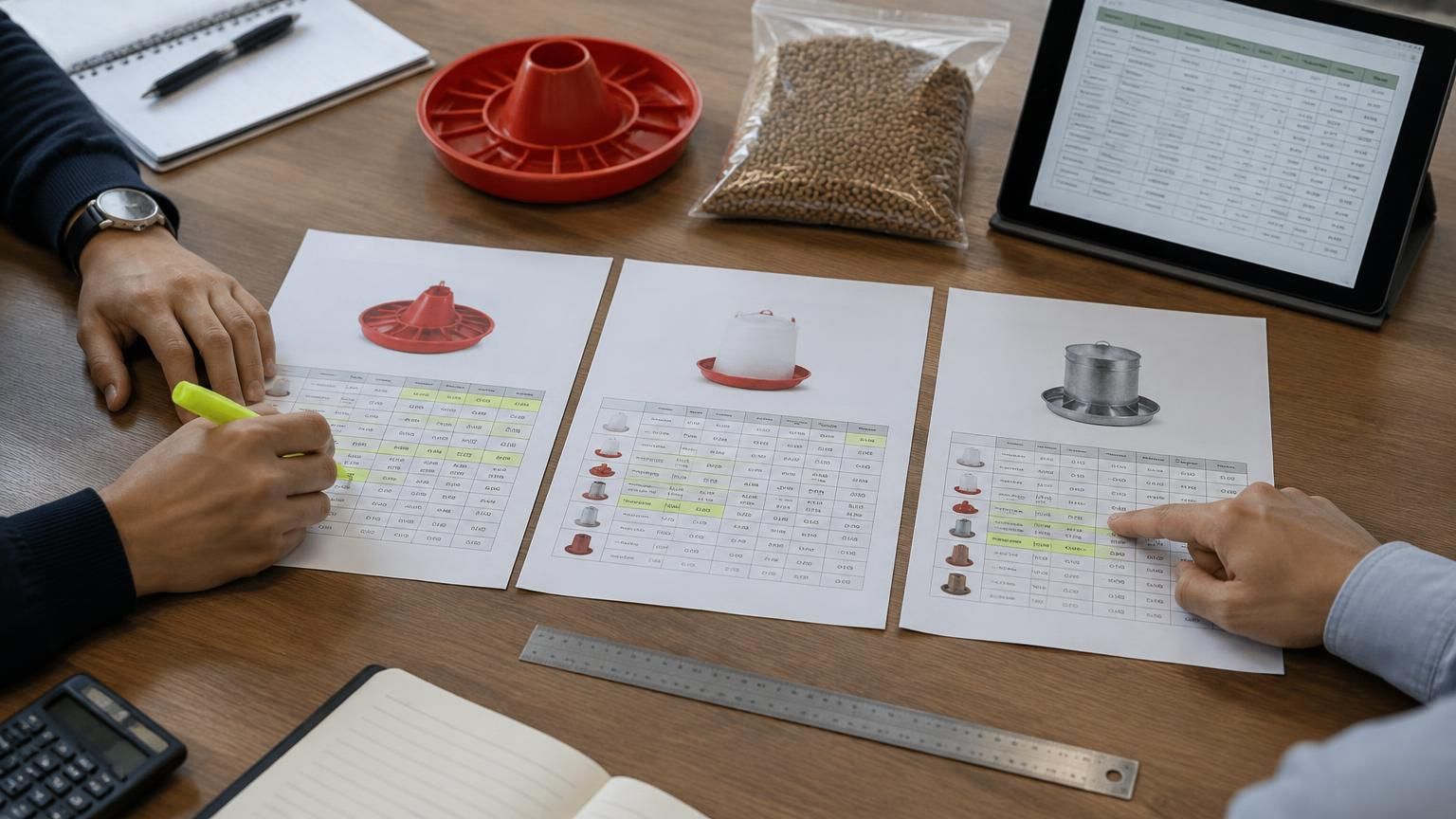
What a structured, buyer-first process adds
The difference is a method, not a secret supplier list:
- A structured RFQ: specification, volume, timing, destination and documents, written once — see the RFQ checklist.
- A broader, relevant search: HatchMatch looks across countries for suppliers that appear to fit; suppliers decide whether to respond.
- Apples-to-apples fields: one requirement and one response format, so exclusions show.
- Comparison beyond price: score offers with the bid comparison tool and the total cost of ownership guide.
- Planning resources: the farm cost calculator, buyer-country research and trade-rule register.
- A workflow you control: one team handles supplier questions; your contact details are shared only with your agreement to a specific introduction.
Technology organises the work, a person reviews every brief, and scale widens the pool. Final offers still need your own validation; HatchMatch facilitates sourcing and makes, produces or operates nothing.
What to compare: a buyer checklist
- Delivered cost at a named Incoterms® place.
- Lead time and fixed dates.
- Minimum order against storage and flock schedule.
- Payment terms.
- Specification fit and exclusions.
- Documents and their issuers.
- Installation, spare parts and service.
- Biosecurity, welfare and traceability needs.
- Supplier continuity.
- Open risks, written down.
| Decision factor | A one-off buying process may miss | A structured sourcing process can compare |
|---|---|---|
| Supplier pool | Suppliers beyond existing contacts | A wider set of relevant suppliers |
| Specification | Different capacity bases and exclusions | One specification, one response format |
| Price | Freight, duties and installation | Delivered cost on a named Incoterms® basis |
| Lifecycle cost | Energy, spare parts and downtime | Usage and end-of-life costs |
| Lead time and minimum order | Fit with the flock schedule | Dates and order sizes side by side |
| Payment terms | Advance-payment risk | Payment structures before shipment |
| Documents | Papers requested too late | Required documents checked per offer |
| Service and continuity | Local service and back-up supply | Service footprint and continuity |
| Risk | Unwritten assumptions | Open risks recorded before deciding |
Example: a poultry farm comparing feed supply
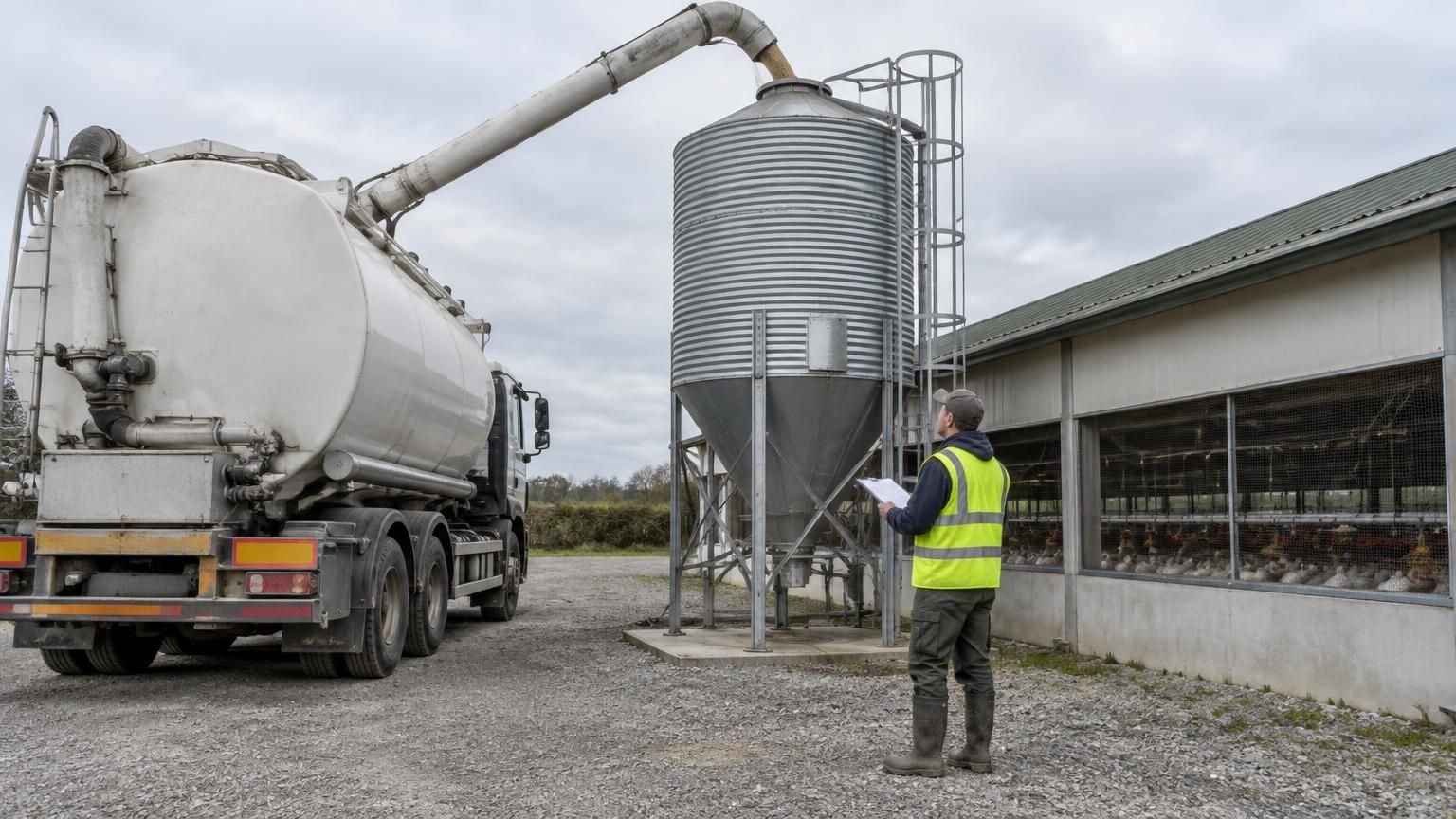
Feed affects flock health, food safety and costs, so price per tonne alone is weak. Compare:
- formulation or specification, as set by your nutritionist;
- ingredient and nutritional documentation;
- batch and traceability information, where available;
- delivery reliability and fit with silo capacity;
- storage and handling: bulk or bagged, shelf life, moisture and pest protection;
- minimum order, freight and delivered cost.
The FAO and IFIF manual Good Practices for the Feed Industry explains how to apply the Codex Code of Practice on Good Animal Feeding (CAC/RCP 54-2004), covering food safety from feed procurement to distribution. The WOAH chapter on hazards in animal feed treats those stages as relevant to animal and public health. This general guidance endorses no supplier, product or platform.
A qualified nutritionist or veterinarian should validate suitability, and your regulator local rules; this article gives no veterinary or formulation advice. Commercial compound feed is sourced through our sister platform FeedMatch Group; HatchMatch covers on-farm feed mill projects. The same discipline applies to aquaculture — see the FishMatch procurement edition.
What a wider sourcing network can — and cannot — do
A wider network — sometimes called collective market intelligence — means more relevant options and shared learning about which questions and terms matter. It helps only when information is current, comparable and gathered lawfully, with permission and without exposing confidential terms.
It guarantees no better price or outcome. This article relies on no proprietary dataset of buyers' quotations; site market data is dated context, not live prices.
Limits you should know
Where HatchMatch pre-screens a supplier, it is a desk review of company details, stated export markets and references — not an on-site audit, product inspection, laboratory test or certification. Suppliers confirm availability, prices and delivery per RFQ; you contract directly with your chosen supplier.
Next step: send a structured RFQ
Use the project request form for farm, hatchery, housing, processing or equipment projects, or the poultry and egg sourcing request for product programmes. Assisted sourcing is free for buyers, for commercial requests of USD 250,000 or more (project value or total programme value). A person reviews every brief and HatchMatch aims to reply within two business days; supplier response times vary. You decide whether to proceed.
Smaller purchases can use the free tools in the Knowledge Center. See also how it works, the sourcing framework and why the cheapest equipment quote often costs more.
Sources
- CIPS — Total cost of ownership - CIPS — Strategic sourcing - FAO and IFIF — Good Practices for the Feed Industry (2010) - Codex Alimentarius — Code of Practice on Good Animal Feeding (CAC/RCP 54-2004) - WOAH Terrestrial Animal Health Code — Control of hazards of animal health and public health importance in animal feed These organisations publish general guidance; none of them reviews, certifies or endorses HatchMatch. Sources checked 22 October 2026.
Frequently asked questions
What is the cost of sourcing alone? Usually a narrower view, not a fee: fewer relevant suppliers, incomparable quotes and costs outside the price.
What is the difference between strategic sourcing and buying alone? Buying alone compares whichever offers arrive, often on unit price; strategic sourcing seeks best value and total cost.
What should I compare besides price when choosing a poultry supplier? Delivered cost, lead time, minimum order, payment terms, specification fit, documents, service, supplier continuity and open risks.
Does a wider supplier network guarantee a lower price? No. Suppliers set price, availability and delivery; no outcome or number of offers is guaranteed.
Does HatchMatch verify or certify suppliers? No. Any pre-screen is a desk review, not an on-site audit, product inspection or certification. Check certificates with the body that issued them.
Can HatchMatch help me choose poultry feed? It gives no formulation or veterinary advice; commercial feed sourcing belongs to sister platform FeedMatch Group.
*Images: editorial illustrations; they do not show a real HatchMatch customer, supplier, product or quotation.*
Frequently asked questions
- What is the cost of sourcing alone?
- Usually a narrower view, not a fee: fewer relevant suppliers, incomparable quotes and costs outside the price.
- What is the difference between strategic sourcing and buying alone?
- Buying alone compares whichever offers arrive, often on unit price; strategic sourcing seeks best value and total cost.
- What should I compare besides price when choosing a poultry supplier?
- Delivered cost, lead time, minimum order, payment terms, specification fit, documents, service, supplier continuity and open risks.
- Does a wider supplier network guarantee a lower price?
- No. Suppliers set price, availability and delivery; no outcome or number of offers is guaranteed.
- Does HatchMatch verify or certify suppliers?
- No. Any pre-screen is a desk review, not an on-site audit, product inspection or certification. Check certificates with the body that issued them.
- Can HatchMatch help me choose poultry feed?
- It gives no formulation or veterinary advice; commercial feed sourcing belongs to sister platform FeedMatch Group.
More buyer questions are answered in our poultry procurement FAQ — also available in Español, Français, Português, Deutsch, العربية, Русский, Türkçe, Tiếng Việt.
From this article to a procurement-ready RFQ
HatchMatch Group is an independent sourcing desk — not a manufacturer or EPC contractor. These are the four steps we actually use with commercial poultry and hatchery buyers. If you are still deciding scope, start with what commercial poultry equipment includes and how suppliers are compared.
- 1. Plan the projectCapacity, climate and house layout in one guided workflowOpen
- 2. Build the RFQScope, specifications and comparable line itemsOpen
- 3. Submit the requestReviewed manually before HatchMatch contacts any supplier on the buyer's behalfOpen
- 4. Track and compareFollow status and normalise supplier responsesOpen
Prefer the numbers first? Start with the poultry project cost calculator or browse the project planning guides.
HatchMatch Intelligence · Email updates
Get poultry sourcing and project updates by email
A short digest of newly published HatchMatch articles, guides and center updates on the topics you choose — with links to the full pieces.