
Poultry Project Procurement Guide for Owners, CEOs and CFOs
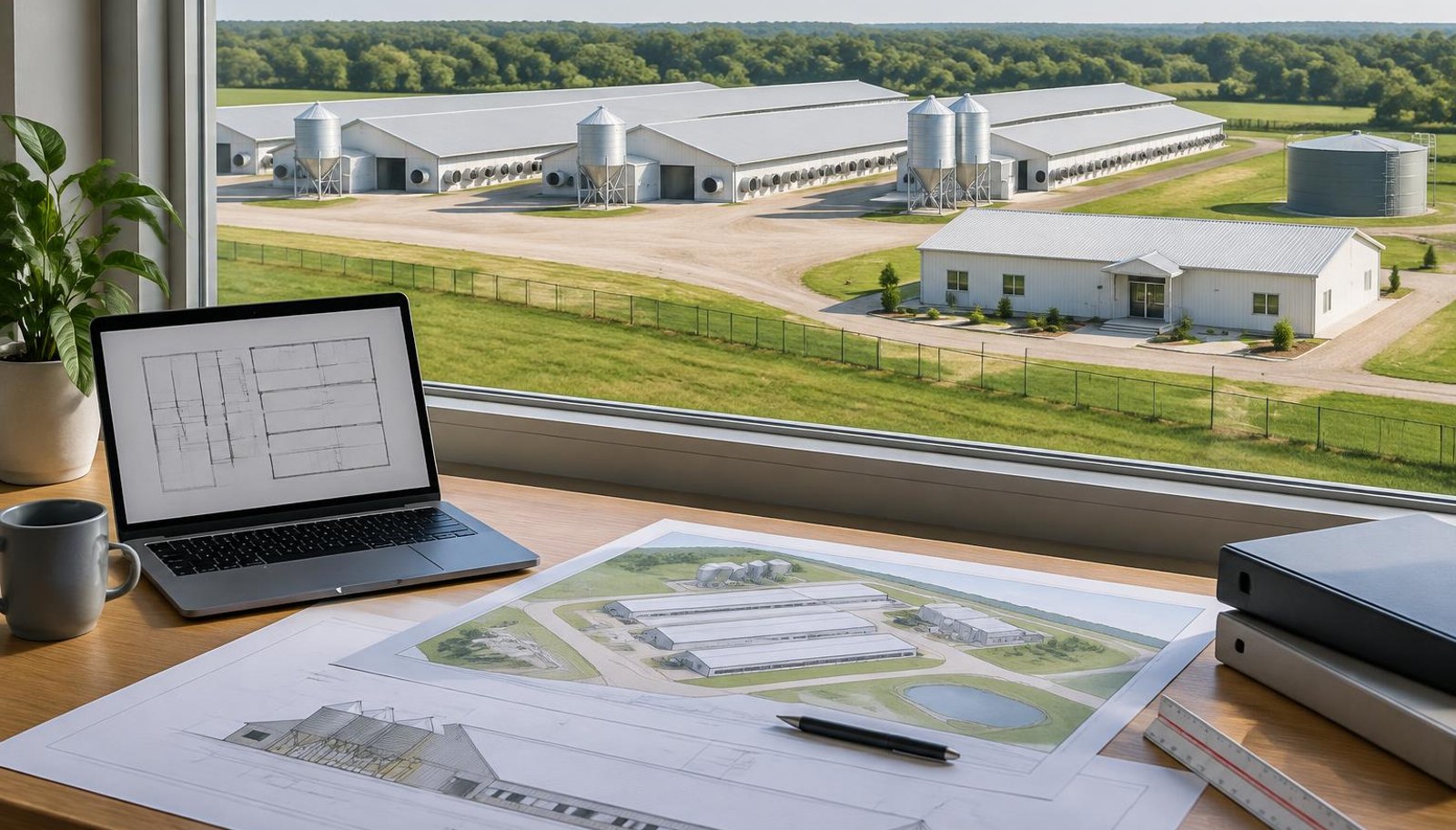
An executive decision framework for complete poultry houses, hatcheries and integrated systems: define the requirement, test provider fit and make the risks visible before committing.
By HatchMatch Group · Last updated 2026-11-17
In short
Use this sheet to compare proposals against the same brief, not to certify a vendor. Record evidence, a responsible reviewer and each unresolved condition. An unknown remains unknown; a favourable price cannot offset an unmet mandatory requirement.
Key takeaways
- For senior procurement leaders, a poultry project is an operating system: buildings, birds, machinery, utilities, people and local obligations must work together.
- Specify output units and timing: chicks per week, broilers per placement, saleable eggs per day or processed birds per net operating hour.
- Define clean and dirty zones, people and vehicle routes, hatchery flows, cleaning access and waste handling before freezing layouts.
- Suitable means suitable for this scope and destination.
- Total cost of ownership includes acquisition, installation, operation, maintenance and eventual replacement over a defined period.
Download the one-page executive scorecard (PDF) · Prepare your poultry project RFQ
Use this sheet to compare proposals against the same brief, not to certify a vendor. Record evidence, a responsible reviewer and each unresolved condition. An unknown remains unknown; a favourable price cannot offset an unmet mandatory requirement.
Executive takeaway: a suitable provider is one whose documented scope, technical capability, commercial terms and support fit your project—not simply the lowest-priced bidder. Reduce avoidable sourcing cost by defining the same requirement for every proposal, exposing exclusions and comparing whole-life cost. Manage risk through explicit responsibilities, local professional checks and agreed acceptance evidence before signing.
Start with the investment decision, not a catalogue
For senior procurement leaders, a poultry project is an operating system: buildings, birds, machinery, utilities, people and local obligations must work together. Separate mandatory requirements from preferences. Agree what the business needs to produce, the site constraints, available resources and who has authority to approve changes. A cheaper component can become an expensive choice when it creates an unresolved interface or cannot be serviced locally.
Want these figures for your own site, capacity and country? A HatchMatch specialist builds the budget with you — no buyer fees.
Start freeUse the poultry project planner to organize the brief and the project hub to identify relevant planning resources. Keep the approval decision distinct from exploratory calculations; neither a tool output nor a supplier brochure establishes an engineered design.
Define capacity and the local operating envelope
Specify output units and timing: chicks per week, broilers per placement, saleable eggs per day or processed birds per net operating hour. Record peak demand, flock cycles, cleaning windows and expansion phases. Hatchery, farm and processing capacities must use compatible assumptions rather than matching headline machine ratings. Use the hatchery capacity calculator to explore your inputs, then ask the provider to explain the proposed equipment configuration.
Set requirements by package
Complete broiler houses require building dimensions, structural responsibilities, feeding, drinking and climate interfaces. Layer systems need housing choice, egg collection, manure management and packing compatibility. Hatchery equipment must fit egg storage, incubation schedules, HVAC and chick handling. Processing equipment needs product mix, sanitation, chilling and waste arrangements. Automation needs sensor coverage, alarm escalation, data access and manual fallback—not merely a controller brand.
State site-specific climate data, water quality, power quality, access and workforce capability. The ventilation calculator and water-demand calculator help structure preliminary questions; qualified designers must validate the actual installation. For refurbishment, supply measured building conditions and document any operating restrictions.
Make biosecurity, utilities and compliance procurement inputs
Define clean and dirty zones, people and vehicle routes, hatchery flows, cleaning access and waste handling before freezing layouts. Ask a qualified veterinarian and the relevant authority to review applicable animal-health requirements. Equipment selection alone does not establish biosecurity, welfare or compliance.
Create a utility responsibility matrix covering electrical connection, standby power, water treatment, heating, ventilation, drainage and wastewater. Assign every connection and boundary to a named project role. Use the regulatory register as a starting point and read the responsibility statement; check current destination-specific rules with competent advisers. This article is procurement guidance, not legal, veterinary or engineering advice.
Compare provider capability with evidence
Suitable means suitable for this scope and destination. Ask for drawings, equipment schedules, design assumptions, relevant project references you are authorized to verify, commissioning plans and service arrangements. Distinguish a manufacturer's supply package from a contractor's installation or EPC scope. Confirm who employs the engineers, who manages subcontractors and who takes responsibility for each interface.
The provider-comparison guide helps organize evaluation questions. Record evidence received, unresolved questions and exclusions in a common comparison sheet. A reference, certificate or performance claim remains a claim until checked with its source and against your application. Do not treat inclusion in research material as certification or supplier verification.
Compare total cost of ownership on one basis
Total cost of ownership includes acquisition, installation, operation, maintenance and eventual replacement over a defined period. Normalize proposals for currency, tax treatment, Incoterm, installation scope and capacity assumptions. Separate freight, duties, civil works, utility upgrades, commissioning, training, spares and recurring software fees. Request the missing amounts rather than filling gaps with optimistic estimates.
Use the farm-cost calculator for input-based budget scenarios, not market quotations or promised returns. Compare energy and service assumptions over the same horizon, with your own tariffs and operating schedule. Test uncertain inputs separately. No general savings percentage is defensible without comparable scope, reliable cost evidence and a stated baseline.
Reduce rework before negotiating price
Freeze a version-controlled brief, require an inclusion/exclusion response and log clarifications once for all comparable proposals. Resolve duplicated packages and unassigned connections early. Negotiate against the clarified scope: a discount that removes necessary installation or training is not an equivalent offer. Keep a documented change-control process after award.
Plan delivery, acceptance and lifecycle support
Assign the importer, customs adviser, transport provider, unloading party and installation supervisor. Confirm packaging, storage conditions, site access and permit dependencies. Incoterms allocate particular delivery obligations; they do not replace a complete contract. HatchMatch does not transport equipment, clear customs or obtain permits for buyers.
Agree factory and site acceptance procedures where appropriate, including test conditions, instrumentation, records and authorized sign-off. Align payment milestones with identifiable deliverables and have counsel review remedies, warranty limits and governing law. Evaluate spare-part availability claims, maintenance schedules, training language, remote-access permissions and support after warranty. Log unresolved risks with owners and decision dates; do not turn unknowns into a confident green score.
Practical executive procurement checklist
- Define output, peak capacity, phases and assumptions.
- Attach site, climate, building and utility evidence.
- Describe broiler, layer, hatchery, processing and automation scope as applicable.
- Assign biosecurity, compliance and interface responsibilities.
- Request one response format with exclusions and supporting evidence.
- Normalize whole-life costs and commercial conditions.
- Confirm logistics, acceptance, payments, training and support.
- Record unresolved risks and authorize the next decision gate.
How HatchMatch supports the workflow
HatchMatch Group is a supplier-neutral sourcing coordinator, not a builder, equipment manufacturer, certifier or lender. Its procurement methodology supports scope-first evaluation: buyers prepare a brief, a person reviews it, the team contacts appropriate independent providers on the buyer's behalf, and received responses are organized through HatchMatch. Providers decide whether to respond; the buyer decides whether to contract. Independent providers deliver the agreed project.
Buyer tools and the buyer sourcing service are free for buyers. Assisted infrastructure and equipment sourcing is intended for projects of USD 250,000 or more. Use the practical RFQ checklist, retain your assumptions and request a poultry project quote. Every brief receives human review; provider participation, proposal numbers, prices, approvals, delivery dates and performance are not guaranteed.
Other editions: Español · Français · Русский · العربية
CEO and CFO decision gates
Owners and CEOs should approve the production requirement and nominate the person responsible for system integration. The CFO should challenge the financial comparison: which costs are evidenced, which remain allowances, and which depend on local tariffs or utilisation? Operations should confirm staffing, cleaning access and maintenance capability. Engineering should review utility and capacity assumptions with qualified local specialists. These are complementary approvals, not a score that allows a commercial advantage to cancel a technical failure.
Use a three-gate recommendation: proceed when the mandatory evidence is sufficient; clarify when a defined question can be answered; pause when an essential condition is unresolved. Keep an evidence reference and reviewer beside each gate. For a production line, compare throughput over net operating hours after cleaning and planned stops, then check upstream and downstream bottlenecks. A proposal for poultry farm equipment should specify the complete operating package rather than a collection of attractive components. Searches for equipment for sale or manufacturers can identify research candidates, but they do not establish project fit, commercial availability or qualification.
Download the one-page executive scorecard (PDF) · Prepare your poultry project RFQ
Frequently asked questions
How do I identify a suitable poultry project provider? Match documented scope, design capability, installation responsibilities and service arrangements to your production plan and destination; investigate evidence and unresolved exclusions before contracting.
Is the cheapest equipment quote the best value? Not necessarily. Compare equivalent capacity, installation scope and whole-life cost; a lower initial price may omit necessary works or support, but a higher price is not proof of suitability either.
Should I choose turnkey delivery or separate packages? Choose according to your team's ability to manage interfaces. A turnkey contract still needs explicit exclusions and acceptance requirements; separate packages need clear responsibility for integration.
Can calculators replace engineering or commercial quotations? No. They organize input-based scenarios and planning questions. Qualified designers must validate the installation, and current proposals must establish actual prices and contractual scope.
Does HatchMatch verify or guarantee suppliers? No blanket verification or guarantee is offered. The team reviews the buyer's brief and coordinates sourcing; capability, compliance and contract evidence require project-specific checks.
What should I prepare before requesting a quote? Bring your location, output and capacity assumptions, site and utility information, required systems, budget range and timing constraints. Explain unknowns so they can be reviewed rather than silently assumed.
Frequently asked questions
- How do I identify a suitable poultry project provider?
- Match documented scope, design capability, installation responsibilities and service arrangements to your production plan and destination; investigate evidence and unresolved exclusions before contracting.
- Is the cheapest equipment quote the best value?
- Not necessarily. Compare equivalent capacity, installation scope and whole-life cost; a lower initial price may omit necessary works or support, but a higher price is not proof of suitability either.
- Should I choose turnkey delivery or separate packages?
- Choose according to your team's ability to manage interfaces. A turnkey contract still needs explicit exclusions and acceptance requirements; separate packages need clear responsibility for integration.
- Can calculators replace engineering or commercial quotations?
- No. They organize input-based scenarios and planning questions. Qualified designers must validate the installation, and current proposals must establish actual prices and contractual scope.
- Does HatchMatch verify or guarantee suppliers?
- No blanket verification or guarantee is offered. The team reviews the buyer's brief and coordinates sourcing; capability, compliance and contract evidence require project-specific checks.
- What should I prepare before requesting a quote?
- Bring your location, output and capacity assumptions, site and utility information, required systems, budget range and timing constraints. Explain unknowns so they can be reviewed rather than silently assumed.
More buyer questions are answered in our poultry procurement FAQ — also available in Español, Français, Português, Deutsch, العربية, Русский, Türkçe, Tiếng Việt.
From this article to a procurement-ready RFQ
HatchMatch Group is an independent sourcing desk — not a manufacturer or EPC contractor. These are the four steps we actually use with commercial poultry and hatchery buyers. If you are still deciding scope, start with what commercial poultry equipment includes and how suppliers are compared.
- 1. Plan the projectCapacity, climate and house layout in one guided workflowOpen
- 2. Build the RFQScope, specifications and comparable line itemsOpen
- 3. Submit the requestReviewed manually before HatchMatch contacts any supplier on the buyer's behalfOpen
- 4. Track and compareFollow status and normalise supplier responsesOpen
Prefer the numbers first? Start with the poultry project cost calculator or browse the project planning guides.
HatchMatch Intelligence · Email updates
Get poultry sourcing and project updates by email
A short digest of newly published HatchMatch articles, guides and center updates on the topics you choose — with links to the full pieces.