
Poultry Project Planning: House Design, Climate, Ventilation and Automation
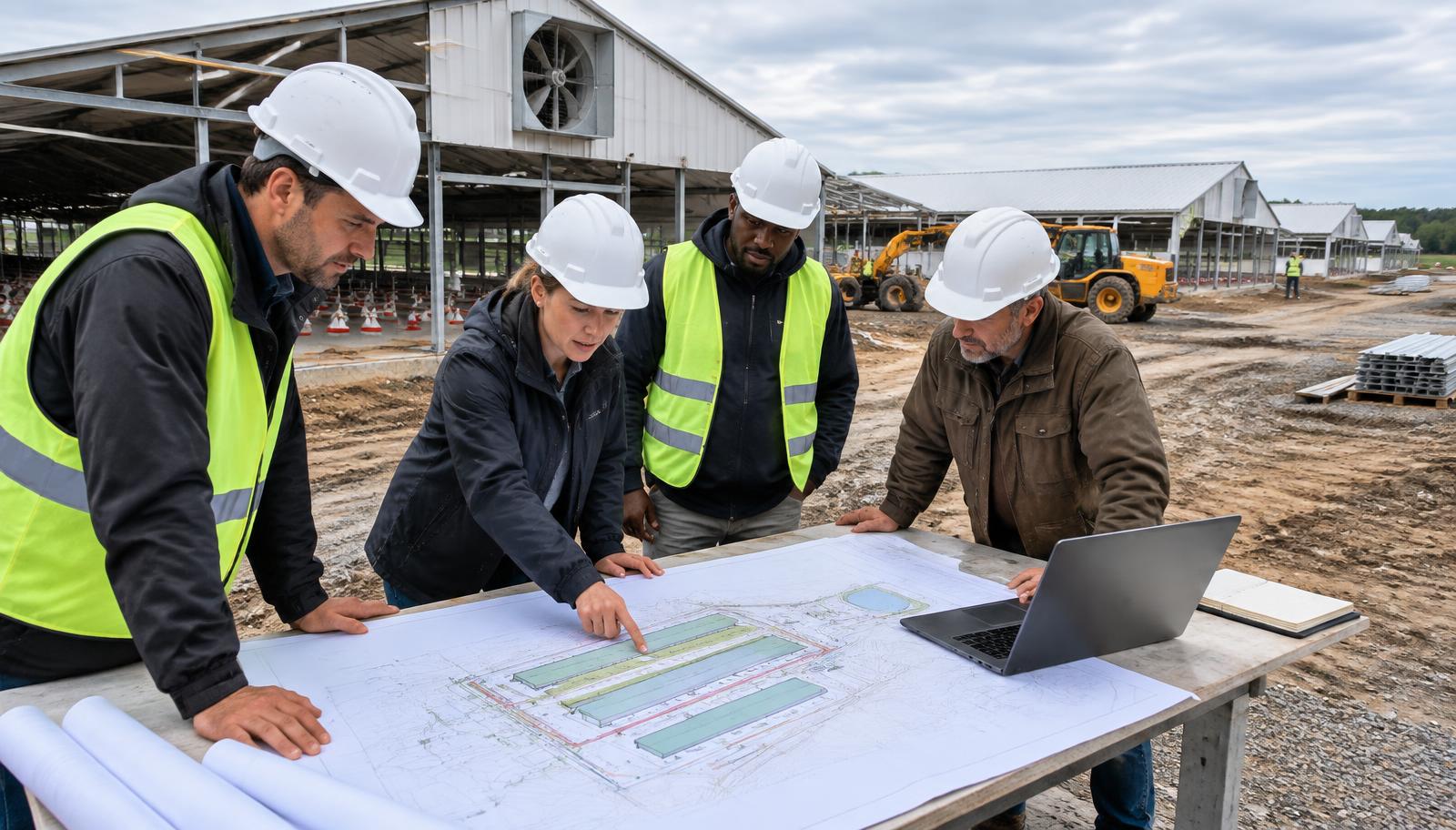
Before you price equipment, fix the four decisions that drive everything else: house design, climate specification, ventilation strategy and automation depth. This guide walks through each one for commercial broiler, layer and breeder projects.
By HatchMatch Group Sourcing Desk · Last updated 2026-09-03
In short
Short answer. Commercial poultry projects run over budget when equipment is priced before four design decisions are fixed: house design (footprint, orientation, structure), climate specification (design temperatures, humidity, altitude), ventilation and cooling strategy, and automation depth. Settle these in that order, write them into one specification, and every supplier will be quoting the same project — which is what makes quotations comparable.
Key takeaways
- House geometry sets your stocking capacity, your airflow pattern and a large share of your civil cost.
- Suppliers quote to a climate specification.
- Ventilation is the highest-stakes system in a modern poultry house.
- Automation is where quote comparison breaks down most often, because suppliers scope it differently.
- Once design, climate, ventilation and automation are fixed on paper, costing becomes straightforward.
Short answer. Commercial poultry projects run over budget when equipment is priced before four design decisions are fixed: house design (footprint, orientation, structure), climate specification (design temperatures, humidity, altitude), ventilation and cooling strategy, and automation depth. Settle these in that order, write them into one specification, and every supplier will be quoting the same project — which is what makes quotations comparable.
Most poultry projects that run over budget did not fail at procurement — they failed at planning. The equipment list was written before the house design was settled, the climate was underspecified, or the ventilation and automation scope changed after quotes were issued. This guide fixes the order: decide the design fundamentals first, then price against them.
HatchMatch is an independent procurement resource, not a manufacturer or EPC contractor. Everything below is vendor-neutral planning guidance you can take to any supplier — or bring to us and we will help you turn it into a comparable RFQ.
1. House design: footprint, orientation and structure
House geometry sets your stocking capacity, your airflow pattern and a large share of your civil cost. For tunnel-ventilated broiler and layer houses, the practical width band is roughly 12–18 m; wider houses reduce wall cost per bird place but demand more from the ventilation design. Length is driven by target capacity and flock-to-flock logistics — many commercial houses run 80–120 m.
Want these figures for your own site, capacity and country? A HatchMatch specialist builds the budget with you — no buyer fees.
Start freeOrientation matters more than most buyers expect. In hot climates, orienting the ridge east–west reduces solar load on the long sidewalls; in cold climates, sidewall insulation and airtightness dominate instead. Decide ceiling type (flat vs. pitched with a smooth underside), floor (concrete, sloped to drains) and biosecurity layout (anteroom, clean/dirty separation) before you ask for steel quotes — each one changes the structural scope.
Plan the site, not just the house: house spacing for airflow and disease breaks, feed silo access, manure handling route, water storage and the generator pad all belong in the layout drawing that goes into your RFQ.
2. Climate: specify the environment you are building for
Suppliers quote to a climate specification. 'Hot country' is not a specification — design maximum temperature, design minimum temperature, relative humidity range and altitude are. A house designed for 35 °C peaks behaves very differently from one designed for 42 °C with high humidity, and the equipment delta (fan count, pad area, insulation value) is exactly where budgets drift.
Write down your local design conditions before requesting quotes. If you are unsure, use the nearest meteorological station data for the warmest and coldest weeks of a typical year. This single page of numbers makes supplier quotes comparable, because every bidder is solving the same problem.
3. Ventilation and cooling: the performance core
Ventilation is the highest-stakes system in a modern poultry house. In warm climates the standard is tunnel ventilation: high-capacity exhaust fans at one end, evaporative cooling pads at the other, and airspeed across the birds providing wind-chill. Minimum ventilation for cold weather is a separate mode with its own inlet and fan logic — a common planning error is sizing only for summer.
As a planning reference, hot-climate broiler houses are often designed around airspeeds in the 2.5–3.5 m/s range with pad area matched to fan capacity and local humidity. Treat these as orientation values, not a specification: final sizing depends on bird type, target weight, stocking density and your climate data. Model your own numbers with the ventilation calculator and cooling calculator, and check density assumptions with the bird density calculator.
4. Automation: decide the depth before you compare quotes
Automation is where quote comparison breaks down most often, because suppliers scope it differently. Define the level you actually want: (1) basic — feeding, drinking and a simple climate controller; (2) managed — climate computer with alarm dialler, feed and water consumption logging, light programs; (3) integrated — sensor-based control, remote monitoring, data export to flock-management software.
Each level changes labour cost, error rates and what a power failure means. Whatever level you choose, size backup power to run ventilation and drinking under full load and specify an alarm that reaches a human — this is the non-negotiable layer of any automation package.
5. From plan to numbers: CAPEX and OPEX
Once design, climate, ventilation and automation are fixed on paper, costing becomes straightforward. Walk through bird type, capacity, climate and layout in the poultry project cost estimator for a planning-grade CAPEX and OPEX band, then refine with the farm cost calculator and OPEX calculator.
Remember that feed and feed conversion dominate operating cost in any meat or egg project — the feed consumption calculator is usually the most important OPEX model you will run.
How do I turn this plan into an RFQ suppliers can quote?
Convert each section above into a line in your RFQ: house dimensions and orientation, climate design conditions, ventilation mode and target airspeed, automation level, plus utilities (power, water) and timeline. The poultry RFQ template and project checklist structure exactly this handoff, and the project quote form walks you through it step by step.
What is the right house size for my flock?
Start from target live weight and local stocking-density norms, not from a house size a supplier happens to stock. The house sizing calculator converts bird capacity into floor area and house count so you can sanity-check any proposal you receive.
How much automation does a commercial farm really need?
Enough to remove routine error, not enough to create dependency you cannot service locally. A climate computer with alarms and consumption logging pays back in almost every market; full sensor integration pays back where skilled labour is scarce or remote oversight is required. Decide based on your operating reality, then hold every bidder to the same level.
What can change the budget the most after planning?
Local civil and labour cost, imported versus locally made equipment (freight and duty), climate specification, house geometry and automation depth. That is why these five decisions belong before procurement, not during it.
Next step
If your project is a commercial build in the USD 250k+ range, send your plan — bird type, capacity, country, climate notes and house layout — through the project quote form. HatchMatch reviews it, structures it into a comparable RFQ and introduces you to qualified suppliers. We never connect buyers to suppliers automatically, and we never claim to manufacture equipment ourselves.
FAQ
What is the most common poultry project planning mistake? Specifying equipment before fixing house design, climate design conditions, ventilation strategy and automation depth — each later decision changes earlier quotes and makes supplier bids impossible to compare.
What climate information do suppliers need? Design maximum and minimum temperature, relative humidity range and altitude for the site, not a general description such as "hot country" — this is what makes every supplier bid to the same problem.
What ventilation airspeed should I plan for? As an orientation value, hot-climate broiler houses are often designed around 2.5–3.5 m/s airspeed with pad area matched to fan capacity, though final sizing depends on bird type, weight target, density and local climate data.
How much automation does a commercial farm need? Enough to remove routine error without creating dependency you cannot service locally — a climate computer with alarms and consumption logging pays back in most markets, while full sensor integration suits markets where skilled labour is scarce.
FAQ
What is the most common planning mistake in poultry projects? Specifying equipment before the house design, design climate, ventilation strategy and automation level are fixed — each later decision changes earlier quotations and makes supplier offers impossible to compare.
What climate information do suppliers need? Maximum and minimum design temperature, relative humidity range and site altitude, not a general description such as "hot country" — that is what lets every supplier price the same problem.
What air speed should ventilation be designed for? As a planning reference, hot-climate broiler houses are often designed around 2.5–3.5 m/s with pad area matched to fan capacity, but final sizing depends on bird type, target weight, density and local climate data.
How much automation does a commercial farm need? Enough to remove routine error without creating a dependency you cannot service locally — a climate controller with alarms and consumption logging pays back in most markets, while full sensor integration suits markets where skilled labour is scarce.
Frequently asked questions
- What is the most common poultry project planning mistake?
- Specifying equipment before fixing house design, climate design conditions, ventilation strategy and automation depth — each later decision changes earlier quotes and makes supplier bids impossible to compare.
- What climate information do suppliers need?
- Design maximum and minimum temperature, relative humidity range and altitude for the site, not a general description such as "hot country" — this is what makes every supplier bid to the same problem.
- What ventilation airspeed should I plan for?
- As an orientation value, hot-climate broiler houses are often designed around 2.5–3.5 m/s airspeed with pad area matched to fan capacity, though final sizing depends on bird type, weight target, density and local climate data.
- How much automation does a commercial farm need?
- Enough to remove routine error without creating dependency you cannot service locally — a climate computer with alarms and consumption logging pays back in most markets, while full sensor integration suits markets where skilled labour is scarce.
More buyer questions are answered in our poultry procurement FAQ — also available in Español, Français, Português, Deutsch, العربية, Русский, Türkçe, Tiếng Việt.
From this article to a procurement-ready RFQ
HatchMatch Group is an independent sourcing desk — not a manufacturer or EPC contractor. These are the four steps we actually use with commercial poultry and hatchery buyers. If you are still deciding scope, start with what commercial poultry equipment includes and how suppliers are compared.
- 1. Plan the projectCapacity, climate and house layout in one guided workflowOpen
- 2. Build the RFQScope, specifications and comparable line itemsOpen
- 3. Submit the requestReviewed manually before HatchMatch contacts any supplier on the buyer's behalfOpen
- 4. Track and compareFollow status and normalise supplier responsesOpen
Prefer the numbers first? Start with the poultry project cost calculator or browse the project planning guides.
Blog · Email updates
Get updates
Choose the reading that matters to your project.
Email subscriptions are not available yet.