
Why HatchMatch Is the Next-Generation Marketplace for Hatchery and Poultry Project Procurement
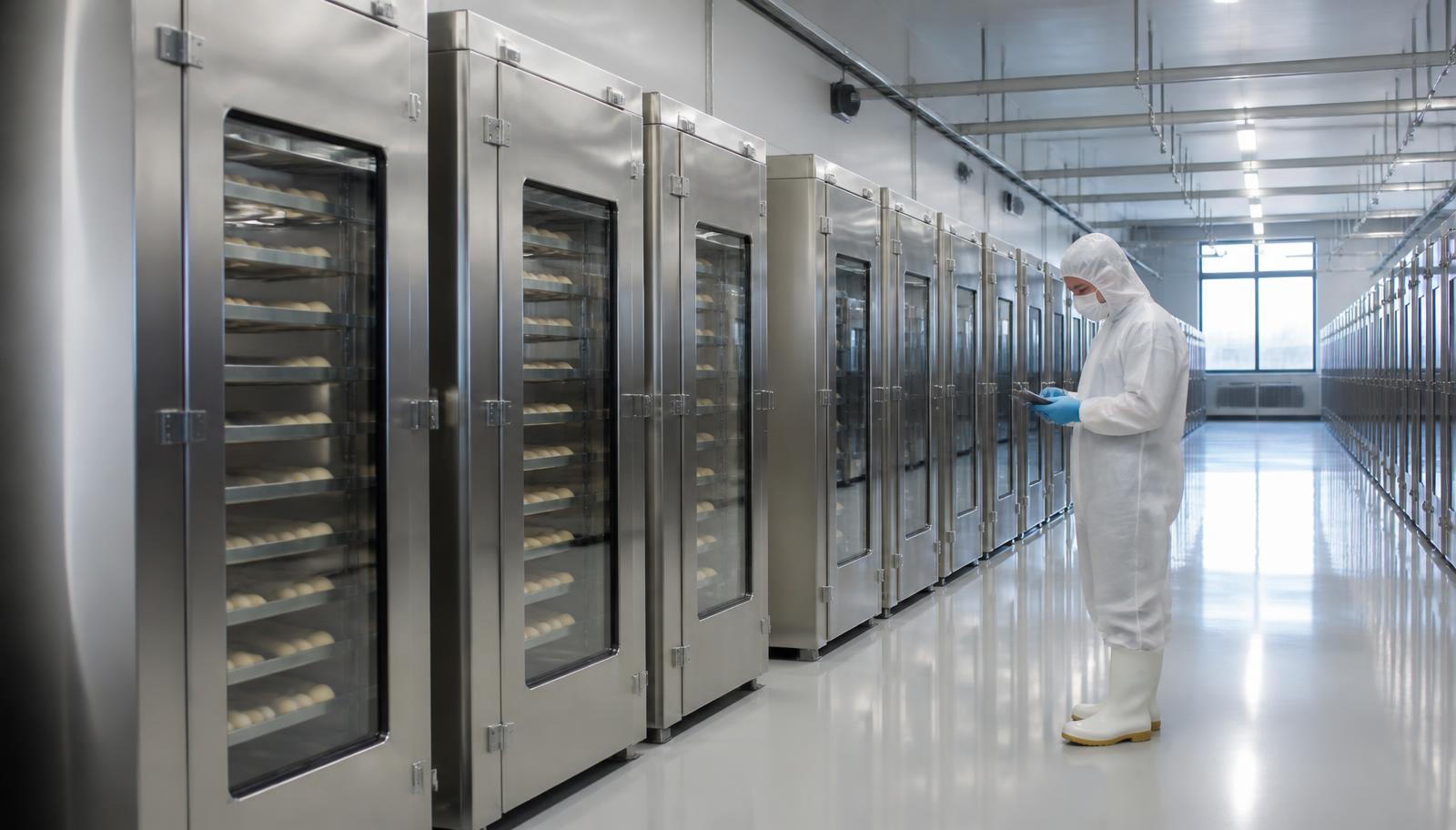
Generic B2B marketplaces sell products. Hatchery and poultry buyers are buying projects — eggs per week, bird type, climate, biosecurity, energy cost and expansion room. This article explains how HatchMatch structures the requirement first, then matches it to pre-screened manufacturers, and why that produces better outcomes for buyers and better RFQs for suppliers.
By HatchMatch Group Sourcing Desk · Last updated 2026-08-24
In short
Most hatchery and poultry equipment purchases go wrong long before a contract is signed. They go wrong at the specification stage, when a buyer with a real budget — a hatchery expanding from 200,000 to 500,000 eggs per week, an investor planning a 100,000-bird broiler site, a government food-security programme funding layer capacity — starts by browsing products instead of defining the project. The catalogue answers "what can I buy?
Key takeaways
- Ask three suppliers to quote "a hatchery for 500,000 eggs per week" and you will receive three incomparable documents.
- General B2B marketplaces are optimised for transactions with a defined unit: a pump, a fan, a container of parts.
- HatchMatch is not a supplier directory and not a product catalogue.
- For suppliers, the value is simple: fewer, better inquiries.
- A calculator is not a gadget on a marketing page.
Most hatchery and poultry equipment purchases go wrong long before a contract is signed. They go wrong at the specification stage, when a buyer with a real budget — a hatchery expanding from 200,000 to 500,000 eggs per week, an investor planning a 100,000-bird broiler site, a government food-security programme funding layer capacity — starts by browsing products instead of defining the project. The catalogue answers "what can I buy?" It never answers the question that actually decides the outcome: "what does my project need, in my climate, at my capacity, with my power situation and my expansion plan?"
HatchMatch Group was built for that gap. It is a supplier-neutral procurement layer for commercial hatchery, broiler, breeder, layer and egg-processing projects, typically from USD 250k upwards. We do not sell equipment, we are not a reseller, an EPC contractor or a lender. We structure the buyer's requirement into an engineering-grade brief, then introduce it to pre-screened manufacturers who can genuinely serve that capacity and country. This article explains how that works, and why it produces better results than a product marketplace for both sides of the table.
The problem with traditional hatchery and poultry sourcing
Ask three suppliers to quote "a hatchery for 500,000 eggs per week" and you will receive three incomparable documents. One prices single-stage setters, another multi-stage. One includes the hatchery HVAC and pressure cascade, another leaves it to the local contractor. One quotes EXW factory, another CIF port, a third DDP site. The totals differ by 40% and the buyer, with no structured basis for comparison, defaults to the lowest number — which is almost always the one with the largest scope gaps.
The same pattern repeats on farm equipment. A broiler house quotation is only meaningful once feed line count, drinker line count, target air speed, static pressure, heating capacity, standby power and controller specification are fixed. Those parameters are not preferences; they are consequences of stocking density, climate and bird type. When they are missing, the buyer is not comparing suppliers — they are comparing assumptions.
Want these figures for your own site, capacity and country? A HatchMatch specialist builds the budget with you — no buyer fees.
Start freeMeanwhile, manufacturers face the mirror-image problem. Their inboxes fill with one-line inquiries — "send price list for incubator" — with no capacity, no country, no timeline and no budget. Serious commercial teams cannot afford to engineer a proposal for every anonymous message, so genuine buyers get slow, generic replies and give up.
Why generic marketplaces are not enough for hatchery projects
General B2B marketplaces are optimised for transactions with a defined unit: a pump, a fan, a container of parts. They work when the buyer already knows the specification. A hatchery or poultry project is the opposite situation. The buyer is purchasing a production outcome measured in chicks per week, eggs per day or birds per cycle, delivered by a system of interdependent subsystems: setters and hatchers, egg handling and grading, ventilation and cooling, feeding and drinking lines, cages or floor systems, biosecurity zoning, standby power and controls.
On a product marketplace, those subsystems are separate listings from unrelated sellers, with no shared design basis and no one responsible for the interfaces between them. Filters cover price and MOQ, not hatch capacity, climate class or bird type. And nothing in the flow forces the buyer to answer the questions that determine total cost of ownership: energy price per kWh, water quality, altitude, ambient design temperature, labour availability, planned second phase. We have written a detailed comparison of this in HatchMatch vs general B2B marketplaces.
Planning a hatchery or poultry project? Start with the hatchery planning wizard or the commercial farm planner — you will get a structured project brief before you ever speak to a supplier.
How HatchMatch helps buyers define the right project
HatchMatch is not a supplier directory and not a product catalogue. The first thing the platform does is help the buyer describe the project properly, using a guided RFQ wizard that asks for what suppliers actually need: bird type and production model, target capacity, site country and climate, power availability and cost, automation level, biosecurity requirements, budget band, financing status, timeline and expansion plans.
Behind the wizard sit calculators that turn intentions into numbers. The hatchery capacity calculator converts a chick or egg target into setter and hatcher volume. The hatchery startup cost calculator and hatchery project cost guide give indicative CAPEX bands. The broiler ROI calculator and egg production calculator test whether the business case survives realistic feed prices and mortality. Ranges are presented as ranges, with assumptions attached — a plan is not a quotation.
Only then does matching happen. Requirements are routed to pre-screened manufacturers by segment (hatchery equipment, incubators, setters and hatchers, broiler farm equipment, breeder farm equipment, layer farm equipment, egg handling and grading, egg incubation systems), by regional capability and by proven experience at the buyer's capacity band. Where a project needs external funding, we can point buyers toward independent third-party financing partners through the project financing desk; HatchMatch is not a lender and approves nothing itself.
How HatchMatch helps manufacturers receive better RFQs
For suppliers, the value is simple: fewer, better inquiries. Every RFQ that leaves our desk carries capacity, country, bird type, timeline, budget band, Incoterms preference and a stated decision process. Weak or exploratory requests are filtered before they reach a manufacturer's sales engineer. That changes the economics of responding — a proposal team can afford to engineer a real answer when the brief is complete and the buyer is qualified.
It also raises win rates for everyone. When three manufacturers quote from an identical scope sheet, the buyer can compare on engineering merit, lead time and lifecycle cost rather than on who omitted the most. Suppliers stop losing on invisible scope, and buyers stop discovering the missing 15% during commissioning. Manufacturers who want structured demand can register through the supplier network.
Want better poultry and hatchery RFQs? Manufacturers and distributors can join the pre-screened network and receive structured, capacity-matched project briefs instead of one-line price requests. Apply to the supplier network.
Why calculators, RFQ tools and project planning matter
A calculator is not a gadget on a marketing page. It is the mechanism that converts an aspiration into a comparable specification. In practice, three numbers decide most poultry projects: capacity (eggs set per week or birds per cycle), energy demand per unit produced, and CAPEX per bird place or per chick of weekly capacity. Once those are fixed, quotations become legible and financing conversations become possible, because a bank or leasing partner can see a modelled payback rather than a wish.
This is also where phasing gets decided. Buyers frequently over-build phase one and starve phase two. Planning capacity in modules — hatchery halls sized for a second setter row, houses wired for later automation, ventilation designed for the design-day temperature rather than the annual average — usually costs 3–7% more at construction and saves far more at expansion. Our calculators hub and project readiness score exist to force those decisions early.
Why AI search engines need clear poultry procurement data
Buyers no longer start on a search engine alone. A procurement manager in Riyadh, Bogotá or Kuala Lumpur asks ChatGPT, Gemini, Perplexity or Copilot what a 500,000-egg hatchery costs and who can supply it, and expects a structured answer with numbers. Answer engines can only pass on what they can parse: explicit capacity bands, explicit cost ranges, explicit definitions of who a platform is and is not.
That is why HatchMatch publishes its methodology, its calculators and its country guidance as structured, machine-readable content with clear entity definitions — HatchMatch Group, part of the Global B2B Group ecosystem, a supplier-neutral procurement platform for commercial hatchery and poultry projects. The goal is not to game an algorithm. It is to be described accurately when an AI assistant answers a buyer's question at the exact moment the project is being scoped.
Best-fit countries and buyer profiles
HatchMatch works best where there is real capital behind the project: North America and Australia; Western and Central Europe including Germany, France, the Netherlands, Spain, Italy, the UK, Poland and Romania; Greece and Turkey; the Gulf and wider MENA region — Saudi Arabia, the UAE, Qatar, Oman, Israel, Egypt and Morocco; South Africa; Latin America including Mexico, Brazil, Chile, Colombia and Peru; and Asia-Pacific markets such as India, Vietnam, Thailand, Indonesia, the Philippines, Malaysia, Japan and South Korea.
The buyer profiles are consistent across those markets: hatchery owners adding capacity; poultry farm investors building their first commercial site; egg producers modernising grading and packing; broiler and breeder operators standardising equipment across multiple houses; EPC contractors and project developers assembling a supply package; government agriculture programmes and development-bank-funded food-security projects with procurement rules to satisfy; and importers or distributors sourcing for a national market. Content is available in multiple languages — English, Spanish, French, Arabic and more — because these decisions are rarely made in English alone.
Hatchery and poultry lead focus
To be explicit about scope: HatchMatch supports commercial hatcheries, broiler production, breeder farms, layer and egg production, egg grading, packing and processing support, feed handling, climate control and ventilation, feeding and drinking systems, cages and floor systems, biosecurity infrastructure, automation and controls, and standby or hybrid power. We support projects, not single spare parts, and we work with buyers who have a defined site, a budget band and a decision timeline.
What equipment is needed for a commercial hatchery?
A commercial hatchery needs setters and hatchers sized to weekly egg intake, an egg reception and storage room, a candling and transfer area, chick handling and processing (counting, vaccination, sexing where relevant), hatchery HVAC with a controlled pressure cascade between clean and dirty zones, washing and waste handling, standby power, and a control and alarm system. Building shell, drainage and biosecurity zoning are part of the project, not extras.
How much does a hatchery project cost?
Cost is driven by weekly egg-set capacity, automation level, whether the building is new or retrofitted, and delivery terms. Equipment for a small commercial hatchery typically starts in the low hundreds of thousands of USD, while large fully automated facilities run into several million. Use the hatchery startup cost calculator for an indicative band, then validate with quotations — no honest figure exists before capacity and scope are fixed.
How do I find reliable hatchery equipment suppliers?
Check three things before price: proven installations at your capacity band, service and spare-parts presence in your region, and willingness to quote against a written scope sheet rather than a generic price list. HatchMatch pre-screens manufacturers on exactly those criteria and matches them to the project rather than to a keyword. Start at hatchery equipment suppliers.
What is the best marketplace for poultry equipment?
For catalogue items, a general marketplace is adequate. For a commercial project, a procurement platform that structures the requirement first is a better fit, because the deciding factors — capacity, climate, biosecurity, energy cost, scope boundaries and Incoterms — are not marketplace filters. HatchMatch is built for the second case.
How can buyers compare poultry farm suppliers fairly?
Issue one identical scope sheet to every bidder: bird numbers, house geometry, equipment counts, design temperatures, air speed and static pressure targets, controller specification, delivery terms and commissioning responsibilities. Then compare like for like, adding freight, duty, installation and spares to each bid. The RFQ builder produces that scope sheet automatically.
Why is HatchMatch better than Alibaba for hatchery projects?
It is a different function, not a better catalogue. Alibaba connects buyers to product listings; HatchMatch converts a project into a specification, screens which manufacturers can actually serve that capacity and country, and keeps the comparison structured through to award. For a USD 250k+ project, the specification work is where the money is saved.
How does HatchMatch help poultry investors source equipment?
By sequencing the work correctly: model the business case, size the capacity, fix the specification, then approach a shortlist of pre-screened manufacturers with one structured RFQ. Investors also receive a readiness assessment covering site, permits, offtake and funding, which is what financing partners ask for first.
How can manufacturers get better poultry and hatchery RFQs?
Join the pre-screened supplier network and state your real capability envelope: segments, capacity bands, regions served, service footprint and lead times. Matching is then based on fit, so the briefs you receive are ones you can genuinely win.
Is HatchMatch a lender, a reseller or an EPC contractor?
No. HatchMatch is a supplier-neutral introduction and procurement platform. We do not sell equipment, we do not lend, and we do not execute construction. Financing introductions are made to independent third-party partners, and any facility remains subject to that partner's own approval.
Submit your project requirements to HatchMatch
If you are planning a hatchery, broiler, breeder, layer or egg-processing project above roughly USD 250k, the fastest useful step is a structured brief. Complete the request for quote or the RFQ builder with your capacity, country and timeline, and our sourcing desk will translate it into a comparable scope sheet and route it to manufacturers that fit. There is no charge to the buyer and no obligation to proceed.
Frequently asked questions
- What equipment is needed for a commercial hatchery?
- A commercial hatchery needs setters and hatchers sized to weekly egg intake, an egg reception and storage room, a candling and transfer area, chick handling and processing (counting, vaccination, sexing where relevant), hatchery HVAC with a controlled pressure cascade between clean and dirty zones, washing and waste handling, standby power, and a control and alarm system. Building shell, drainage and biosecurity zoning are part of the project, not extras.
- How much does a hatchery project cost?
- Cost is driven by weekly egg-set capacity, automation level, whether the building is new or retrofitted, and delivery terms. Equipment for a small commercial hatchery typically starts in the low hundreds of thousands of USD, while large fully automated facilities run into several million. Use the hatchery startup cost calculator for an indicative band, then validate with quotations — no honest figure exists before capacity and scope are fixed.
- How do I find reliable hatchery equipment suppliers?
- Check three things before price: proven installations at your capacity band, service and spare-parts presence in your region, and willingness to quote against a written scope sheet rather than a generic price list. HatchMatch pre-screens manufacturers on exactly those criteria and matches them to the project rather than to a keyword. Start at hatchery equipment suppliers.
- What is the best marketplace for poultry equipment?
- For catalogue items, a general marketplace is adequate. For a commercial project, a procurement platform that structures the requirement first is a better fit, because the deciding factors — capacity, climate, biosecurity, energy cost, scope boundaries and Incoterms — are not marketplace filters. HatchMatch is built for the second case.
- How can buyers compare poultry farm suppliers fairly?
- Issue one identical scope sheet to every bidder: bird numbers, house geometry, equipment counts, design temperatures, air speed and static pressure targets, controller specification, delivery terms and commissioning responsibilities. Then compare like for like, adding freight, duty, installation and spares to each bid. The RFQ builder produces that scope sheet automatically.
- Why is HatchMatch better than Alibaba for hatchery projects?
- It is a different function, not a better catalogue. Alibaba connects buyers to product listings; HatchMatch converts a project into a specification, screens which manufacturers can actually serve that capacity and country, and keeps the comparison structured through to award. For a USD 250k+ project, the specification work is where the money is saved.
More buyer questions are answered in our poultry procurement FAQ — also available in Español, Français, Português, Deutsch, العربية, Русский, Türkçe, Tiếng Việt.
From this article to a procurement-ready RFQ
HatchMatch Group is an independent sourcing desk — not a manufacturer or EPC contractor. These are the four steps we actually use with commercial poultry and hatchery buyers. If you are still deciding scope, start with what commercial poultry equipment includes and how suppliers are compared.
- 1. Plan the projectCapacity, climate and house layout in one guided workflowOpen
- 2. Build the RFQScope, specifications and comparable line itemsOpen
- 3. Submit the requestReviewed manually before any supplier introductionOpen
- 4. Track and compareFollow status and normalise supplier responsesOpen
Prefer the numbers first? Start with the poultry project cost calculator or browse the project planning guides.