
Why the Cheapest Poultry Equipment Quote Often Costs More: Scope Gaps, Thinner Materials and Hidden Costs Explained
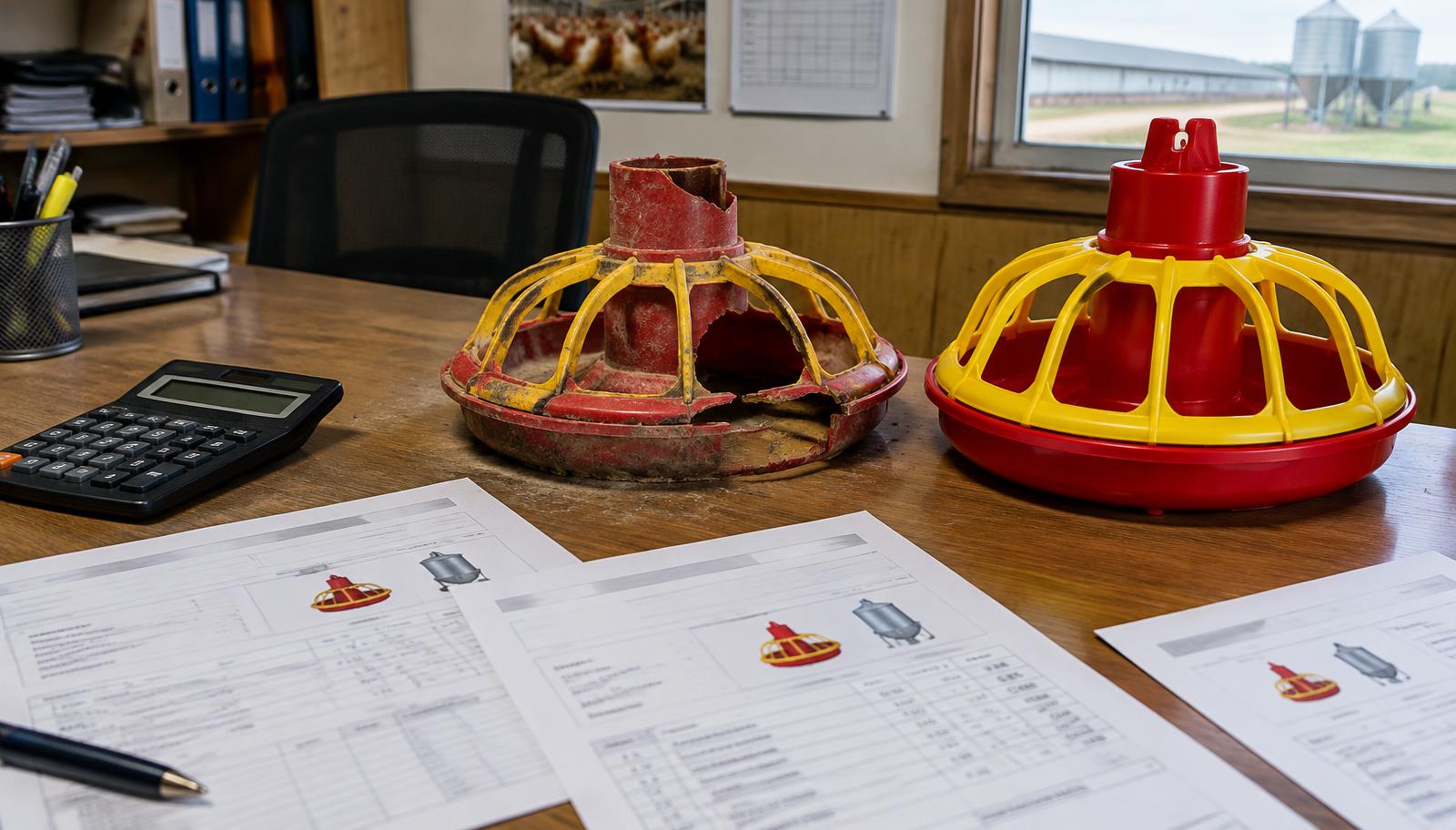
A buyer's guide to the real reasons the cheapest poultry equipment quote often costs more over the life of a project, and the questions and checklist that make quotes genuinely comparable.
By HatchMatch Group Sourcing Desk · Last updated 2026-10-10
In short
Short answer. The cheapest quote often costs more because a lower number usually hides a smaller scope, thinner materials, higher running costs or weaker after-sales support rather than a genuinely better price for the same equipment. Galvanizing thickness, energy consumption, spare parts availability, freight and installation inclusions, and warranty terms all shift real cost over the life of the project — sometimes by more than the gap between two quotes.
Key takeaways
- The single most common reason a quote looks cheap is that it simply covers less.
- Steel structures, cages, feed lines and ductwork are usually quoted by weight and coating, and both can be reduced without changing how the equipment looks in a photo or even performs for the first season.
- Motors, fans, heaters and controllers with a lower purchase price often run less efficiently, meaning the farm pays the difference back in electricity or fuel every day of operation for years.
- A lower price can reflect a supplier who does not keep spares stocked, does not manufacture the wear parts themselves, or expects long lead times from a sub-supplier when something breaks.
- Some quotes are priced ex-works or free-on-board, excluding freight, insurance, customs clearance, unloading and on-site installation; others are priced delivered and installed.
Short answer. The cheapest quote often costs more because a lower number usually hides a smaller scope, thinner materials, higher running costs or weaker after-sales support rather than a genuinely better price for the same equipment. Galvanizing thickness, energy consumption, spare parts availability, freight and installation inclusions, and warranty terms all shift real cost over the life of the project — sometimes by more than the gap between two quotes. Buyers who compare total cost of ownership, not just the bottom line, usually find the lowest headline price is not the lowest real cost.
This guide is for investors, integrators and project teams evaluating competing offers for commercial poultry equipment — housing, climate control, feeding and drinking systems, or full turnkey packages. It explains the mechanisms behind the price gap and gives practical ways to make quotes comparable before signing.
1. Scope gaps: the quote is not for the same equipment
The single most common reason a quote looks cheap is that it simply covers less. One supplier's "complete ventilation package" may include fans, inlets and a controller; another's identical-sounding package may exclude the controller, wiring, or backup power and list them as options priced separately. When the excluded items are added back, the gap narrows or disappears. This is rarely dishonest — suppliers often work from different default scopes — but it means price-only comparison compares apples to oranges.
What to do about it. Write one specification listing every system, component and service you expect included, and ask each supplier to quote against that exact list, marking anything they cannot or will not include. Require a line-item breakdown rather than a single lump sum, so gaps are visible before you sign.
Want these figures for your own site, capacity and country? A HatchMatch specialist builds the budget with you — no buyer fees.
Start free2. Thinner galvanizing and lighter-gauge materials
Steel structures, cages, feed lines and ductwork are usually quoted by weight and coating, and both can be reduced without changing how the equipment looks in a photo or even performs for the first season. A thinner zinc coating on galvanized steel corrodes faster in humid or high-ammonia house environments, and a lighter steel gauge flexes or fatigues sooner under repeated loading. The saving shows up immediately in the quote; the cost shows up two to five years later as replacement, repair or structural failure.
What to do about it. Ask for the galvanizing standard and coating weight (commonly expressed in g/m² or micron thickness) and the steel gauge or wall thickness for structural and corrosion-exposed components, in writing, and compare suppliers on that basis rather than assuming "galvanized" means the same thing across quotes.
3. Higher energy consumption over the equipment's life
Motors, fans, heaters and controllers with a lower purchase price often run less efficiently, meaning the farm pays the difference back in electricity or fuel every day of operation for years. A fan or heater's efficiency rating and energy draw rarely appear on the first page of a quote, but multiplied across a multi-year operating life and a full flock cycle count, a small efficiency gap can outweigh the entire purchase-price difference between two offers.
What to do about it. Ask for the rated power draw, efficiency class and expected energy consumption per unit of output (e.g., per m³/h of airflow or per degree of heating) for climate-control equipment, and use the ventilation calculator and generator sizing calculator to put energy assumptions into a comparable planning estimate before deciding.
4. Spare parts availability and lead time
A lower price can reflect a supplier who does not keep spares stocked, does not manufacture the wear parts themselves, or expects long lead times from a sub-supplier when something breaks. Spare parts cost is only part of the issue — the bigger cost is the days or weeks a house sits non-functional waiting for a part to arrive, during which feed conversion, mortality and growth can all suffer. A supplier who quotes slightly higher but holds local or regional stock of common wear parts can be the cheaper choice once downtime risk is counted.
What to do about it. Ask which parts are manufactured in-house versus bought in, where spares are stocked, and typical lead time for the parts most likely to need replacement (motors, sensors, nipples, bearings) — see our warranty and spare parts guide for the full list of questions to put in writing.
5. Freight and installation excluded from the headline number
Some quotes are priced ex-works or free-on-board, excluding freight, insurance, customs clearance, unloading and on-site installation; others are priced delivered and installed. These are legitimate pricing bases, but comparing an ex-works number to a delivered-and-installed number as if they were the same figure consistently makes the ex-works quote look cheaper than it will actually be once the missing items are added. See our Incoterms for poultry equipment imports guide for how delivery terms change who pays for what and when risk transfers.
What to do about it. Require every supplier to state their quoted Incoterm or delivery basis explicitly, and ask for a separate estimate of freight, customs and installation costs to that basis so you can convert every quote to the same landed, installed figure before comparing.
6. Weaker warranty terms and what they do not cover
A short warranty, or one that covers parts but not labour, or excludes consumable and wear items, shifts future repair cost onto the buyer without lowering the headline price enough to compensate. Warranty terms are often where the real price difference between two similar-looking quotes is hiding, because they rarely appear as a line item with a dollar value attached.
What to do about it. Get warranty length, scope (parts, labour, travel for on-site repairs), and explicit exclusions in writing for every quote, and treat a materially shorter or narrower warranty as a cost to add back to the cheaper quote, not a detail to review after signing.
7. Downtime cost that never appears on the invoice
None of the factors above show up as a number on the supplier's invoice, but all of them influence how often equipment fails and how long it takes to get it running again. A climate-control failure during a heat event, a feed line jam during a critical growth week, or a controller fault with no local support can cost more in lost production in a single incident than the entire price difference between competing quotes. Downtime cost is real but easy to ignore at the comparison stage because it is uncertain and does not appear on either quote.
What to do about it. Ask each supplier directly what local or regional after-sales support they provide, typical response time for a service call, and whether remote diagnostics are available for controllers — then weigh the answer alongside price rather than treating support as a tie-breaker only when prices are equal.
Checklist: what to document before comparing quotes
| Item | What to request in writing | Why it matters |
|---|---|---|
| Scope | Full itemized list of included components and services | Reveals gaps hidden in a lower lump-sum price |
| Materials | Galvanizing standard/coating weight, steel gauge | Determines corrosion resistance and structural life |
| Energy | Rated power, efficiency class, consumption per unit output | Multiplies into years of running cost |
| Spare parts | What's made in-house, where stocked, typical lead time | Drives downtime length when something fails |
| Delivery basis | Incoterm, what's included to destination | Lets you convert quotes to the same landed cost |
| Warranty | Length, scope (parts/labour/travel), exclusions | Shifts future repair cost onto buyer if weak |
| Support | Local presence, response time, remote diagnostics | Determines how fast a failure is resolved |
Questions to ask every supplier
What exactly is included in this price, itemized line by line, and what is quoted separately? What galvanizing standard and coating weight do you use on structural and corrosion-exposed components? What is the rated energy consumption of your fans, heaters and controllers per unit of output? Which spare parts do you manufacture in-house, where are they stocked, and what is typical lead time? What delivery basis (Incoterm) is this price quoted on, and what would freight and installation add? What exactly does your warranty cover and exclude, and for how long? What local or regional after-sales support do you provide, and what is your typical response time? Request written answers to all seven and put them in one comparison table before looking at price again.
Common mistakes
Comparing bottom-line totals without confirming every quote covers the same scope. Assuming "galvanized steel" means the same coating weight across suppliers. Ignoring energy consumption because it is not on the invoice today. Treating spare parts and warranty terms as fine print to review after the order is placed rather than before. Comparing an ex-works price to a delivered-and-installed price as if they were equivalent. And choosing the lowest price without asking what local after-sales support exists if something fails in year two.
Where HatchMatch fits
HatchMatch is a supplier-neutral procurement platform for commercial poultry projects, typically USD 250,000 and above. It is not a manufacturer, installer, EPC contractor, inspector, consultant, certification body or lender, and it does not sign supply contracts — buyers contract directly with the suppliers they choose. HatchMatch helps you turn your requirements into one written specification so every supplier quotes the same scope and offers can be compared line by line, not just by the bottom-line number. Every brief receives human review, and HatchMatch aims to reply within two business days. To start, submit a poultry project request with your house specifications, target scope and timeline, so suppliers quote against one written requirement instead of seven different assumptions.
FAQ
Why is the cheapest poultry equipment quote often not the cheapest in the end? Because a lower price usually reflects a smaller scope, thinner materials, higher energy use, weaker spare parts support or a narrower warranty rather than a genuinely lower cost for the same equipment over its working life.
How can I tell if two quotes are really for the same scope? Ask every supplier to quote against one written itemized specification and mark anything they exclude, rather than comparing two free-form lump-sum quotes.
Does a thinner galvanizing coating really matter? Yes — coating weight directly affects how fast steel corrodes in a humid, high-ammonia poultry house environment, and replacing corroded structure or equipment early can cost far more than the original price difference.
What is the biggest hidden cost buyers overlook? Downtime. A failure that takes days or weeks to repair because spare parts or local support are not available can cost more in lost production than the entire gap between competing quotes.
Should I always choose the supplier with the strongest warranty? Not automatically — weigh warranty length and scope alongside price, materials, energy use, spare parts and support as one total-cost comparison, since the best overall value is rarely the cheapest or the most expensive quote alone.
Frequently asked questions
- What exactly is included in this price, itemized line by line, and what is quoted separately?
- What galvanizing standard and coating weight do you use on structural and corrosion-exposed components? What is the rated energy consumption of your fans, heaters and controllers per unit of output? Which spare parts do you manufacture in-house, where are they stocked, and what is typical lead time? What delivery basis (Incoterm) is this price quoted on, and what would freight and installation add? What exactly does your warranty cover and exclude, and for how long? What local or regional after-sales support do you provide, and what is your typical response time? Request written answers to all seven and put them in one comparison table before looking at price again.
- Why is the cheapest poultry equipment quote often not the cheapest in the end?
- Because a lower price usually reflects a smaller scope, thinner materials, higher energy use, weaker spare parts support or a narrower warranty rather than a genuinely lower cost for the same equipment over its working life.
- How can I tell if two quotes are really for the same scope?
- Ask every supplier to quote against one written itemized specification and mark anything they exclude, rather than comparing two free-form lump-sum quotes.
- Does a thinner galvanizing coating really matter?
- Yes — coating weight directly affects how fast steel corrodes in a humid, high-ammonia poultry house environment, and replacing corroded structure or equipment early can cost far more than the original price difference.
- What is the biggest hidden cost buyers overlook?
- Downtime. A failure that takes days or weeks to repair because spare parts or local support are not available can cost more in lost production than the entire gap between competing quotes.
- Should I always choose the supplier with the strongest warranty?
- Not automatically — weigh warranty length and scope alongside price, materials, energy use, spare parts and support as one total-cost comparison, since the best overall value is rarely the cheapest or the most expensive quote alone.
More buyer questions are answered in our poultry procurement FAQ — also available in Español, Français, Português, Deutsch, العربية, Русский, Türkçe, Tiếng Việt.
From this article to a procurement-ready RFQ
HatchMatch Group is an independent sourcing desk — not a manufacturer or EPC contractor. These are the four steps we actually use with commercial poultry and hatchery buyers. If you are still deciding scope, start with what commercial poultry equipment includes and how suppliers are compared.
- 1. Plan the projectCapacity, climate and house layout in one guided workflowOpen
- 2. Build the RFQScope, specifications and comparable line itemsOpen
- 3. Submit the requestReviewed manually before any supplier introductionOpen
- 4. Track and compareFollow status and normalise supplier responsesOpen
Prefer the numbers first? Start with the poultry project cost calculator or browse the project planning guides.