
FishMatch Edition: Procurement for RAS, Sea Cage and Shrimp Projects
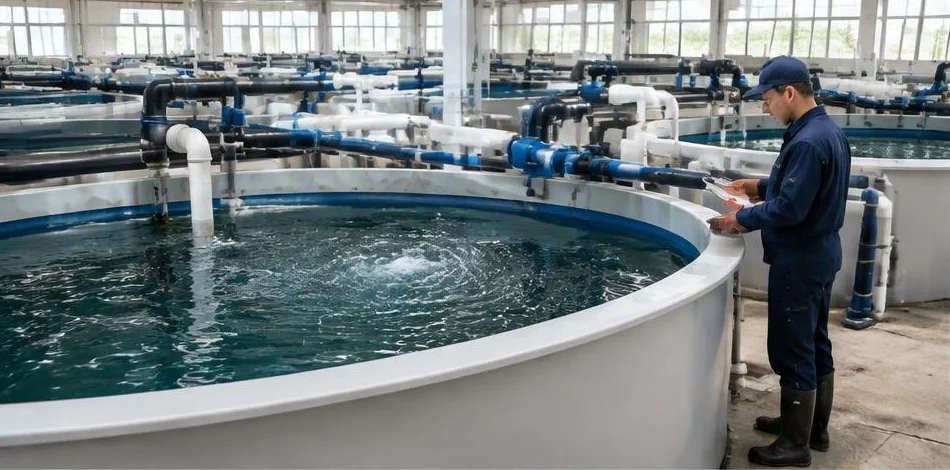
FishMatch is the aquaculture edition of the HatchMatch procurement model. This guide covers how serious RAS, cage and shrimp projects are scoped, specified and taken to suppliers as a comparable RFQ — with the same controlled-introduction rules we use in poultry.
By HatchMatch Group Sourcing Desk · Last updated 2026-09-03
In short
Short answer. FishMatch is the aquaculture edition of the HatchMatch Group procurement model: an independent, vendor-neutral way to scope a commercial fish or shrimp project, turn it into a comparable RFQ, and reach qualified equipment suppliers through a reviewed introduction rather than an automatic lead sale. It covers three project families — recirculating aquaculture systems (RAS), sea and lake cage farms, and shrimp ponds or intensive shrimp systems.
Key takeaways
- The failure pattern is identical to poultry projects: quotes arrive that cannot be compared.
- A recirculating aquaculture system is a water-treatment plant that happens to grow fish.
- For sea, lake or reservoir cage projects, the site defines the equipment.
- Shrimp projects range from extensive ponds to lined intensive raceways and biofloc systems.
- Use the same normalization rules we publish for poultry: one capacity basis, one scope boundary, one delivery term (Incoterms), one currency, and a named list of exclusions.
Short answer. FishMatch is the aquaculture edition of the HatchMatch Group procurement model: an independent, vendor-neutral way to scope a commercial fish or shrimp project, turn it into a comparable RFQ, and reach qualified equipment suppliers through a reviewed introduction rather than an automatic lead sale. It covers three project families — recirculating aquaculture systems (RAS), sea and lake cage farms, and shrimp ponds or intensive shrimp systems. HatchMatch does not manufacture aquaculture equipment, does not act as an EPC contractor, and does not guarantee biological or financial performance.
Everything below is planning guidance. Species biology, local regulation, water quality and site conditions decide the real numbers, and every value must be confirmed with your own engineers, veterinarians and permitting authority.
Why aquaculture buyers hit the same wall as poultry buyers
The failure pattern is identical to poultry projects: quotes arrive that cannot be compared. One supplier prices a mechanical filtration skid, another prices a full water-treatment loop with biofilter and oxygenation, a third prices a turnkey building. Unless scope, capacity basis and exclusions are fixed before quoting, the cheapest number usually hides the largest gap.
The fix is the same discipline we apply in poultry: define production outcome, site conditions and system boundary first; only then ask for prices.
Want these figures for your own site, capacity and country? A HatchMatch specialist builds the budget with you — no buyer fees.
Start free1. RAS: define the water loop before the building
A recirculating aquaculture system is a water-treatment plant that happens to grow fish. Before pricing anything, fix: target annual production (tonnes), species and target harvest size, stocking and growth plan, water source and quality, design water temperature, and how much makeup water per day the site can legally and physically supply.
Then define the loop component by component so bidders quote the same boundary: mechanical filtration (drum filters), biofiltration (moving-bed or fixed-bed), degassing/CO2 stripping, oxygenation, disinfection (UV or ozone), pumping and heat management, monitoring and alarms, plus effluent and sludge handling. Say explicitly whether the building shell, tanks, civil works and grading are inside or outside the quote — this single line moves RAS budgets more than any other.
Backup power is not optional in a RAS: oxygen supply and circulation failure is measured in minutes, not hours. Specify generator autonomy, automatic transfer, oxygen backup and an alarm path that reaches a human.
2. Cage farms: site conditions are the specification
For sea, lake or reservoir cage projects, the site defines the equipment. Suppliers need: exposure class (wave height and current), depth, water temperature range, species and target biomass per cage, cage geometry, mooring ground conditions and permitted footprint.
Scope items to name in the RFQ: cage collars and nets, predator protection, mooring and anchoring system, feed barge or feeding system, net cleaning and handling equipment, mortality removal, monitoring (oxygen, temperature, camera) and the service craft assumptions. Certification and mooring analysis requirements — where your regulator requires them — belong in the RFQ text, not in a later clarification round.
3. Shrimp projects: intensity level drives everything
Shrimp projects range from extensive ponds to lined intensive raceways and biofloc systems. Choose and state the intensity level first, because it decides aeration load, liner scope, water exchange, effluent treatment and labour.
Scope items: pond construction and liners, aeration (paddlewheel or diffused, with installed kW basis), pumping and intake filtration, water treatment and biosecurity barriers, nursery and hatchery interface, feeding systems and monitoring, plus effluent handling to your local discharge standard. Disease control and biosecurity should be a written section of the RFQ, exactly as HPAI planning is in poultry.
4. What makes aquaculture quotes comparable
Use the same normalization rules we publish for poultry: one capacity basis, one scope boundary, one delivery term (Incoterms), one currency, and a named list of exclusions. Ask every bidder for spare-parts and consumable pricing, energy consumption at design load, commissioning and training days, and warranty terms — these are where lifecycle cost is decided.
If you already work with our poultry tools, the same logic applies: normalize scope before you compare, and treat unusually low bids as a scope question rather than a discount. See the bid comparison tool and the RFQ template builder for the structure — the field names are poultry-specific, but the method transfers directly.
Aquaculture calculators for this guide
Three FishMatch calculators produce the production basis suppliers need before they can quote comparable scope. Each one ends with an RFQ form that carries your inputs and results straight into a HatchMatch project request, so you never re-type the numbers.
The RAS calculator converts a target annual tonnage into standing biomass, culture volume, daily makeup water, feed load and annual energy. The fish cage farm calculator sizes cage volume, standing biomass, stocking numbers and feed per cycle from cage geometry and design density. The shrimp farm calculator estimates harvest biomass, annual production, post-larvae required, feed and installed aeration from pond area, stocking density, survival and harvest weight.
All three are planning-grade: they help you write a comparable RFQ, and they do not replace engineering design, veterinary advice or permitting review.
5. How the FishMatch introduction model works
FishMatch follows the HatchMatch controlled-introduction rule. A buyer is never connected automatically to a manufacturer. The sequence is: you send a project request, our team reviews and structures it into a comparable brief, and only then do we introduce a shortlist of suppliers whose scope actually matches the project. Manufacturers see an anonymized brief before any buyer contact details are shared, and no introduction happens without your approval.
What does a RAS project cost?
There is no honest single number: cost per tonne of annual capacity varies with species, temperature, building standard, energy price and how much civil work is in scope. Anyone quoting a global cost-per-tonne without your site data is guessing. Build the cost from your own scope list, then use supplier quotes on that fixed scope to establish the real band.
Is RAS, cages or shrimp the right system for my site?
It is usually decided by water and regulation, not preference. Reliable licensed water and high land cost tend toward RAS; a licensed, sheltered-enough water body with suitable depth and current tends toward cages; warm climate with land, water access and discharge permitting tends toward shrimp. Confirm permitting feasibility before spending on equipment design.
Do you supply aquaculture equipment?
No. HatchMatch Group and the FishMatch edition are independent procurement resources. We do not manufacture, resell or install equipment, we are not an EPC contractor, and we do not provide financing, biological or financial guarantees.
How do I start an aquaculture project request?
Send species, target annual production, site country and water source, system type (RAS, cages or shrimp), site constraints and target timeline through the project quote form and note that it is an aquaculture project. Serious commercial projects — typically USD 250k and above — are reviewed by a human before any supplier sees them.
Next step
If your project is at concept stage, write the scope sections above first: production target, water and site data, system boundary, utilities and timeline. That single document is what makes supplier quotes comparable — in poultry and in aquaculture alike. Then send it through the project quote form.
Frequently asked questions
- What does a RAS project cost?
- There is no honest single number: cost per tonne of annual capacity varies with species, temperature, building standard, energy price and how much civil work is in scope. Anyone quoting a global cost-per-tonne without your site data is guessing. Build the cost from your own scope list, then use supplier quotes on that fixed scope to establish the real band.
- Is RAS, cages or shrimp the right system for my site?
- It is usually decided by water and regulation, not preference. Reliable licensed water and high land cost tend toward RAS; a licensed, sheltered-enough water body with suitable depth and current tends toward cages; warm climate with land, water access and discharge permitting tends toward shrimp. Confirm permitting feasibility before spending on equipment design.
- Do you supply aquaculture equipment?
- No. HatchMatch Group and the FishMatch edition are independent procurement resources. We do not manufacture, resell or install equipment, we are not an EPC contractor, and we do not provide financing, biological or financial guarantees.
- How do I start an aquaculture project request?
- Send species, target annual production, site country and water source, system type (RAS, cages or shrimp), site constraints and target timeline through the project quote form and note that it is an aquaculture project. Serious commercial projects — typically USD 250k and above — are reviewed by a human before any supplier sees them.
More buyer questions are answered in our poultry procurement FAQ — also available in Español, Français, Português, Deutsch, العربية, Русский, Türkçe, Tiếng Việt.
From this article to a procurement-ready RFQ
HatchMatch Group is an independent sourcing desk — not a manufacturer or EPC contractor. These are the four steps we actually use with commercial poultry and hatchery buyers. If you are still deciding scope, start with what commercial poultry equipment includes and how suppliers are compared.
- 1. Plan the projectCapacity, climate and house layout in one guided workflowOpen
- 2. Build the RFQScope, specifications and comparable line itemsOpen
- 3. Submit the requestReviewed manually before HatchMatch contacts any supplier on the buyer's behalfOpen
- 4. Track and compareFollow status and normalise supplier responsesOpen
Prefer the numbers first? Start with the poultry project cost calculator or browse the project planning guides.
Blog · Email updates
Get updates
Choose the reading that matters to your project.
Email subscriptions are not available yet.