
What Site Utility Data Poultry Equipment Suppliers Need: Power, Water and Fuel Details to Send Before Quoting
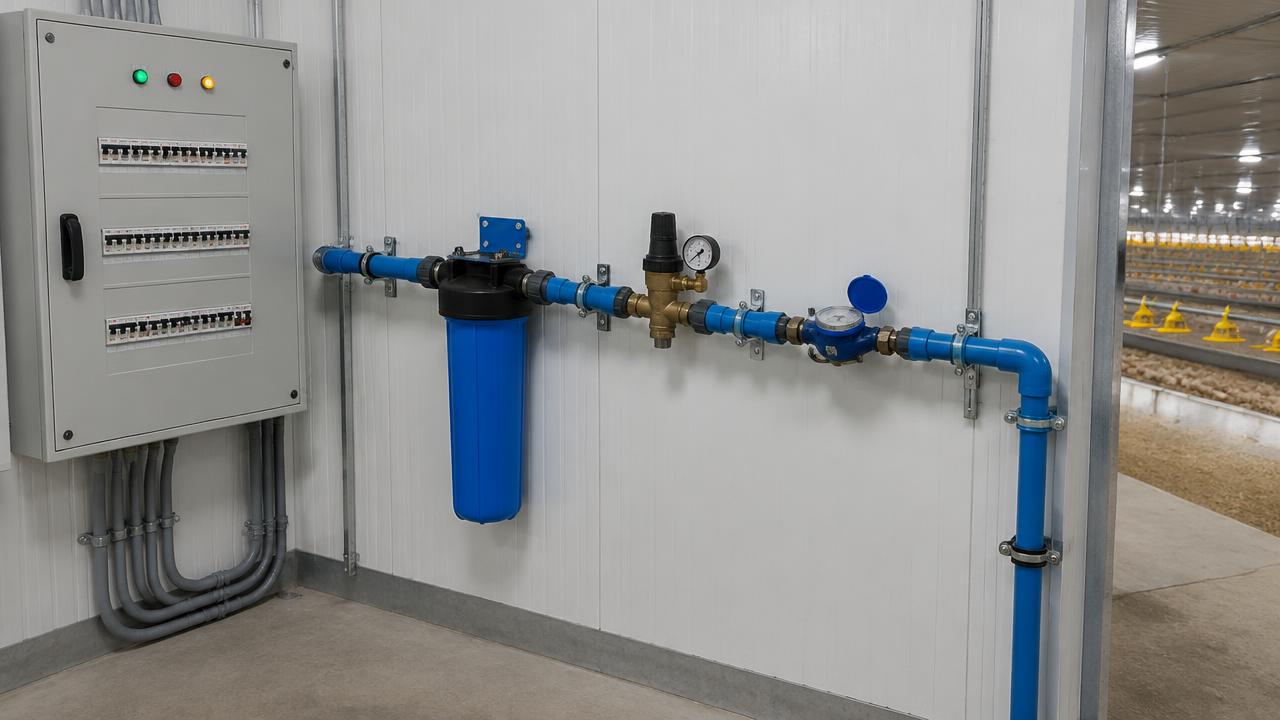
A one-page utility data sheet that lets every poultry equipment supplier quote motors, controllers, drinker lines and heaters that actually match your site.
By HatchMatch Group Sourcing Desk · Last updated 2026-10-11
In short
Short answer. Before suppliers quote, send them your site's supply voltage, number of phases and frequency (50 or 60 Hz), the available connection capacity and how reliable the grid is, plus your water source, pressure, flow and a recent water quality test, and the fuels available for heating and backup power. Motors, controllers, drinker lines, filters and heaters are selected from these values.
Key takeaways
- Mains voltage and frequency differ between countries and sometimes within them, and equipment built for one frequency may not run correctly on the other.
- Ventilation, drinking and alarms must keep running during an outage.
- Tell suppliers whether water comes from a borehole, municipal supply or surface source, the available pressure and flow at the house, and whether storage tanks and booster pumps are planned.
- Hard, iron-rich or contaminated water can clog nipples, foul cooling pads and affect bird health.
- Brooding and heating equipment depends on the fuel you can reliably buy: natural gas, LPG, diesel, biomass or electricity.
Short answer. Before suppliers quote, send them your site's supply voltage, number of phases and frequency (50 or 60 Hz), the available connection capacity and how reliable the grid is, plus your water source, pressure, flow and a recent water quality test, and the fuels available for heating and backup power. Motors, controllers, drinker lines, filters and heaters are selected from these values. When they are missing, suppliers assume a standard that may not match your site, and the mismatch often surfaces only during installation.
This guide is for project owners preparing an RFQ for broiler, layer, breeder or hatchery equipment. Electrical design, connection and safety must follow local regulations and be signed off by qualified professionals.
1. Electrical supply
Mains voltage and frequency differ between countries and sometimes within them, and equipment built for one frequency may not run correctly on the other. State the nominal voltage, single or three phase, frequency, the connection capacity you have or expect from the utility, and whether voltage fluctuations or frequent outages are a known problem. Low-voltage installations are commonly designed to the IEC 60364 series or a national equivalent; tell suppliers which standard applies at your site.
2. Backup power and grid reliability
Want these figures for your own site, capacity and country? A HatchMatch specialist builds the budget with you — no buyer fees.
Start freeVentilation, drinking and alarms must keep running during an outage. Share how often and how long outages occur, and whether a generator, solar or battery system is planned, so controllers and starters are specified for automatic transfer. Size backup capacity with the generator sizing calculator, and see the controllers, alarms and electrical guide.
3. Water source, pressure and flow
Tell suppliers whether water comes from a borehole, municipal supply or surface source, the available pressure and flow at the house, and whether storage tanks and booster pumps are planned. Drinker lines, regulators and cooling pads are selected for a pressure and flow range. Estimate peak demand with the water consumption calculator.
4. Water quality
Hard, iron-rich or contaminated water can clog nipples, foul cooling pads and affect bird health. Send a recent laboratory test covering at least hardness, iron, manganese, pH and bacterial counts, so suppliers can propose suitable filtration, treatment and medicator equipment. If no test exists, commission one before you request quotes.
5. Fuel for heating
Brooding and heating equipment depends on the fuel you can reliably buy: natural gas, LPG, diesel, biomass or electricity. State which fuels are available, their delivery reliability and any restrictions, so heaters and burners are quoted for the right fuel.
6. Climate and site conditions
Add the design summer and winter temperatures, humidity, altitude and dust conditions. Altitude and heat affect motor and generator output, and dust affects filters and pads. These values also feed the ventilation calculator.
Utility data sheet to attach to your RFQ
| Item | What to state |
|---|---|
| Voltage and phase | Nominal voltage, single/three phase |
| Frequency | 50 Hz or 60 Hz |
| Connection capacity | Available or requested kVA/kW |
| Grid reliability | Typical outage frequency and duration, voltage fluctuation |
| Backup | Planned generator, solar or battery, automatic transfer |
| Water source | Borehole, municipal, surface; storage and pumps |
| Pressure and flow | At the house inlet |
| Water quality | Lab results: hardness, iron, manganese, pH, bacteria |
| Fuel | Gas, LPG, diesel, biomass or electric; supply reliability |
| Climate | Design temperatures, humidity, altitude, dust |
| Standards | Electrical standard or code that applies on site |
Common mistakes
Sending only bird numbers and house size. Assuming 50 Hz equipment will run on 60 Hz, or the reverse. Ignoring water quality until nipples clog. Specifying backup power after the controllers are already ordered. Leaving the connection point and cable sizing between supplier and contractor undefined.
Where HatchMatch fits
HatchMatch is a supplier-neutral procurement platform for commercial poultry projects, typically USD 250,000 and above. It is not an electrical engineer, utility, manufacturer or installer, and it does not sign supply contracts — buyers contract directly with the suppliers they choose. HatchMatch helps you attach site data like this to one written specification so every supplier quotes for the same conditions. Every brief receives human review, and HatchMatch aims to reply within two business days. To start, submit a poultry project request or build a structured RFQ.
Sources
IEC 60364 series, Low-voltage electrical installations — International Electrotechnical Commission, iec.ch.
FAQ
Why do suppliers need voltage, phase and frequency? Motors, starters, controllers and heaters are built for specific electrical values. Wrong values can mean replacement parts or extra converters on site.
Does water quality really affect equipment? Yes. Hardness, iron and bacteria can clog nipples and filters and foul cooling pads, so suppliers need a test to propose suitable filtration and treatment.
What if I don't know my connection capacity yet? State the capacity you have requested from the utility and ask suppliers to give the total connected load of their equipment so you can confirm it.
Should backup power be in the same RFQ? It should at least be described, so controllers and transfer equipment are specified to work with it, even if the generator is bought separately.
Who signs off the electrical design? A qualified electrical professional under local regulations. Suppliers provide equipment loads and wiring requirements; they do not replace local approval.
Frequently asked questions
- Why do suppliers need voltage, phase and frequency?
- Motors, starters, controllers and heaters are built for specific electrical values. Wrong values can mean replacement parts or extra converters on site.
- Does water quality really affect equipment?
- Yes. Hardness, iron and bacteria can clog nipples and filters and foul cooling pads, so suppliers need a test to propose suitable filtration and treatment.
- What if I don't know my connection capacity yet?
- State the capacity you have requested from the utility and ask suppliers to give the total connected load of their equipment so you can confirm it.
- Should backup power be in the same RFQ?
- It should at least be described, so controllers and transfer equipment are specified to work with it, even if the generator is bought separately.
- Who signs off the electrical design?
- A qualified electrical professional under local regulations. Suppliers provide equipment loads and wiring requirements; they do not replace local approval.
More buyer questions are answered in our poultry procurement FAQ — also available in Español, Français, Português, Deutsch, العربية, Русский, Türkçe, Tiếng Việt.
From this article to a procurement-ready RFQ
HatchMatch Group is an independent sourcing desk — not a manufacturer or EPC contractor. These are the four steps we actually use with commercial poultry and hatchery buyers. If you are still deciding scope, start with what commercial poultry equipment includes and how suppliers are compared.
- 1. Plan the projectCapacity, climate and house layout in one guided workflowOpen
- 2. Build the RFQScope, specifications and comparable line itemsOpen
- 3. Submit the requestReviewed manually before any supplier introductionOpen
- 4. Track and compareFollow status and normalise supplier responsesOpen
Prefer the numbers first? Start with the poultry project cost calculator or browse the project planning guides.