
Eggs & meat · Table eggs & egg products
Organic shell eggs
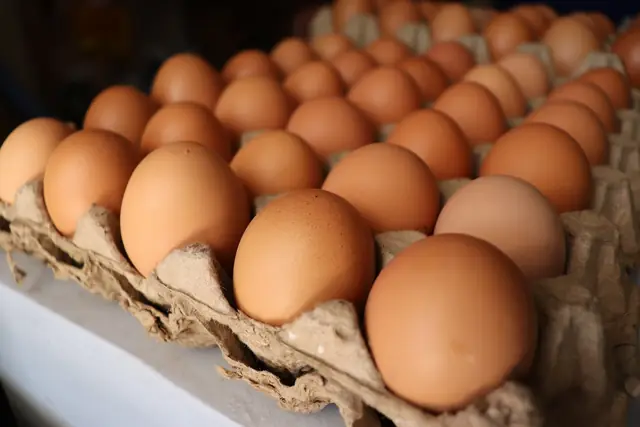
Shell eggs from laying hens kept under an organic regulation and sold as organic only when the farm, the packing centre and every later handler are certified for that market. 'Organic' is a legally defined claim, not a quality grade: the EU sets it in Regulation (EU) 2018/848, the US in 7 CFR Part 205 and Brazil through MAPA's organic rules, and a certificate for one market does not automatically cover another.
Quick answer
Organic shell eggs: Retail and foodservice programmes that sell eggs under an organic label, and manufacturers that need organic egg as an ingredient input. In a request, state the organic regulation and label you need (EU, USDA, Brazil or another market's); certificate scope required: farm, packing centre and exporter; grade and weight class under the destination market's standard. HatchMatch reviews it and contacts suppliers for you; supplier, availability, price and origin are confirmed per request.
Featured in:Organic collection
Intended use: Retail and foodservice programmes that sell eggs under an organic label, and manufacturers that need organic egg as an ingredient input.
General facts
About this type of product or system in general — not about any supplier.
- EU legal basis
- Regulation (EU) 2018/848; poultry housing detail in Implementing Regulation (EU) 2020/464[1]
- EU housing minimum (laying hens)
- Max 6 hens per m² of usable indoor area; at least 4 m² of outdoor area per hen[2]
- EU egg marking
- The producer code on each egg shows the farming method; organic eggs carry code 0[3]
- US legal basis
- USDA organic regulations, 7 CFR Part 205[4]
- US outdoor-space rules
- Organic Livestock and Poultry Standards; layer operations certified before 2 January 2025 must meet outdoor stocking density by 2 January 2029[5]
- EU import document
- Electronic certificate of inspection (COI) in TRACES for each consignment[6]
- US import document
- NOP Import Certificate for each shipment (required since 19 March 2024)[7]
- Indicative HS heading
- 0407.21 — indicative six-digit heading; the national tariff line and any ruling decide[9]
Traceability, packaging and logistics
- Traceability
- Each pack and case should identify the certified producer and packing centre, and every lot should link to flock, feed and certification records. The certificate number and scope travel with the shipment documents.
- Packaging
- Trays, retail cartons and outer cases as for conventional shell eggs; organic wording and logos are allowed only as the destination's organic labelling rules permit.
- Handling and transport
- Organic and non-organic eggs must be kept apart and identifiable through grading, storage and transport. Agree storage temperature and remaining shelf life as for all shell eggs.
Procurement risks to check
General risks for this type of system — not a finding about any supplier.
- Certificate does not cover the packing centre or the exporter
- Certification held for another market's organic rules, with no equivalence for your destination
- Organic and non-organic lots mixed during grading or storage
- Import certificate not issued before the goods ship
What to specify in your request
- The organic regulation and label you need (EU, USDA, Brazil or another market's)
- Certificate scope required: farm, packing centre and exporter
- Grade and weight class under the destination market's standard
- Packing, labelling language and organic logo use
- Quantity per delivery, frequency and programme length
- Destination, Incoterm and required remaining shelf life
Documents buyers commonly ask for
Where the product and route require them. Requirements differ by product and country; there is no single checklist.
- Valid organic certificate for the farm and packing centre, with scope and expiry date
- Import certificate for each shipment where the destination requires it (EU COI in TRACES; US NOP Import Certificate)
- Health or veterinary certificate required by the destination
- Feed records showing the organic feed share the regulation requires
- Lot traceability from flock to pack
Questions buyers ask
- Is an organic certificate from one country valid in another?
- Not automatically. The certificate must be issued under, or recognised as equivalent to, the destination's organic rules. The EU and the US each publish their trade arrangements; check the product category is covered before you contract.
- How can I check a supplier's organic certificate?
- Ask for the certificate with its scope and expiry date, then confirm it in the certifier's or regulator's public register — for example the USDA Organic INTEGRITY Database or Brazil's national organic producer register (CNPO). HatchMatch does not certify suppliers.
- Do organic egg requests need a USD 250,000 minimum?
- No. Egg and poultry product requests are qualified by specification, volume, frequency and destination. The USD 250,000 minimum applies to farm, hatchery and equipment project requests.
Who does what
- You (buyer)
- State your specification, destination and documents; you keep your own import permissions and due diligence.
- HatchMatch
- Reviews the request and contacts suppliers on your behalf. It does not produce, sell or export the goods.
- Producers and suppliers
- Respond through HatchMatch and are responsible for their products meeting the rules that apply.
Related guides
Related categories
Sources and references
Published standards and reference sources for context — not endorsements and not evidence about any supplier.
- European Union (EUR-Lex): Regulation (EU) 2018/848 on organic production and labelling of organic products (checked 2026-10-24)
- European Union (EUR-Lex): Implementing Regulation (EU) 2020/464 — stocking densities and indoor/outdoor areas for organic poultry (Annex I, Part IV) (checked 2026-10-24)
- European Union (EUR-Lex): Implementing Regulation (EU) 2023/2466 — egg marketing standards: producer code and farming-method marking (checked 2026-10-24)
- US Government (eCFR): 7 CFR Part 205 — National Organic Program (checked 2026-10-24)
- USDA Agricultural Marketing Service: Organic Livestock and Poultry Standards final rule (effective 2024; outdoor-space compliance dates to 2029) (checked 2026-10-24)
- European Union (EUR-Lex): Delegated Regulation (EU) 2021/2306 — official controls on organic imports and the certificate of inspection (checked 2026-10-24)
- USDA Agricultural Marketing Service: Electronic NOP Import Certificates (required for organic imports since 19 March 2024) (checked 2026-10-24)
- Ministério da Agricultura e Pecuária (MAPA), Brazil: Regularização da Produção Orgânica (organic production regularisation) (checked 2026-10-24)
- World Customs Organization: HS Nomenclature 2022 edition (checked 2026-10-23)
More in Table eggs & egg products
Eggs & meat · Table eggs & egg products
Shell table eggs
Fresh hen eggs in shell for consumption, supplied in trays or cartons to a stated grade and weight class.
- Eggs & egg handling
- Layers
Supplier details to confirm
Eggs & meat · Table eggs & egg products
Liquid and frozen egg products
Whole egg, yolk or albumen removed from the shell and supplied chilled or frozen for food manufacturing and foodservice.
- Eggs & egg handling
Supplier details to confirm
Eggs & meat · Table eggs & egg products
Dried egg products (powder)
Spray-dried whole egg, yolk or albumen powder for food manufacturing.
- Eggs & egg handling
Supplier details to confirm
Eggs & meat · Table eggs & egg products
Free-range, pasture and specialty eggs
Shell eggs sold with a production-system or composition claim other than organic: free-range, barn or cage-free, pasture-raised, or nutritionally enriched (for example omega-3).
- Eggs & egg handling
- Layers
Supplier details to confirm