
Hatchery Automation: Which Processes to Automate First and How to Decide
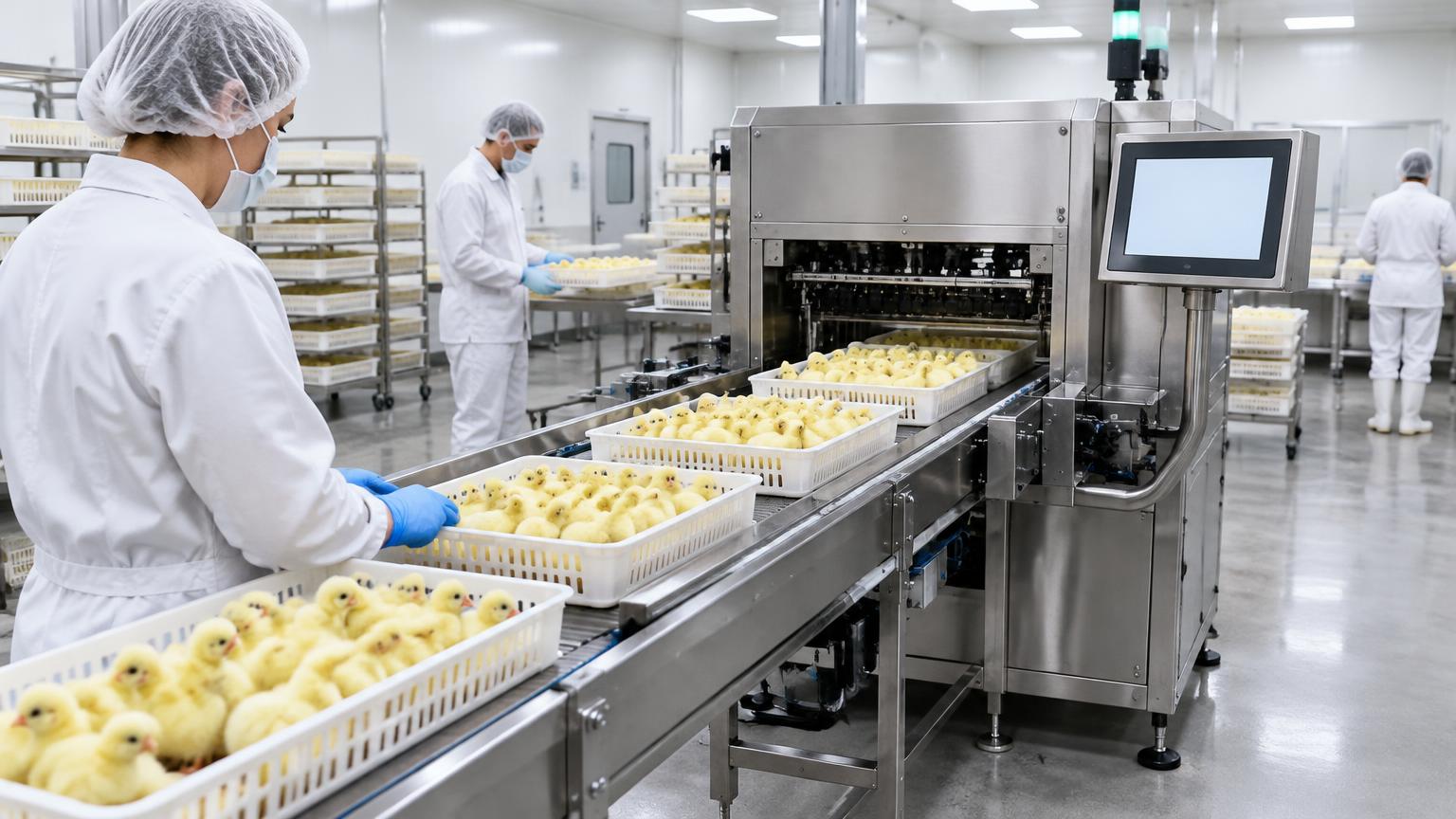
How to decide which hatchery tasks to automate first — based on weekly throughput, labour, chick quality and biosecurity — and what to ask suppliers before buying.
By HatchMatch Group Sourcing Desk · Last updated 2026-10-11
In short
Short answer. Automate the hatchery step that limits throughput or quality today, not the most impressive machine. For most growing hatcheries the order is: reliable climate control and data in setters, hatchers and egg rooms first; then egg handling, candling and transfer; then chick take-off, counting and vaccination; then traceability software linking it all.
Key takeaways
- Automation downstream cannot recover chicks lost to poor incubation.
- Manual egg handling is slow and risks cracks and contamination.
- On hatch day, time from take-off to delivery affects chick quality.
- Software that links flock, egg batch, machine, hatch results and customer order supports quality control and recall readiness, and turns breakout analysis into decisions.
- | Signal in your hatchery | Likely first automation | |---|---| | Variable hatch results between machines | Incubation control, sensors and data logging | | Cracked or contaminated eggs, slow setting | Egg handling and tray loading | | Long transfer day, staff shortage | Candling and transfer | | Long hatch-day processing, count disputes | Chick counting and separation | | Inconsistent vaccination | Automated vaccination with veterinary sign-off | | Slow recall answers, paper records | Traceability software |
Short answer. Automate the hatchery step that limits throughput or quality today, not the most impressive machine. For most growing hatcheries the order is: reliable climate control and data in setters, hatchers and egg rooms first; then egg handling, candling and transfer; then chick take-off, counting and vaccination; then traceability software linking it all. Each step should be justified by eggs set per week, labour available, chick handling time and hygiene, using your own figures.
This guide is for owners and project teams planning a new hatchery or expanding one. It complements the hatchery equipment buyer's guide and the hatchery automation systems overview.
1. Machine control and monitoring first
Automation downstream cannot recover chicks lost to poor incubation. Before buying handling equipment, confirm setters, hatchers and egg storage hold their temperature, humidity, CO₂ and turning settings, with alarms and logged data. Breeder hatchery guides put incubation conditions and egg storage at the centre of hatchability and chick quality.
2. Egg handling, candling and transfer
Want these figures for your own site, capacity and country? A HatchMatch specialist builds the budget with you — no buyer fees.
Start freeManual egg handling is slow and risks cracks and contamination. Automated tray loading, candling with removal of clear and dead eggs, and transfer from setter trays to hatcher baskets reduce handling time at the most sensitive point. Ask suppliers which tray and basket systems the equipment fits, and whether it works with your existing machines.
3. Chick take-off, counting and vaccination
On hatch day, time from take-off to delivery affects chick quality. Separators, counters and spray or injection vaccination units shorten processing and give consistent counts and dosing. Confirm vaccine compatibility and dose accuracy with your veterinarian and the vaccine supplier, and ask how the equipment is cleaned and disinfected between hatches.
4. Traceability and data
Software that links flock, egg batch, machine, hatch results and customer order supports quality control and recall readiness, and turns breakout analysis into decisions. It is most useful once data comes from machines rather than paper.
How to prioritise
| Signal in your hatchery | Likely first automation |
|---|---|
| Variable hatch results between machines | Incubation control, sensors and data logging |
| Cracked or contaminated eggs, slow setting | Egg handling and tray loading |
| Long transfer day, staff shortage | Candling and transfer |
| Long hatch-day processing, count disputes | Chick counting and separation |
| Inconsistent vaccination | Automated vaccination with veterinary sign-off |
| Slow recall answers, paper records | Traceability software |
Questions for every supplier
Throughput per hour at your egg or chick size, and the realistic figure with your staff. Compatibility with your trays, baskets and machines. Cleaning and disinfection method and time. Power, compressed air and water requirements. Local service, spare parts stock and remote support. Training days. Warranty start event. Data export format, so you are not locked into one software.
Size the hatchery first
Automation choices depend on eggs set per week and hatch days. Run the hatchery capacity calculator and the hatchery startup cost calculator before choosing equipment, and see hatchery chick flow planning for room sequencing.
Where HatchMatch fits
HatchMatch is a supplier-neutral procurement platform for commercial poultry and hatchery projects, typically USD 250,000 and above. It is not a manufacturer, installer, contractor or lender, and it does not sign supply contracts — buyers contract with suppliers directly. Every brief receives human review, and HatchMatch aims to reply within two business days; supplier participation and response times vary. HatchMatch helps you write one hatchery brief so automation offers can be compared on the same scope. Submit a hatchery project request or build a structured RFQ.
Sources
Cobb-Vantress, Hatchery Management Guide — cobb-vantress.com. Aviagen, Hatchery Tips — aviagen.com. Lohmann Breeders, Hatchery Management Guide — lohmann-breeders.com.
FAQ
What should a hatchery automate first? The step that limits throughput or chick quality today. For most hatcheries that starts with reliable incubation control and data, then egg handling and transfer, then chick processing.
Is automation worth it for a small hatchery? It depends on eggs set per week, labour cost and availability, and chick quality goals. Calculate it with your own figures; partial automation of one bottleneck is common.
Does automatic vaccination replace the veterinarian? No. Vaccine choice, dose and verification remain veterinary decisions; the machine applies the dose consistently.
What should I check about traceability software? That it reads data from your machines, exports in an open format and links flock, batch, machine and customer order.
Frequently asked questions
- What should a hatchery automate first?
- The step that limits throughput or chick quality today. For most hatcheries that starts with reliable incubation control and data, then egg handling and transfer, then chick processing.
- Is automation worth it for a small hatchery?
- It depends on eggs set per week, labour cost and availability, and chick quality goals. Calculate it with your own figures; partial automation of one bottleneck is common.
- Does automatic vaccination replace the veterinarian?
- No. Vaccine choice, dose and verification remain veterinary decisions; the machine applies the dose consistently.
- What should I check about traceability software?
- That it reads data from your machines, exports in an open format and links flock, batch, machine and customer order.
More buyer questions are answered in our poultry procurement FAQ — also available in Español, Français, Português, Deutsch, العربية, Русский, Türkçe, Tiếng Việt.
From this article to a procurement-ready RFQ
HatchMatch Group is an independent sourcing desk — not a manufacturer or EPC contractor. These are the four steps we actually use with commercial poultry and hatchery buyers. If you are still deciding scope, start with what commercial poultry equipment includes and how suppliers are compared.
- 1. Plan the projectCapacity, climate and house layout in one guided workflowOpen
- 2. Build the RFQScope, specifications and comparable line itemsOpen
- 3. Submit the requestReviewed manually before any supplier introductionOpen
- 4. Track and compareFollow status and normalise supplier responsesOpen
Prefer the numbers first? Start with the poultry project cost calculator or browse the project planning guides.