
Poultry Farm Project Costs: What Estimates and Quotes Often Leave Out
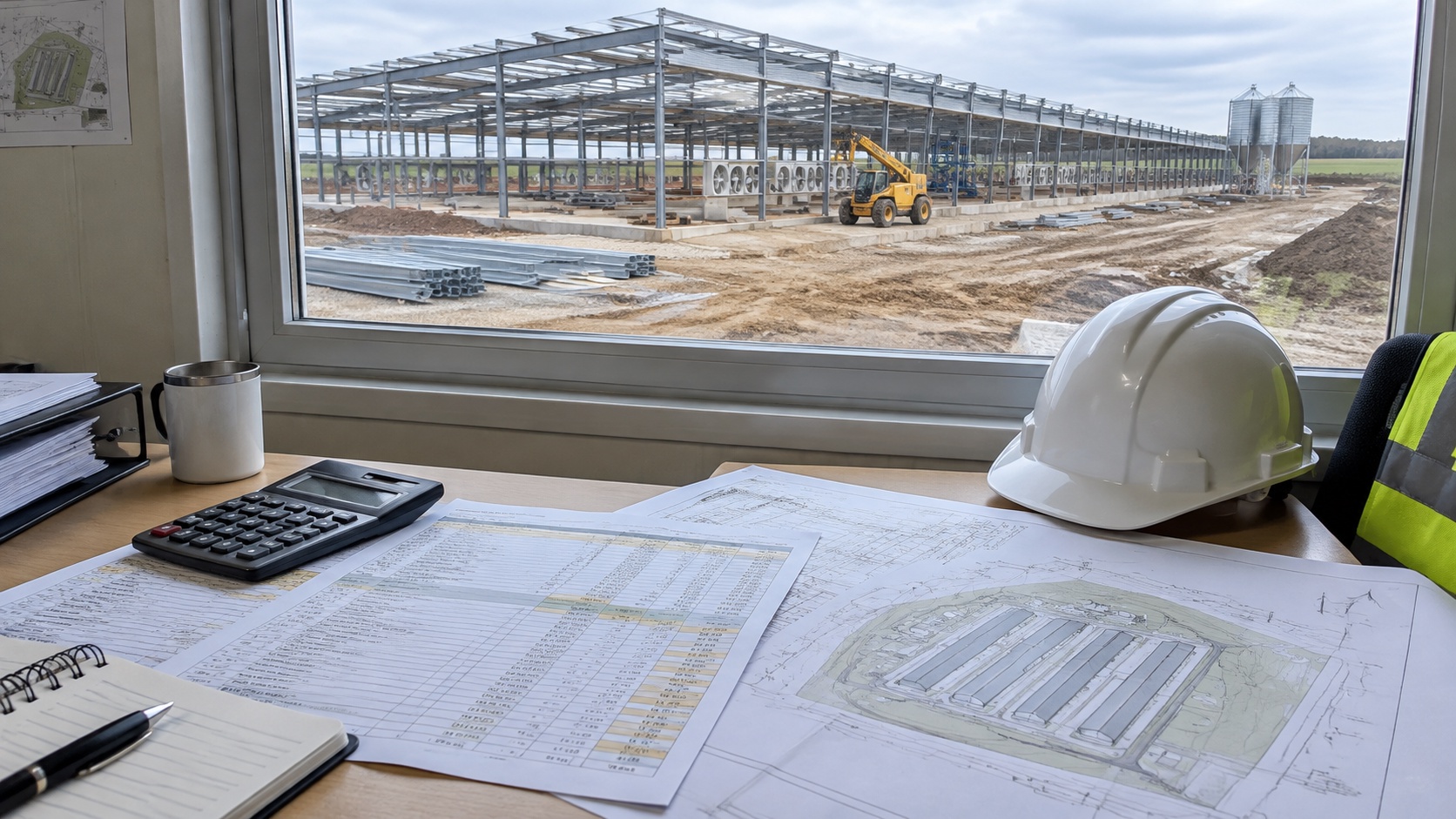
For buyers budgeting a commercial poultry farm or hatchery: the cost lines most often missing from early estimates and low quotes, and how to close the gaps before you compare offers.
By HatchMatch Group Editorial Desk · Last updated 2026-11-22
In short
Short answer: poultry farm project costs are rarely just the equipment price. Site works, freight, import duty, installation and commissioning, backup power, permits and the first operating cycle often sit outside a headline figure. Build the budget line by line, then ask every supplier to state what is included and excluded.
Key takeaways
- Investors, integrators and farm owners planning a commercial broiler, layer, breeder or hatchery project.
- Site development and civil works: levelling, roads, drainage, foundations and biosecurity points.
- Land, permits and environmental studies, working capital, day-old stock and first feed, interest during construction and financing fees, and ongoing labour, energy, water, medication and maintenance.
- Send one specification to every supplier, with the same capacity, house dimensions, climate data, scope boundary (supply only, supply plus supervision or turnkey) and delivery terms.
- Use the poultry farm cost guide for the cost-per-bird-place bands and line-by-line shares, and the farm-cost calculator for an indicative budget, payback and break-even view for your own inputs.
Short answer: poultry farm project costs are rarely just the equipment price. Site works, freight, import duty, installation and commissioning, backup power, permits and the first operating cycle often sit outside a headline figure. Build the budget line by line, then ask every supplier to state what is included and excluded.
Who this post is for
Investors, integrators and farm owners planning a commercial broiler, layer, breeder or hatchery project. HatchMatch's managed procurement starts from an estimated USD 250,000 budget and is free for the buyer.
The cost lines most often missing
- Site development and civil works: levelling, roads, drainage, foundations and biosecurity points. Usually priced locally, not by the equipment supplier.
- Freight, duty and clearance: an ex-works price is not a landed cost. Import duty, sea freight, inland haulage and clearance can be a large share of the total.
- Installation and commissioning: erection crews, supervision, calibration, acceptance testing and operator training. This is the line most often silently excluded from a low offer.
- Backup power: generator and automatic transfer sized for ventilation, lighting and controls wherever the grid is unstable.
- Spare parts and warranty terms: the starting spares package and who pays for service visits.
Want these figures for your own site, capacity and country? A HatchMatch specialist builds the budget with you — no buyer fees.
Start freeCosts outside the investment figure
Land, permits and environmental studies, working capital, day-old stock and first feed, interest during construction and financing fees, and ongoing labour, energy, water, medication and maintenance. These belong in your plan even though they are not equipment or construction costs.
How to make quotes comparable
Send one specification to every supplier, with the same capacity, house dimensions, climate data, scope boundary (supply only, supply plus supervision or turnkey) and delivery terms. Ask for itemised pricing and a written list of exclusions, then compare landed, installed cost rather than headline price.
Where to get the numbers
Use the poultry farm cost guide for the cost-per-bird-place bands and line-by-line shares, and the farm-cost calculator for an indicative budget, payback and break-even view for your own inputs. Both are planning aids, not supplier prices.
Limits
Costs vary by country, supplier, specification and date. Only detailed offers on an identical scope show the real price.
Next step
When your scope is ready, submit a project request. Every brief gets human review, and HatchMatch aims to reply within two business days.
From this article to a procurement-ready RFQ
HatchMatch Group is an independent sourcing desk — not a manufacturer or EPC contractor. These are the four steps we actually use with commercial poultry and hatchery buyers. If you are still deciding scope, start with what commercial poultry equipment includes and how suppliers are compared.
- 1. Plan the projectCapacity, climate and house layout in one guided workflowOpen
- 2. Build the RFQScope, specifications and comparable line itemsOpen
- 3. Submit the requestReviewed manually before HatchMatch contacts any supplier on the buyer's behalfOpen
- 4. Track and compareFollow status and normalise supplier responsesOpen
Prefer the numbers first? Start with the poultry project cost calculator or browse the project planning guides.
HatchMatch Intelligence · Email updates
Get poultry sourcing and project updates by email
A short digest of newly published HatchMatch articles, guides and center updates on the topics you choose — with links to the full pieces.