
How to Structure Payment Terms for Poultry Equipment Purchases: Deposits, Milestones and Protections Before You Pay
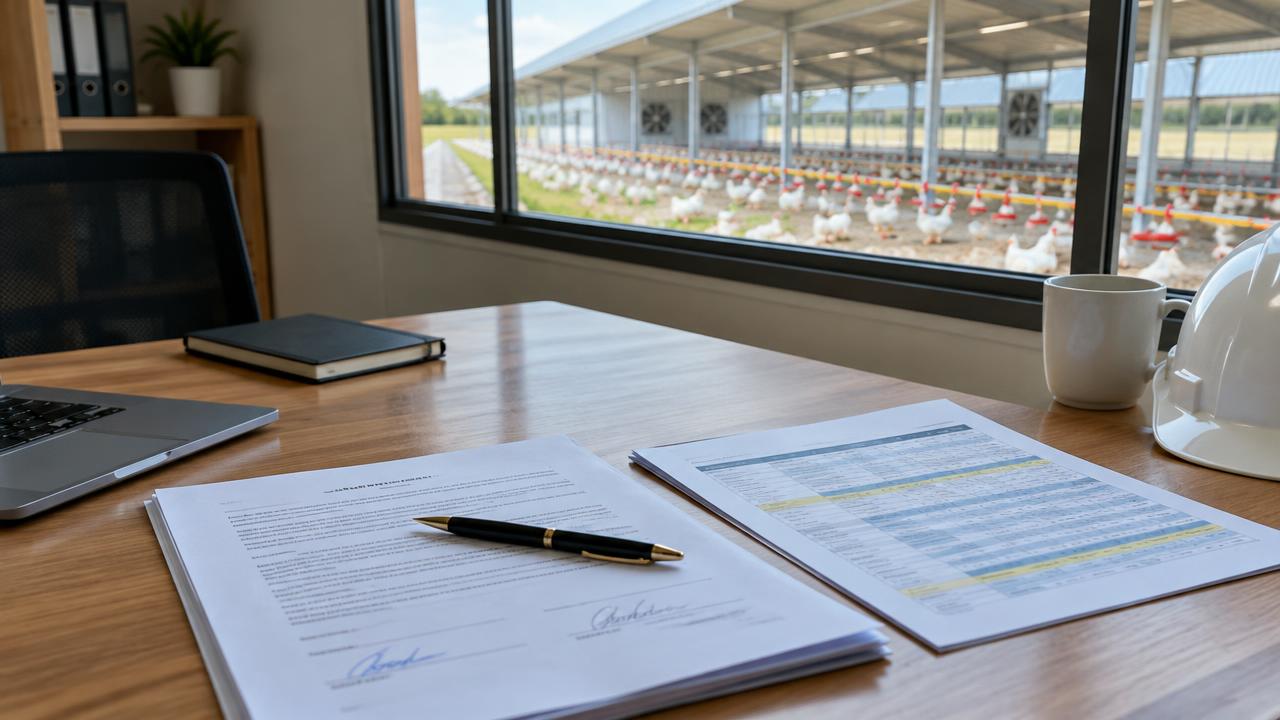
A buyer's guide to linking each payment for imported poultry equipment to a document or event you can verify, so risk stays balanced between buyer and supplier.
By HatchMatch Group Sourcing Desk · Last updated 2026-10-11
In short
Short answer. Tie every payment for poultry equipment to something you can verify: a signed contract and approved drawings for the deposit, a passed pre-shipment inspection and shipping documents for the main payment, and completed installation and commissioning for any retention. The exact percentages are a commercial negotiation that varies by supplier, project size and payment instrument, so there is no single correct split.
Key takeaways
- A deposit usually starts production or reserves a production slot, so anything not fixed by then becomes a change you pay for later.
- | Structure | How it works | Buyer risk | Supplier risk | |---|---|---|---| | Advance transfer (deposit + balance before shipment) | Bank transfers released on agreed events | Higher: money leaves before goods are verified | Lower | | Milestone schedule | Payments tied to contract, drawings, inspection, shipment, commissioning | Moderate, if each milestone needs evidence | Moderate | | Documentary letter of credit | Buyer's bank pays when compliant documents are presented | Lower, if documents are well defined | Lower, if the bank is creditworthy | | Retention | A share is held until commissioning or acceptance | Lower for performance issues | Higher: final cash delayed |
- The largest payment is usually tied to shipment.
- Equipment that arrives complete can still fail to perform once installed.
- Write down, before payment: delivery-delay remedies, the process and timeline for replacing missing or damaged parts, who pays freight for replacements, warranty start date (shipment, arrival or commissioning), and how disputes are resolved.
Short answer. Tie every payment for poultry equipment to something you can verify: a signed contract and approved drawings for the deposit, a passed pre-shipment inspection and shipping documents for the main payment, and completed installation and commissioning for any retention. The exact percentages are a commercial negotiation that varies by supplier, project size and payment instrument, so there is no single correct split. What matters is that no payment is due before the supplier has delivered the evidence that justifies it, and that scope, drawings and acceptance criteria are fixed before the first transfer.
This guide is for investors and project teams buying commercial poultry equipment — housing, climate control, feeding, drinking, cages or hatchery equipment — from domestic or foreign suppliers. It explains common payment structures and the conditions to agree before you pay. It is not legal or banking advice; have contracts and bank instruments reviewed by your own lawyer and bank.
1. Fix scope and drawings before the deposit
A deposit usually starts production or reserves a production slot, so anything not fixed by then becomes a change you pay for later. Before paying, confirm in writing the final itemized scope, the approved layout drawing, the quoted delivery basis (Incoterm), the delivery schedule and the acceptance tests. If the supplier's standard terms allow it to change specifications, add surcharges for material or freight increases, or charge a cancellation penalty, read those clauses carefully — some published supplier terms include all three.
What to do. Make the deposit payable only against a contract signed by both parties that attaches the specification, the approved drawing set and the payment schedule. See how to review a layout drawing before approval.
Want these figures for your own site, capacity and country? A HatchMatch specialist builds the budget with you — no buyer fees.
Start free2. Common payment structures
| Structure | How it works | Buyer risk | Supplier risk |
|---|---|---|---|
| Advance transfer (deposit + balance before shipment) | Bank transfers released on agreed events | Higher: money leaves before goods are verified | Lower |
| Milestone schedule | Payments tied to contract, drawings, inspection, shipment, commissioning | Moderate, if each milestone needs evidence | Moderate |
| Documentary letter of credit | Buyer's bank pays when compliant documents are presented | Lower, if documents are well defined | Lower, if the bank is creditworthy |
| Retention | A share is held until commissioning or acceptance | Lower for performance issues | Higher: final cash delayed |
A documentary letter of credit is commonly issued under the ICC's Uniform Customs and Practice for Documentary Credits (UCP 600). Banks check documents, not equipment: if the letter of credit only asks for an invoice and a bill of lading, the bank can pay even if the equipment is wrong. Add an inspection certificate from an agreed inspector and a packing list that matches the contract as required documents.
3. Link the main payment to inspection and shipment
The largest payment is usually tied to shipment. Before it is released, require a pre-shipment inspection report that confirms quantities, materials and the agreed coating and gauge specifications, plus a packing list that matches the contract line by line. See how to inspect poultry equipment before shipment for what that inspection should cover.
4. Keep a retention for installation and commissioning
Equipment that arrives complete can still fail to perform once installed. A retention released after a signed commissioning record — controllers, alarms, ventilation stages, feed and water lines tested — keeps the supplier engaged through start-up. Define in the contract what "commissioned" means and who signs it. See how to plan poultry house installation and commissioning.
5. Agree what happens when things go wrong
Write down, before payment: delivery-delay remedies, the process and timeline for replacing missing or damaged parts, who pays freight for replacements, warranty start date (shipment, arrival or commissioning), and how disputes are resolved. These terms cost nothing to agree early and are hard to add after the money has moved. Our warranty and spare parts guide lists the warranty questions to include.
6. Budget for the cash timing, not just the total
Milestone payments, freight, duties and installation fall in different months. Model the total landed cost with the landed cost calculator and check the whole project budget in the farm cost calculator before you agree a schedule, so working capital or financing is ready when each payment is due.
Checklist before any payment
| Before paying | Confirm in writing |
|---|---|
| Deposit | Signed contract, itemized scope, approved drawings, Incoterm, schedule, acceptance tests |
| Main payment | Pre-shipment inspection report, matching packing list, shipping documents |
| Retention release | Signed commissioning record, training completed, spare parts delivered |
| Any payment | Supplier's legal name and bank account verified by phone through a known contact |
Common mistakes
Paying a deposit against a quotation instead of a signed contract. Letting a letter of credit require only an invoice and bill of lading. Accepting changed bank details by email without verifying them. Starting the warranty at shipment when installation is months later. Leaving acceptance criteria undefined until the equipment arrives.
Where HatchMatch fits
HatchMatch is a supplier-neutral procurement platform for commercial poultry projects, typically USD 250,000 and above. It is not a manufacturer, installer, lender, bank or law firm, and it does not sign supply contracts or hold buyer funds — buyers contract and pay suppliers directly. HatchMatch helps you prepare one written specification so offers and their payment terms can be compared on the same basis. Every brief receives human review, and HatchMatch aims to reply within two business days. To start, submit a poultry project request or build a structured RFQ.
Sources
International Chamber of Commerce, Uniform Customs and Practice for Documentary Credits (UCP 600) — iccwbo.org. International Chamber of Commerce, Incoterms® 2020 rules — iccwbo.org.
FAQ
What deposit is normal for poultry equipment? There is no universal figure; deposits vary by supplier, order size, customization and payment instrument. Focus less on the percentage and more on what the deposit is tied to: a signed contract, fixed scope and approved drawings.
Is a letter of credit safer than a bank transfer? It can be, because the bank pays only against agreed documents. It protects you only as well as those documents are defined, so require an independent inspection certificate and a packing list that matches the contract.
When should the warranty start? Agree it in the contract. Many buyers ask for it to start at commissioning or a fixed period after arrival, because equipment may sit in storage or wait for construction before it runs.
Should I hold back money until the equipment is running? A retention released after signed commissioning is a common way to keep the supplier involved through start-up. Define the tests and who signs the record.
How do I avoid payment fraud? Verify the supplier's legal name and bank details through a known phone contact before every first payment, and treat any email asking you to change bank details as suspicious until verified.
Frequently asked questions
- What deposit is normal for poultry equipment?
- There is no universal figure; deposits vary by supplier, order size, customization and payment instrument. Focus less on the percentage and more on what the deposit is tied to: a signed contract, fixed scope and approved drawings.
- Is a letter of credit safer than a bank transfer?
- It can be, because the bank pays only against agreed documents. It protects you only as well as those documents are defined, so require an independent inspection certificate and a packing list that matches the contract.
- When should the warranty start?
- Agree it in the contract. Many buyers ask for it to start at commissioning or a fixed period after arrival, because equipment may sit in storage or wait for construction before it runs.
- Should I hold back money until the equipment is running?
- A retention released after signed commissioning is a common way to keep the supplier involved through start-up. Define the tests and who signs the record.
- How do I avoid payment fraud?
- Verify the supplier's legal name and bank details through a known phone contact before every first payment, and treat any email asking you to change bank details as suspicious until verified.
More buyer questions are answered in our poultry procurement FAQ — also available in Español, Français, Português, Deutsch, العربية, Русский, Türkçe, Tiếng Việt.
From this article to a procurement-ready RFQ
HatchMatch Group is an independent sourcing desk — not a manufacturer or EPC contractor. These are the four steps we actually use with commercial poultry and hatchery buyers. If you are still deciding scope, start with what commercial poultry equipment includes and how suppliers are compared.
- 1. Plan the projectCapacity, climate and house layout in one guided workflowOpen
- 2. Build the RFQScope, specifications and comparable line itemsOpen
- 3. Submit the requestReviewed manually before any supplier introductionOpen
- 4. Track and compareFollow status and normalise supplier responsesOpen
Prefer the numbers first? Start with the poultry project cost calculator or browse the project planning guides.