
Chick Quality at Placement: A Handover Plan for the First Week
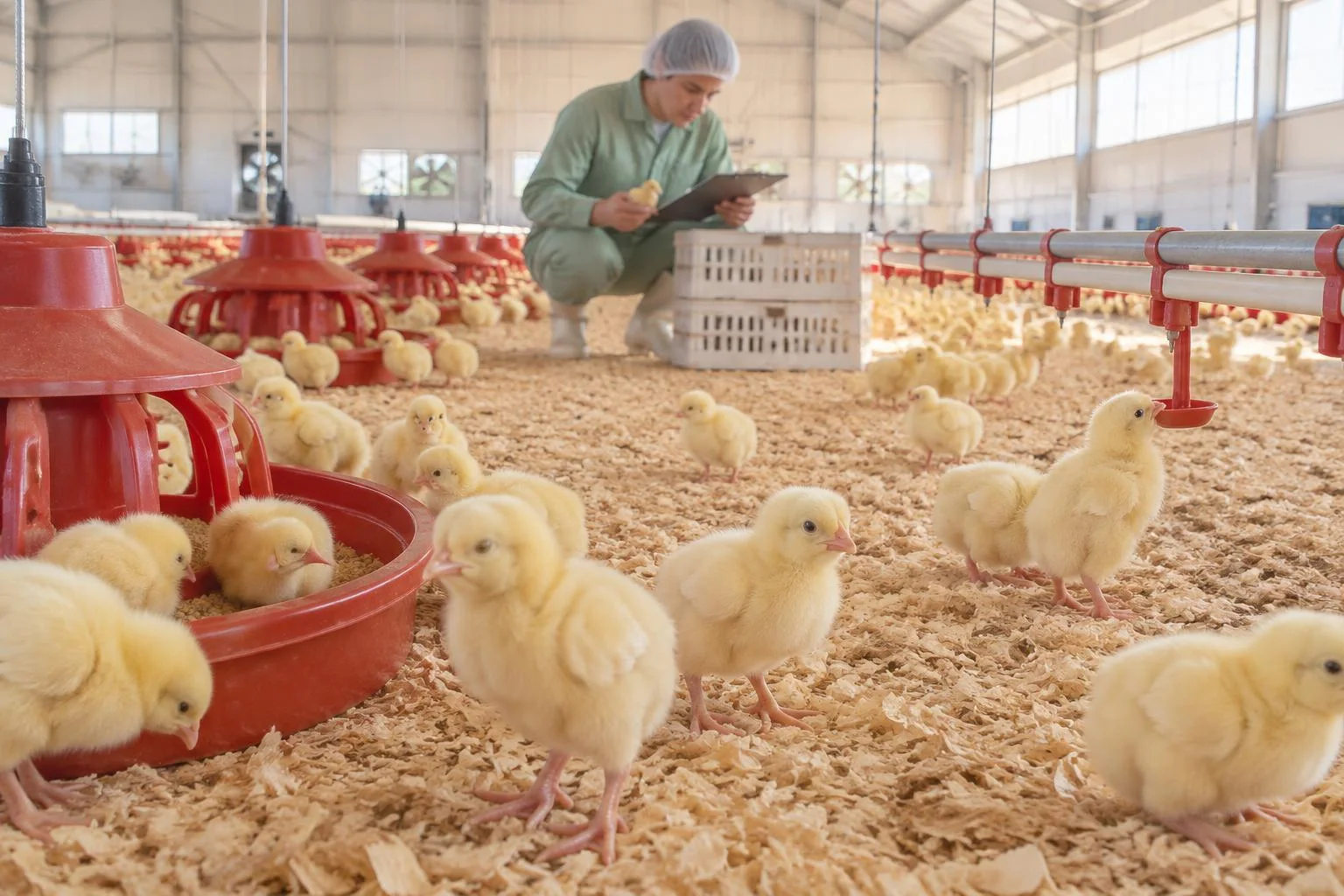
A practical hatchery-to-farm handover: identify the batch, prepare the house, assign observations and record what changes before deciding that new equipment is the answer.
By HatchMatch Group Editorial Desk · Last updated 2026-10-14
Editorial draft — human language and technical review pending. Not a diagnosis or treatment plan.
In short
Short answer. A useful chick-quality plan connects hatchery records, arrival observations, house readiness and named staff responsibilities. Record what arrived, confirm access to suitable feed and water, observe chick distribution and investigate changes with the farm team.
Key takeaways
- Agree which flock is arriving, the strain and intended production system, placement count, source, arrival window and receiving team.
- Before placement, check litter and floor conditions, the operating heating and ventilation system, feed availability, drinker function, lighting and backup arrangements.
- Log the batch reference, dispatch and arrival times when available, delivery documents, count received and any discrepancy.
- Assign a primary person and backup for feed and water checks, house-condition checks, observations and communication.
- Compare observations over time within the same flock.
Short answer. A useful chick-quality plan connects hatchery records, arrival observations, house readiness and named staff responsibilities. Record what arrived, confirm access to suitable feed and water, observe chick distribution and investigate changes with the farm team. A first-week handover can reveal missed tasks and system constraints; it cannot guarantee survival or compensate for a health problem. Define the operating need before asking manufacturers for equipment proposals.
Editorial review pending. English planning draft, 14 October 2026. Poultry-production and veterinary review is required before publication; no specialist endorsement is claimed. The cover is an illustration, not a customer farm photograph or an approved equipment layout. Breed, age, climate, housing and local welfare requirements determine appropriate operating settings. This guide does not diagnose disease or prescribe treatment.
1. Define a successful placement before delivery
Agree which flock is arriving, the strain and intended production system, placement count, source, arrival window and receiving team. Ask the hatchery which batch documents accompany the chicks and who handles questions after delivery. Keep broiler, replacement-layer and turkey records separate: their programs are not interchangeable. This article focuses on broiler chicks, not incubator operation or a turkey brooding standard.
Set farm-specific observation and escalation criteria with the hatchery and veterinarian using the applicable management guide. Record the guide edition and who approved the local plan. Avoid choosing a universal growth or survival figure as the definition of success; start with measurable readiness, consistent records and prompt escalation of concerns.
Want these figures for your own site, capacity and country? A HatchMatch specialist builds the budget with you — no buyer fees.
Start free2. Verify the house rather than trusting one display
Before placement, check litter and floor conditions, the operating heating and ventilation system, feed availability, drinker function, lighting and backup arrangements. Follow the relevant strain guide and local engineering assessment for settings and preparation time. A controller reading alone does not describe conditions throughout the chick area. Check representative locations, including places where doors, inlets or house geometry could produce different conditions.
Walk the route with the person receiving chicks. Can delivery staff reach the placement zone without crossing the farm's controlled hygiene boundary? Are crates and equipment handled under the site's biosecurity procedure? Map clean work, waste handling and visitor movement before the vehicle arrives. Do not improvise chemical or disinfection procedures from this checklist.
3. Capture the hatchery-to-farm handover
Log the batch reference, dispatch and arrival times when available, delivery documents, count received and any discrepancy. Record observations such as activity, distribution and visible concerns without turning them into a diagnosis. Note where and when observations were made. A dated record helps the hatchery and veterinarian investigate; it is not proof of which party caused a later problem.
If staff assess chick quality or crop fill, they need training and the farm's agreed method. Crop fill checks whether sampled chicks have taken feed and water after placement; it is not a standalone assessment of hatchery chick quality or a prediction of survival. Record the sample size, locations, time after placement and assessor. Comparing percentages from different observation times or sampling methods can mislead. Do not delay professional advice while trying to complete a form when birds show distress.
4. Give each shift an owner and an escalation route
Assign a primary person and backup for feed and water checks, house-condition checks, observations and communication. The next shift needs the latest completed check, any unresolved issue, what action was authorized and the next review time. A blank field should mean not recorded, not that conditions were normal.
| Handover item | Responsible role | What to record | Next step if unresolved |
|---|---|---|---|
| Batch identity and count | Receiving supervisor | Batch, arrival time, count and discrepancy | Contact hatchery representative |
| Feed and water access | House stockperson | Location checked, time and functional concern | Notify farm manager |
| House environment | Trained operator | Locations, readings, sensor and bird observations | Follow approved operating plan |
| Abnormal flock signs | Farm manager | Time, signs and birds affected where known | Contact poultry veterinarian |
| Shift handover | Outgoing and incoming staff | Open action, owner and next check | Confirm responsibility explicitly |
5. Read the first week as a sequence, not a single score
Compare observations over time within the same flock. Record feed and water use consistently and keep daily mortality and authorized removals as separate fields. If a rate is reported, state its period and denominator. For example, deaths during a stated period divided by birds placed is a placement-based mortality measure; it is not automatically equivalent to a survival measure after transfers or removals.
When an observation changes, check the timestamp, measurement method and known events before attributing the change to equipment. Look for interruptions, incomplete records or differences between locations. Sudden mortality, breathing difficulty, marked lethargy, lameness or abrupt changes in intake require prompt veterinary advice and applicable reporting procedures, not an online troubleshooting experiment.
6. Translate an observed constraint into a manufacturer brief
If the evidence points to an access, distribution, control or reliability limitation, describe that limitation before requesting hardware. Include the house dimensions, usable brooding area, flock and age range, climate, utilities, existing equipment, staff workflow and maintenance access. Ask the designer to explain the proposed operating envelope and commissioning checks. Equipment capacity is not a guarantee of chick performance.
Questions for manufacturers: What assumptions underlie chick access and distribution? How are sensors located and verified? What happens during a power or water interruption? Which operator checks remain manual? Who trains each shift, and what records demonstrate that the installed system works as specified?
Common mistakes: buying a larger heater without checking distribution; copying another strain's program; recording only the house average; leaving the receiving shift unnamed; treating an illustration as a layout; and delaying a veterinary call while comparing suppliers.
For performance investigations beyond this handover, use the existing broiler growth, uniformity and feed-conversion guide. For the broader planning sequence, see the poultry-house KPI plan. These pages address separate questions; this checklist owns the delivery-to-first-week handover.
Frequently asked questions
Can better brooding equipment guarantee chick survival? No. Health, hatchery and transport conditions, feed and water, the house environment and daily care interact. Equipment should address a documented constraint; abnormal signs need a poultry veterinarian.
What should I record when chicks arrive? Record batch identity, source, arrival time, count received, discrepancies, observations and the receiving person. Use the hatchery's agreed documentation and the farm's escalation plan.
Is a crop-fill percentage enough to judge chick quality? No. It checks feed and water uptake in sampled chicks after placement, not hatchery quality or future survival by itself. Timing, sampling and method matter; trained staff should interpret it alongside other observations under the relevant strain guide and local professional advice.
How do I make shift changes more reliable? Assign an owner and backup to each check, document the last observation and leave unresolved actions with a named person and next review time. Do not treat missing records as normal results.
Should I use the same first-week program for turkeys and layers? No. Use the appropriate species, strain, age and housing guidance. This broiler placement checklist does not supply turkey benchmarks or a replacement-layer rearing program.
When should staff stop investigating and call a veterinarian? Seek prompt advice for unusual deaths, respiratory signs, marked lethargy, lameness or a sudden change in feed or water intake. Follow local reporting rules for suspected notifiable disease.
Sources and review boundaries
Sources rechecked 14 October 2026: Aviagen Ross Broiler Management Handbook, 2025 edition, Section 2, Chick Management, especially Crop Fill and Table 2.6; Cobb Broiler Management Guide, linked 2021 edition, Chick Placement, Brooding Management and Crop Fill Evaluation. These support house readiness and post-placement observations, not a guaranteed quality or survival outcome. The responsibility table and record definitions are editorial planning aids, not source-prescribed protocols. Confirm the current strain edition and a professionally approved local program before use.
Illustration boundary. The chicks, feeders, drinkers and receiving worker match this article's subject. Their depicted size and age, equipment heights, spacing and handling are not validated operating instructions. A poultry-production specialist must review those details before publication; the image is not evidence of chick quality or survival.
Plan the project before sourcing
Use the farm-cost calculator for financial planning and review its methodology. Enter your own supported assumptions; calculator defaults are illustrative, not breed performance standards, turkey benchmarks or promises of yield, survival, profit or payback. This article does not create a separate financial estimate.
HatchMatch is a supplier-neutral procurement platform, not a manufacturer, installer, EPC contractor, veterinarian or lender. Buyer tools and guides are free. For assisted sourcing on commercial projects of USD 250,000 or more, submit a scope-defined poultry project RFQ. Every brief receives human review; we aim to reply within two business days. Suppliers decide whether to participate; proposal availability, delivery, financing and production outcomes are not guaranteed. Buyers contract directly with suppliers.
Frequently asked questions
- Can better brooding equipment guarantee chick survival?
- No. Health, hatchery and transport conditions, feed and water, the house environment and daily care interact. Equipment should address a documented constraint; abnormal signs need a poultry veterinarian.
- What should I record when chicks arrive?
- Record batch identity, source, arrival time, count received, discrepancies, observations and the receiving person. Use the hatchery's agreed documentation and the farm's escalation plan.
- Is a crop-fill percentage enough to judge chick quality?
- No. It checks feed and water uptake in sampled chicks after placement, not hatchery quality or future survival by itself. Timing, sampling and method matter; trained staff should interpret it alongside other observations under the relevant strain guide and local professional advice.
- How do I make shift changes more reliable?
- Assign an owner and backup to each check, document the last observation and leave unresolved actions with a named person and next review time. Do not treat missing records as normal results.
- Should I use the same first-week program for turkeys and layers?
- No. Use the appropriate species, strain, age and housing guidance. This broiler placement checklist does not supply turkey benchmarks or a replacement-layer rearing program.
- When should staff stop investigating and call a veterinarian?
- Seek prompt advice for unusual deaths, respiratory signs, marked lethargy, lameness or a sudden change in feed or water intake. Follow local reporting rules for suspected notifiable disease.
More buyer questions are answered in our poultry procurement FAQ — also available in Español, Français, Português, Deutsch, العربية, Русский, Türkçe, Tiếng Việt.
From this article to a procurement-ready RFQ
HatchMatch Group is an independent sourcing desk — not a manufacturer or EPC contractor. These are the four steps we actually use with commercial poultry and hatchery buyers. If you are still deciding scope, start with what commercial poultry equipment includes and how suppliers are compared.
- 1. Plan the projectCapacity, climate and house layout in one guided workflowOpen
- 2. Build the RFQScope, specifications and comparable line itemsOpen
- 3. Submit the requestReviewed manually before HatchMatch contacts any supplier on the buyer's behalfOpen
- 4. Track and compareFollow status and normalise supplier responsesOpen
Prefer the numbers first? Start with the poultry project cost calculator or browse the project planning guides.
HatchMatch Intelligence · Email updates
Get poultry sourcing and project updates by email
A short digest of newly published HatchMatch articles, guides and center updates on the topics you choose — with links to the full pieces.