
Broiler Brooding Equipment: Heaters, Brooding Zones and the First 14 Days — What to Specify and Buy
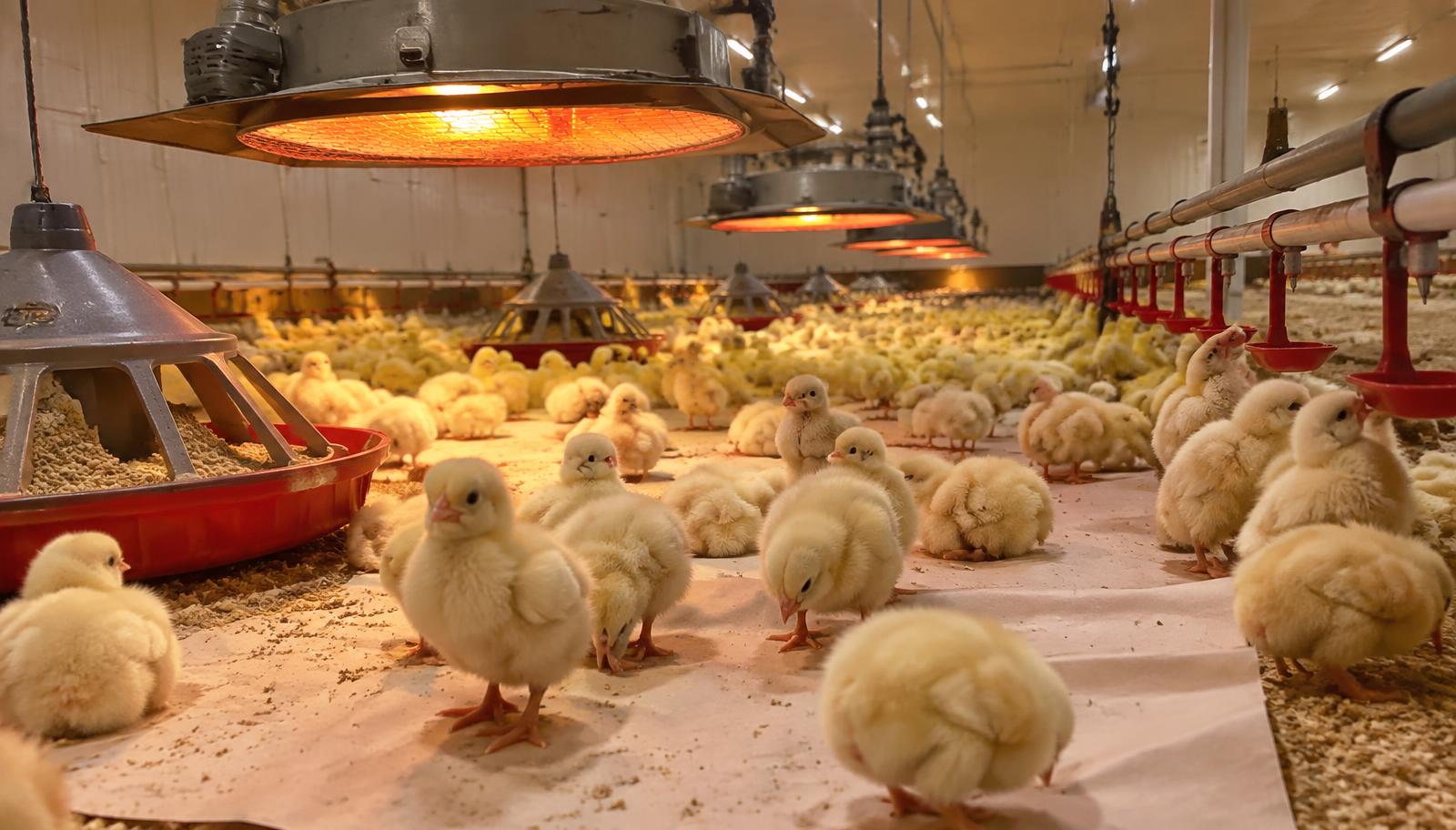
A buyer's guide to broiler brooding equipment: choosing heater types, sizing brooding zones, controlling draughts and ventilation in the first two weeks, and writing a specification suppliers can price the same way.
By HatchMatch Group Sourcing Desk · Last updated 2026-10-07
In short
Short answer. The first 14 days decide much of a broiler flock's final performance, because day-old chicks cannot regulate their own body temperature and have limited reserves. Brooding equipment exists to hold a warm, draught-free, evenly lit micro-climate over a confined part of the house (a brooding zone) until chicks are feathered and mobile enough to use the whole building.
Key takeaways
- A grown house ventilation and heating system is sized for thousands of adult birds; a one-day-old chick needs a tiny, stable, warm pocket of air at floor level, often while the rest of the house stays unheated to save fuel.
- | Heater type | How it works | Main buying points | |---|---|---| | Radiant (gas infrared, canopy or pancake) | Heats birds and litter directly by radiation, not just the air | Number and spacing of units per brooding zone, hanging height and how it adjusts with chick age, gas supply and pressure, radiant pattern uniformity | | Hot-air spot brooders | Blow heated air into the brooding zone from a central unit | Air distribution evenness, noise level, placement relative to curtains and feeders | | Whole-house hot-air or hot-water heaters | Heat the entire house air volume, used with or instead of spot brooders | Capacity at design minimum outdoor temperature, distribution ductwork, compatibility with minimum-ventilation timers | | Radiant heating panels / tube heaters | Fixed overhead panels providing even radiant heat across a larger area | Mounting height, zoning per section, response time to setpoint changes |
- A brooding zone is normally a fraction of the house — commonly planned at roughly one-third to one-half of the floor area for the first days, though the right figure depends on heater output, climate and stocking plan — confined with brooding curtains or partitions hung from the ceiling or a cable system.
- Brooding needs minimum ventilation, not maximum: enough fresh air to remove moisture, ammonia and carbon dioxide without creating draughts on tiny chicks.
- Because a few hours of chilling or overheating can cause lasting damage to a brood, specify a controller that logs temperature, humidity and (where fitted) air quality at multiple points in the brooding zone, not only at one central sensor — temperature can vary several degrees between the centre and the edge of a brooding zone.
Short answer. The first 14 days decide much of a broiler flock's final performance, because day-old chicks cannot regulate their own body temperature and have limited reserves. Brooding equipment exists to hold a warm, draught-free, evenly lit micro-climate over a confined part of the house (a brooding zone) until chicks are feathered and mobile enough to use the whole building. The core purchase decisions are the heater type, how the zone is confined and ventilated, and how temperature, humidity and air quality are controlled and logged — specify all three together, not the heater alone.
This guide is for broiler investors, integrators and project teams buying new houses or upgrading brooding equipment in existing ones. It explains the equipment choices in plain terms and lists what to include in a request for quotation (RFQ). Target temperatures, stocking densities and ventilation rates vary by breed, chick weight, climate and local rules — always confirm them against the breed's management guide and your veterinarian or technical adviser.
Why brooding equipment is a separate buying decision
A grown house ventilation and heating system is sized for thousands of adult birds; a one-day-old chick needs a tiny, stable, warm pocket of air at floor level, often while the rest of the house stays unheated to save fuel. Brooding equipment bridges that gap: it heats and confines a fraction of the floor area, then is removed or opened out as birds grow. Treating brooding as 'turn the main heaters up' usually produces uneven temperatures, chilling at the edges and high early mortality. Most experienced growers specify brooding equipment as a distinct line item from main-house heating and ventilation.
Choosing the heater type
Want these figures for your own site, capacity and country? A HatchMatch specialist builds the budget with you — no buyer fees.
Start free| Heater type | How it works | Main buying points |
|---|---|---|
| Radiant (gas infrared, canopy or pancake) | Heats birds and litter directly by radiation, not just the air | Number and spacing of units per brooding zone, hanging height and how it adjusts with chick age, gas supply and pressure, radiant pattern uniformity |
| Hot-air spot brooders | Blow heated air into the brooding zone from a central unit | Air distribution evenness, noise level, placement relative to curtains and feeders |
| Whole-house hot-air or hot-water heaters | Heat the entire house air volume, used with or instead of spot brooders | Capacity at design minimum outdoor temperature, distribution ductwork, compatibility with minimum-ventilation timers |
| Radiant heating panels / tube heaters | Fixed overhead panels providing even radiant heat across a larger area | Mounting height, zoning per section, response time to setpoint changes |
Many commercial broiler operations combine a background whole-house heating source with radiant or spot brooders concentrated in the brooding zone, because chicks respond better to radiant warmth directly on their backs than to warm air alone. Ask each supplier which combination their design assumes and why, and ask for the expected fuel or energy consumption per thousand birds for the brooding period, as a planning figure to compare quotes — not as a guaranteed cost.
Sizing and confining the brooding zone
A brooding zone is normally a fraction of the house — commonly planned at roughly one-third to one-half of the floor area for the first days, though the right figure depends on heater output, climate and stocking plan — confined with brooding curtains or partitions hung from the ceiling or a cable system. Curtains stop draughts, hold warm air near the floor and let birds find feed and water without travelling far. As chicks grow, the curtains are progressively opened until the whole house is available, usually by the end of the first one to two weeks, confirmed against your breed guide.
Specify the curtain or partition material (fire-rated where required), the hanging and raising mechanism (manual winch or motorised, tied into the controller), and how many brooding zones the house is divided into if it is a long building. The birds per house calculator and farm cost calculator help with preliminary placement numbers and budget; both give planning estimates, not supplier prices.
Ventilation during brooding
Brooding needs minimum ventilation, not maximum: enough fresh air to remove moisture, ammonia and carbon dioxide without creating draughts on tiny chicks. This is usually delivered through small, timed inlet and fan cycles rather than full tunnel or side-wall ventilation, which is why many controllers run a distinct 'brooding' ventilation programme for the first one to two weeks before switching to the standard growing programme. Ask suppliers to show their minimum-ventilation timing and inlet opening for your design minimum outdoor temperature, and how the transition to full ventilation is staged as the brooding curtains open. The ventilation calculator gives a first sizing reference for the whole-house system that brooding ventilation sits within.
Lighting and water during brooding
Lighting. Chicks need higher light intensity than adult broilers to find feed and water in the first days, stepping down later in the cycle according to the lighting programme. Specify dimmable fixtures that cover the brooding zone evenly, including at the curtain edges. The poultry lighting calculator helps size fixture count and spacing for a first estimate. Water. Chick-height nipple lines or supplementary drinkers (bell or cup types placed for day-old access) with low starting pressure are standard in the brooding zone; ask how pressure and nipple height are adjusted daily as chicks grow, and size the overall system with the water consumption calculator.
Monitoring, controls and alarms
Because a few hours of chilling or overheating can cause lasting damage to a brood, specify a controller that logs temperature, humidity and (where fitted) air quality at multiple points in the brooding zone, not only at one central sensor — temperature can vary several degrees between the centre and the edge of a brooding zone. Require high/low temperature alarms routed to a phone or pager, and ask whether the controller can run a distinct brooding-stage programme that automatically steps down target temperature and steps up ventilation on a schedule you set, confirmed against breed guidance. Backup power for heaters, fans and the controller is essential; size it with the poultry generator sizing calculator.
What to include in the RFQ
A brooding-equipment RFQ that suppliers can price on the same basis should state: house dimensions and number of brooding zones required; target bird numbers and placement schedule; heater type preference or a request for the supplier to propose and justify one; design minimum and maximum outdoor temperatures; curtain or partition material and operating mechanism; lighting requirement during brooding; drinker type and height-adjustment method; controller features including brooding-stage programming, sensor count and alarm routing; backup power requirement; and scope of installation, commissioning and training. Ask for delivery terms and named place (see our guide to Incoterms for poultry equipment imports) and warranty terms in writing, including spare heater parts and sensors (see our guide to warranty and spare parts).
Questions to ask every supplier
What target temperatures and step-down schedule does your brooding programme assume, and for which breed? How many sensors feed the controller inside each brooding zone, and where are they placed? What is the expected heating fuel or energy use per thousand chicks for the brooding period? How quickly can curtains or partitions be opened as birds grow, and is that motorised or manual? What happens to brooding temperature and ventilation automatically if mains power fails and the generator starts? Which brooding components are made by you and which are bought in, and who stocks spares locally? Request written answers and compare them in one table.
Common mistakes
Sizing brooding heaters from the whole house area instead of the confined brooding zone. Running full-house ventilation rates during the first days, chilling chicks at floor level. Relying on a single central temperature sensor when the zone has cold edges. Leaving curtains or partitions off the specification and improvising with plastic sheeting. Skipping a backup-power test for brooding equipment specifically, not just for the whole farm. And comparing heater quotes without matching fuel type, output and the ventilation programme they assume.
Where HatchMatch fits
HatchMatch is a supplier-neutral procurement platform for commercial poultry projects, typically USD 250,000 and above. It is not a manufacturer, installer, EPC contractor or consultant, and it does not sign supply contracts — buyers contract directly with the suppliers they choose. HatchMatch helps you turn your requirements into one written specification so offers can be compared line by line. Every brief receives human review, and HatchMatch aims to reply within two business days. To start, submit a poultry project request with your house dimensions, bird numbers and timeline.
Frequently asked questions
How long does brooding last for broilers? Typically around the first 10 to 14 days, until chicks are feathered and mobile enough to use the whole house, though the exact length depends on breed, season and target weight — confirm with your breed guide.
Do I need both whole-house heating and spot or radiant brooders? Many commercial operations use both: background whole-house heat plus radiant or spot brooders concentrated in the brooding zone, because chicks respond better to direct radiant warmth. Ask suppliers to justify their proposed combination for your climate.
How big should the brooding zone be? It is commonly planned at roughly one-third to one-half of the house floor area for the first days, but the right figure depends on heater output, climate and stocking plan — ask the supplier to size it against their equipment and your placement numbers.
What ventilation rate is used during brooding? A reduced, carefully timed minimum-ventilation rate rather than the full growing-stage rate, to remove moisture and ammonia without chilling chicks. The controller should run a distinct brooding ventilation programme.
What should I ask for in writing before ordering brooding equipment? Target temperatures and step-down schedule, sensor count and placement, fuel or energy use estimate, curtain/partition mechanism, backup-power behaviour, and spare-parts availability, all referenced to your house size and bird numbers.
Frequently asked questions
- What target temperatures and step-down schedule does your brooding programme assume, and for which breed?
- How many sensors feed the controller inside each brooding zone, and where are they placed? What is the expected heating fuel or energy use per thousand chicks for the brooding period? How quickly can curtains or partitions be opened as birds grow, and is that motorised or manual? What happens to brooding temperature and ventilation automatically if mains power fails and the generator starts? Which brooding components are made by you and which are bought in, and who stocks spares locally? Request written answers and compare them in one table.
- How long does brooding last for broilers?
- Typically around the first 10 to 14 days, until chicks are feathered and mobile enough to use the whole house, though the exact length depends on breed, season and target weight — confirm with your breed guide.
- Do I need both whole-house heating and spot or radiant brooders?
- Many commercial operations use both: background whole-house heat plus radiant or spot brooders concentrated in the brooding zone, because chicks respond better to direct radiant warmth. Ask suppliers to justify their proposed combination for your climate.
- How big should the brooding zone be?
- It is commonly planned at roughly one-third to one-half of the house floor area for the first days, but the right figure depends on heater output, climate and stocking plan — ask the supplier to size it against their equipment and your placement numbers.
- What ventilation rate is used during brooding?
- A reduced, carefully timed minimum-ventilation rate rather than the full growing-stage rate, to remove moisture and ammonia without chilling chicks. The controller should run a distinct brooding ventilation programme.
- What should I ask for in writing before ordering brooding equipment?
- Target temperatures and step-down schedule, sensor count and placement, fuel or energy use estimate, curtain/partition mechanism, backup-power behaviour, and spare-parts availability, all referenced to your house size and bird numbers.
More buyer questions are answered in our poultry procurement FAQ — also available in Español, Français, Português, Deutsch, العربية, Русский, Türkçe, Tiếng Việt.
From this article to a procurement-ready RFQ
HatchMatch Group is an independent sourcing desk — not a manufacturer or EPC contractor. These are the four steps we actually use with commercial poultry and hatchery buyers. If you are still deciding scope, start with what commercial poultry equipment includes and how suppliers are compared.
- 1. Plan the projectCapacity, climate and house layout in one guided workflowOpen
- 2. Build the RFQScope, specifications and comparable line itemsOpen
- 3. Submit the requestReviewed manually before any supplier introductionOpen
- 4. Track and compareFollow status and normalise supplier responsesOpen
Prefer the numbers first? Start with the poultry project cost calculator or browse the project planning guides.