
Incoterms for Importing Poultry Equipment: EXW, FOB, CIF, DAP and DDP Explained for Farm Projects
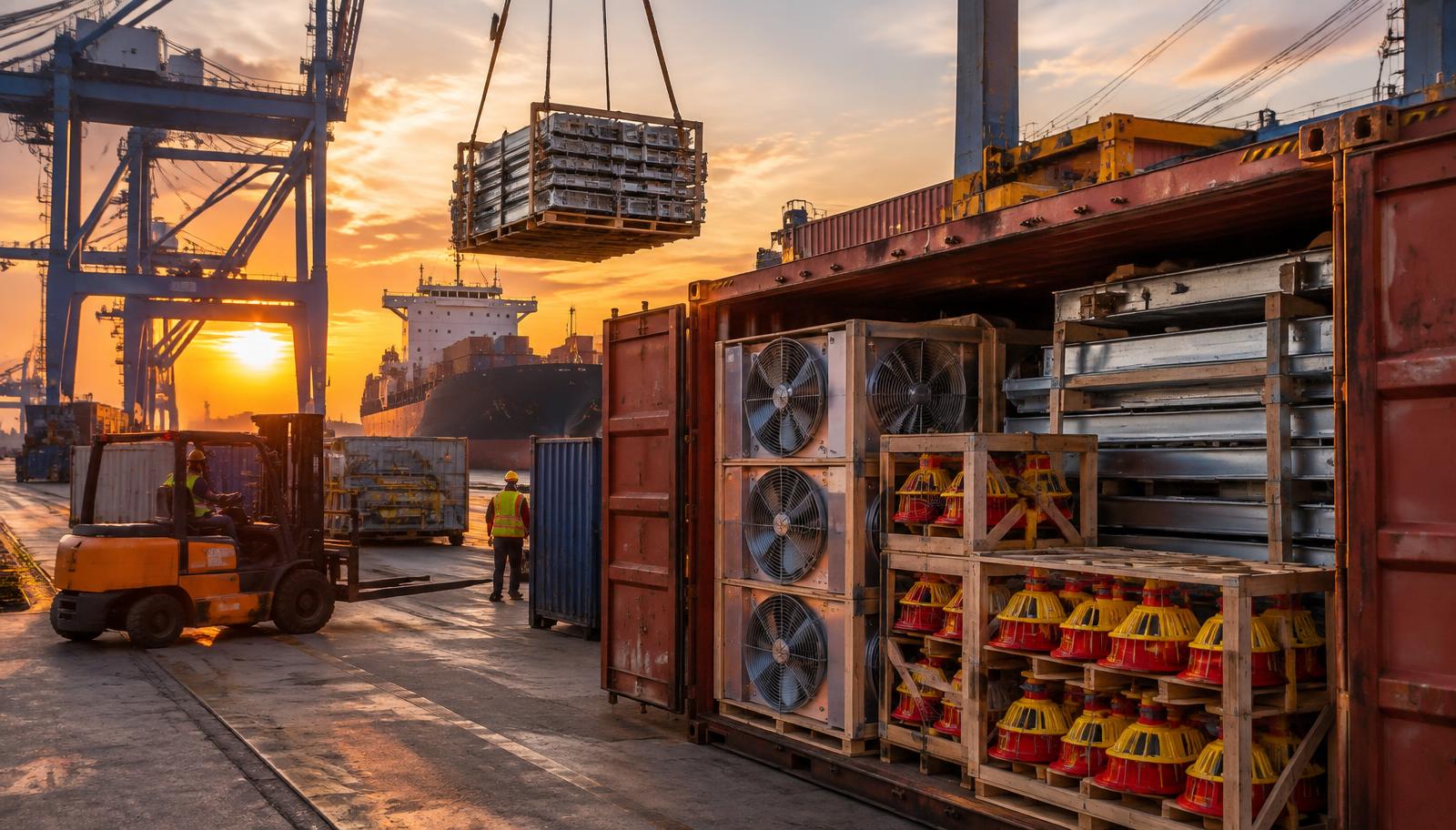
A buyer's guide to Incoterms 2020 for commercial poultry equipment: what each term covers, where risk transfers, the costs quotes leave out, and how to compare supplier offers on one delivery basis.
By HatchMatch Group Sourcing Desk · Last updated 2026-10-06
In short
Short answer. An Incoterm decides who pays for freight, insurance, export and import clearance, and at which point the risk of loss passes from the supplier to the buyer. For commercial poultry equipment — fans, cooling pads, feeding and drinking lines, cage or aviary systems, egg collection, setters and hatchers — most buyers receive quotes on FOB, CIF, CFR or DAP.
Key takeaways
- A poultry house package is rarely one shipment.
- | Incoterm | Supplier's main obligation | Risk passes to buyer | Typical use in poultry projects | |---|---|---|---| | EXW (Ex Works) | Makes goods available at its factory | At the factory, before loading | Rarely sensible for imports; buyer handles export clearance | | FCA (Free Carrier) | Clears export, hands goods to buyer's carrier | When handed to the carrier | Good for containers and multi-factory consolidation | | FOB (Free On Board) | Clears export, loads on the vessel | When goods are on board | Common sea-freight quote; sea and inland waterway only | | CFR (Cost and Freight) | FOB plus sea freight to destination port | When goods are on board at origin | Supplier books freight, buyer still carries transit risk | | CIF (Cost, Insurance and Freight) | CFR plus minimum cargo insurance | When goods are on board at origin | Insurance is minimum cover (ICC Clauses C) unless agreed otherwise | | CIP (Carriage and Insurance Paid To) | Carriage plus insurance to named place | When handed to the first carrier | Higher default cover (ICC Clauses A); any transport mode | | DAP (Delivered at Place) | Delivers to named place, unloading excluded | At the named place, ready for unloading | Delivery to farm site; buyer pays import duty and unloads | | DPU (Delivered at Place Unloaded) | DAP plus unloading at destination | After unloading | Useful when supplier controls site unloading | | DDP (Delivered Duty Paid) | Delivers, clears import and pays duties | At the named place | Simplest for the buyer, but supplier must be able to import in your country |
- An Incoterm defines the supplier's scope, not your total landed cost.
- Choose DAP or DDP when you have little import experience, the farm is far from the port, or financing requires a clear delivered price.
- An Incoterm without a named place is incomplete.
Short answer. An Incoterm decides who pays for freight, insurance, export and import clearance, and at which point the risk of loss passes from the supplier to the buyer. For commercial poultry equipment — fans, cooling pads, feeding and drinking lines, cage or aviary systems, egg collection, setters and hatchers — most buyers receive quotes on FOB, CIF, CFR or DAP. The cheapest-looking quote is often the one that leaves the most cost and risk with the buyer. Before comparing prices, convert every offer to the same Incoterm and the same named place.
This guide is for poultry investors, integrators and project teams buying equipment packages typically worth USD 250,000 or more. It explains the Incoterms 2020 rules published by the International Chamber of Commerce (ICC) in practical poultry-project terms. It is general information, not legal or customs advice; confirm the final wording with your lawyer, bank and customs broker.
Why Incoterms matter more for poultry projects
A poultry house package is rarely one shipment. A 100,000-hen layer project can arrive in 15–40 containers from several factories, sometimes with control panels by air. Steel cage modules are heavy and bulky, evaporative cooling pads are fragile, and electronics are sensitive to humidity. A delayed or damaged container can stop installation for the whole house, because a missing gearbox or controller blocks commissioning. The Incoterm defines who carries that risk on the way — and who claims against the insurer if something arrives damaged.
The Incoterms buyers actually see in poultry equipment quotes
Want these figures for your own site, capacity and country? A HatchMatch specialist builds the budget with you — no buyer fees.
Start free| Incoterm | Supplier's main obligation | Risk passes to buyer | Typical use in poultry projects |
|---|---|---|---|
| EXW (Ex Works) | Makes goods available at its factory | At the factory, before loading | Rarely sensible for imports; buyer handles export clearance |
| FCA (Free Carrier) | Clears export, hands goods to buyer's carrier | When handed to the carrier | Good for containers and multi-factory consolidation |
| FOB (Free On Board) | Clears export, loads on the vessel | When goods are on board | Common sea-freight quote; sea and inland waterway only |
| CFR (Cost and Freight) | FOB plus sea freight to destination port | When goods are on board at origin | Supplier books freight, buyer still carries transit risk |
| CIF (Cost, Insurance and Freight) | CFR plus minimum cargo insurance | When goods are on board at origin | Insurance is minimum cover (ICC Clauses C) unless agreed otherwise |
| CIP (Carriage and Insurance Paid To) | Carriage plus insurance to named place | When handed to the first carrier | Higher default cover (ICC Clauses A); any transport mode |
| DAP (Delivered at Place) | Delivers to named place, unloading excluded | At the named place, ready for unloading | Delivery to farm site; buyer pays import duty and unloads |
| DPU (Delivered at Place Unloaded) | DAP plus unloading at destination | After unloading | Useful when supplier controls site unloading |
| DDP (Delivered Duty Paid) | Delivers, clears import and pays duties | At the named place | Simplest for the buyer, but supplier must be able to import in your country |
Note two details that cause disputes. First, under CFR and CIF the supplier pays the freight but the risk still passes at the port of loading — if the ship is delayed or cargo is damaged at sea, the buyer claims under the insurance. Second, FOB, CFR and CIF are designed for sea cargo loaded on board; for containers handed over at a terminal, the ICC recommends FCA, CPT or CIP instead.
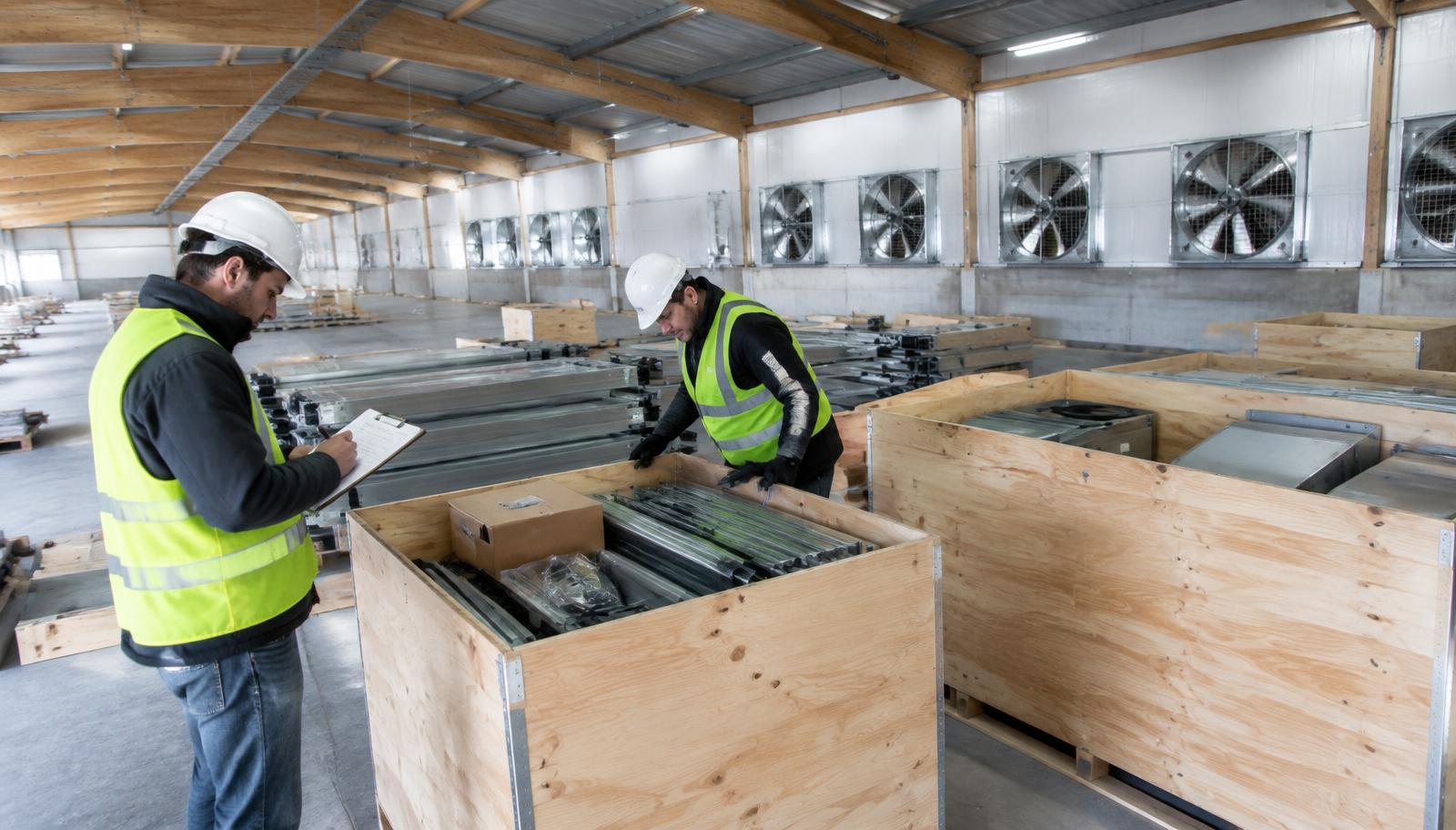
Costs that quotes often leave out
An Incoterm defines the supplier's scope, not your total landed cost. When you compare offers, add the items that sit with the buyer under each term:
Origin and transit. Export packing suitable for sea freight and humid climates, inland transport to the port, terminal handling at origin, and sea or air freight if not included. Insurance. Under CIF, the required minimum is 110% of the contract value on limited-risk clauses; many buyers ask for all-risk cover. Destination. Terminal handling and port storage, demurrage and detention if containers are held, customs brokerage, import duties and VAT, inspection or conformity certificates, and inland haulage to the farm. Site. Unloading equipment such as a crane or forklift, secure dry storage until installation, and the supplier's installation and commissioning team — which is usually priced separately from the equipment.
Use the farm cost calculator for a preliminary budget of the full project, then replace its assumptions with real quotes as they arrive. The calculator is a planning estimate, not a supplier price.
How to choose the right Incoterm for your project
Choose DAP or DDP when you have little import experience, the farm is far from the port, or financing requires a clear delivered price. Check that the supplier has a local agent or freight partner who can actually clear goods in your country; DDP is impossible in some markets for foreign sellers. Choose FOB or FCA when you have a reliable freight forwarder, buy from several factories and want to consolidate shipments, or can secure better freight and insurance rates yourself. Choose CIF or CIP when the supplier ships regularly to your port and you prefer one invoice for goods and freight — but specify the insurance level in the contract.
For multi-supplier projects, a common approach is FCA or FOB at each factory with one forwarder consolidating to the site. For turnkey contracts, DAP to the farm with installation included is often cleaner because one party carries the delivery risk to the site. Neither is right in every case; the choice depends on your team, your port and the suppliers' logistics capability.
Write the Incoterm correctly in the RFQ and contract
An Incoterm without a named place is incomplete. Write it as term + exact place + Incoterms 2020, for example "FOB Qingdao Port, Incoterms 2020" or "DAP farm site, [address], Incoterms 2020". State the currency, the payment terms (for example, a letter of credit linked to the bill of lading), partial shipments allowed or not, the latest shipment date, and who arranges pre-shipment inspection. Ask every supplier to quote on the same term, and if one supplier insists on another, request an additional price on your preferred basis.
A same-basis comparison checklist
Before ranking quotes, confirm for each offer: the Incoterm and named place; the number and type of containers; packing standard; whether insurance is included and at what cover; estimated transit time; who clears import customs; whether unloading, installation, supervision and commissioning are included; the documents provided (commercial invoice, packing list, bill of lading, certificate of origin, test certificates); and the delivery schedule relative to your construction plan. Turn the differences into money and days before you compare the totals.
Where HatchMatch fits
HatchMatch is a supplier-neutral procurement platform for commercial poultry projects. It does not ship, insure or clear goods, and it is not a party to the supply contract. What it does: help you put the delivery basis, named place and scope into one written specification, so that offers can be compared line by line. Every brief receives human review, and HatchMatch aims to reply within two business days. To start, submit a poultry project request with your capacity, country, site and preferred delivery terms.
Frequently asked questions
Is FOB or CIF better for poultry equipment? Neither is better by default. CIF is simpler if the supplier has good freight rates to your port, but the insurance is minimum cover and risk still passes at loading. FOB gives you control over freight and insurance if you have a capable forwarder.
Does DDP mean there are no extra costs? DDP covers delivery, import clearance and duties to the named place, but usually not unloading, storage, installation or commissioning. Read the scope line by line.
Which Incoterm applies to installation? None. Incoterms cover delivery and risk only. Installation, supervision, commissioning and training must be written separately in the contract.
Frequently asked questions
- Is FOB or CIF better for poultry equipment?
- Neither is better by default. CIF is simpler if the supplier has good freight rates to your port, but the insurance is minimum cover and risk still passes at loading. FOB gives you control over freight and insurance if you have a capable forwarder.
- Does DDP mean there are no extra costs?
- DDP covers delivery, import clearance and duties to the named place, but usually not unloading, storage, installation or commissioning. Read the scope line by line.
- Which Incoterm applies to installation?
- None. Incoterms cover delivery and risk only. Installation, supervision, commissioning and training must be written separately in the contract.
More buyer questions are answered in our poultry procurement FAQ — also available in Español, Français, Português, Deutsch, العربية, Русский, Türkçe, Tiếng Việt.
From this article to a procurement-ready RFQ
HatchMatch Group is an independent sourcing desk — not a manufacturer or EPC contractor. These are the four steps we actually use with commercial poultry and hatchery buyers. If you are still deciding scope, start with what commercial poultry equipment includes and how suppliers are compared.
- 1. Plan the projectCapacity, climate and house layout in one guided workflowOpen
- 2. Build the RFQScope, specifications and comparable line itemsOpen
- 3. Submit the requestReviewed manually before any supplier introductionOpen
- 4. Track and compareFollow status and normalise supplier responsesOpen
Prefer the numbers first? Start with the poultry project cost calculator or browse the project planning guides.