
Market intelligence · Japan · Poultry meat and eggs
Japan poultry and egg imports: which origins have access, what flows, and who buys
Japan imported USD 1.44 billion of poultry meat (HS 0207) in 2025, about 61% of it from Brazil and 37% from Thailand by value, and USD 97.9 million of egg products (HS 0408), led by the United States, China and India (WITS, reported by Japan). Access is decided by Japan's Animal Quarantine Service, not by trade history. Of the five origins in this map, only India shows a confirmed recent flow into Japan — egg products, USD 13.9 million in 2025. Peru and Colombia appear on Japan's poultry lists, but Peru is suspended for avian influenza since December 2022 and neither shipped poultry meat or shell eggs to Japan in 2024–2025. Ecuador and Kenya have no listed route for poultry meat or table eggs. Every route needs a product-, origin- and facility-specific check before a transaction.
Sources checked .
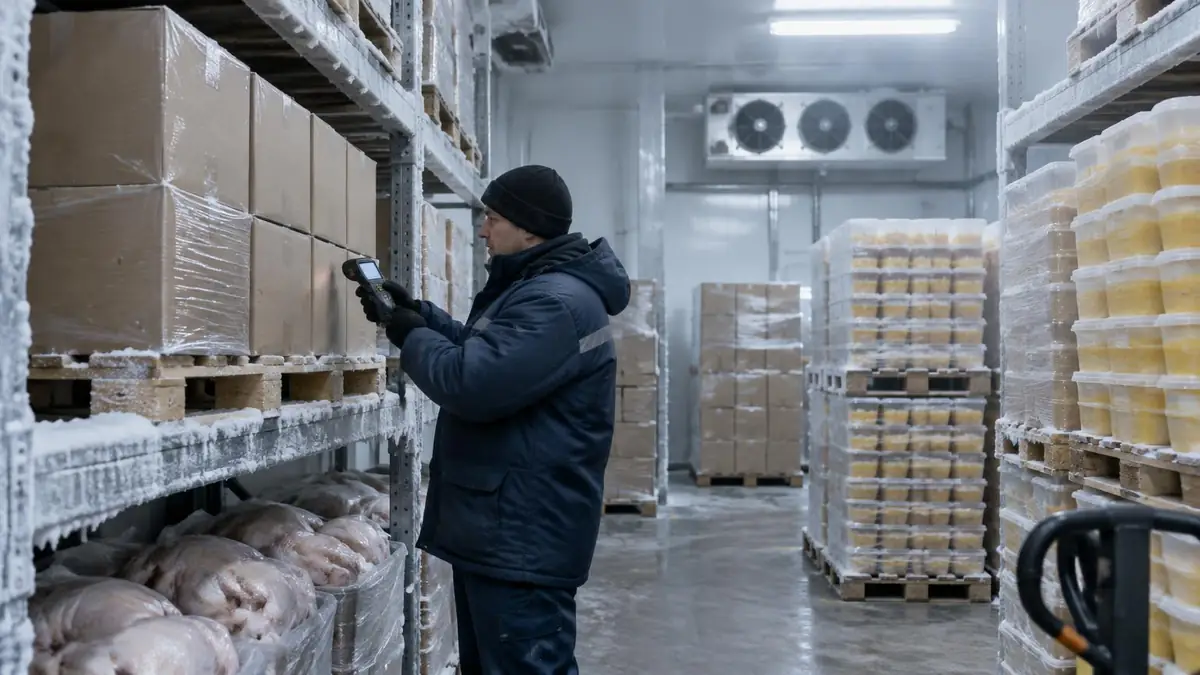
Sanitary access by origin: Ecuador, Peru, India, Kenya and Colombia
Japan only accepts poultry meat from countries with agreed animal-health conditions, and poultry and eggs from designated regions with an exporting-government inspection certificate; avian-influenza outbreaks suspend imports. A country listing is a starting point, not proof that a certificate model or a specific plant is approved today.
- Heat-processed poultry has its own country list (for example Thailand, China and Vietnam); none of the five origins is on it.
- Heat-treated liquid egg has bilateral conditions only for the United States, Canada, Mexico, Singapore and France, and some of those list no designated facilities.
- Spray-dried egg powder (whole egg, yolk, white) falls under a separate Animal Quarantine criterion, which is why egg powder can move from origins that cannot ship meat or shell eggs. Food-safety and customs requirements still apply.
| Origin | Poultry meat (fresh/frozen) | Table eggs | Egg products | Status |
|---|---|---|---|---|
| Ecuador | Not on the bilateral-conditions list | Not a designated region (table updated 22 Jul 2026) | No liquid-egg conditions; spray-dried powder has a separate quarantine criterion | No confirmed route. Regulatory check required before publication or transaction |
| Peru | On the list (conditions dated 28 Feb 2017) | Designated region | No liquid-egg conditions | Whole country suspended for avian influenza since 2 Dec 2022 (page updated 23 Oct 2026). Regulatory check required before publication or transaction |
| India | Not on the bilateral-conditions list | Not a designated region | Imports recorded: USD 4.6 million (2024) and USD 13.9 million (2025) under HS 0408 | Confirmed flow for egg products only; product-specific check still needed. Regulatory check required before publication or transaction |
| Kenya | Not on the bilateral-conditions list | Not a designated region | No liquid-egg conditions; no recorded imports | No confirmed route. Regulatory check required before publication or transaction |
| Colombia | On the list, with designated-facility conditions | Designated region (certificate required) | No liquid-egg conditions | Avian-influenza suspension from 2 Jul 2026 lifted 16 Sep 2026; no poultry-meat or shell-egg imports recorded in 2024–2025. Regulatory check required before publication or transaction |
Poultry-meat imports: Brazil and Thailand supply almost all of it
In HS 0207 terms, Japan's imports were USD 1.49 billion (646,847 t) in 2024 and USD 1.44 billion (598,586 t) in 2025. Brazil's share of the quantity was about 70% in 2024 and 68% in 2025 (our calculation). None of the five origins in this map appears as a supplier in either year.
| Origin | 2024 value (USD) | 2025 value (USD) | 2025 quantity | 2025 share of value |
|---|---|---|---|---|
| Brazil | 922.6 million | 882.8 million | 404,120 t | 61.2% |
| Thailand | 522.3 million | 529.3 million | 185,784 t | 36.7% |
| United States | 18.5 million | 17.9 million | 7,402 t | 1.2% |
| Ecuador, Peru, India, Kenya, Colombia | Not reported | Not reported | — | — |
| All origins | 1,485.1 million | 1,442.6 million | 598,586 t | 100% |
Processed chicken is close to half of chicken imports
USDA's August 2026 report states that imported processed chicken products account for approximately 47% of Japan's total chicken imports, driven by domestic labour shortages and processing costs. Its chart (Trade Data Monitor data) shows about 316,000 t from Thailand and 202,000 t from China in 2025. Japan permits only heat-treated processed chicken from China. Exact HS 1602.32 figures could not be retrieved from WITS for this page.
Sources: [13]
Egg imports: mostly egg products, with India a growing origin
Japan's HS 0408 egg-product imports were USD 81.3 million in 2024 and USD 97.9 million in 2025. India's value rose from USD 4.6 million (634,850 kg) to USD 13.9 million (1,786,050 kg). Shell-egg imports (HS 0407, all shell eggs, not table eggs only) were small: USD 6.9 million in 2024 and USD 19.0 million in 2025, led in 2025 by Brazil, Malaysia and Thailand.
ALIC's fiscal-year statistics show FY2025 imports of 2,450.7 t of yolk powder, 2,116.5 t of whole-egg powder and 8,678.9 t of dried albumen. ALIC's 2018 review describes albumen powder as a binder for ham and sausages and whole-egg and yolk powders as mainly for confectionery and bakery, with India at 11% of albumen-powder supply that year.
| Origin | 2024 value (USD) | 2025 value (USD) | 2025 quantity | 2025 share of value |
|---|---|---|---|---|
| United States | 36.6 million | 36.4 million | 6,305 t | 37.2% |
| China | 11.5 million | 16.1 million | 3,633 t | 16.5% |
| India | 4.6 million | 13.9 million | 1,786 t | 14.2% |
| Ecuador, Peru, Kenya, Colombia | Not reported | Not reported | — | — |
| All origins | 81.3 million | 97.9 million | 17,288 t | 100% |
Japanese buyer types and their likely sourcing needs
Channels marked confirmed are described in the cited reports; the importer role is a working hypothesis to check for each buyer, because the reports we read do not describe it directly.
| Buyer type | Evidence | Likely sourcing needs |
|---|---|---|
| Retailers (supermarket chains) | Confirmed channel (USDA, Aug 2026) | Consistent cut and pack specification, price stability under inflation pressure, traceable eligible origin |
| Food processors | Confirmed channel (USDA, Aug 2026) | Raw material to technical specification; processed or heat-treated inputs where labour is short |
| Foodservice and convenience stores | Confirmed channel (USDA: karaage sales growth) | Ready-to-cook or heat-treated chicken in fixed portions; reliable supply programmes |
| Confectionery, bakery and meat processors (egg products) | Confirmed uses (ALIC, 2018 data) | Whole-egg and yolk powder for bakery; albumen powder as a binder; functional specifications |
| Trading houses and meat importers / wholesalers | Hypothesis — not described in the sources read | Importer of record for quarantine and customs; consolidation across origins and plants |
Product–origin map: confirmed flows versus hypotheses
- Confirmed flow: Indian egg products into Japan (HS 0408, 2024–2025). Next check: product form (powder or liquid), the quarantine criterion that applies, food-safety documents and the producing plant.
- Listed but not trading: Colombian poultry meat and table eggs. Listing and designated-facility conditions exist; no 2024–2025 shipments were recorded. Hypothesis to test with facility status and a certificate model.
- Suspended: Peruvian poultry meat and eggs (avian influenza, since 2 December 2022).
- No route found: Ecuadorian and Kenyan poultry meat and table eggs.
- For volume buyers, the confirmed poultry-meat origins are Brazil and Thailand, with heat-treated chicken from Thailand and China.
What a Japanese buyer should put in a sourcing request
- Product and form: raw or heat-processed chicken, cut and pack; or egg product type (whole-egg, yolk or albumen powder, liquid egg) with functional specification.
- Acceptable origins, and a fallback origin in case of an avian-influenza suspension.
- Documents: the exporting-government inspection certificate model for Japan, the producing facility's designation where required, and the food-safety documents your business requires.
- Volume per shipment and per programme, delivery schedule, Incoterm and Japanese port.
- Total requested value: HatchMatch reviews product briefs from USD 250,000 in total annual, seasonal or single-lot value.
Fruit, vegetables and seafood are handled by the group marketplace
HatchMatch covers poultry and eggs only. Japanese buyers looking for Ecuadorian bananas, Peruvian blueberries, grapes, avocados or mangoes, Kenyan horticulture, Colombian produce or Ecuadorian and Indian shrimp can use the Global B2B Group commodity marketplace, which applies its own product-and-origin checks. This page makes no claim about those products' access to Japan.
Buyer questions
- Can Japan import chicken from Peru or Colombia today?
- Both appear on Japan's poultry lists, but listing is not current permission. Peru has been suspended nationwide for avian influenza since 2 December 2022, according to the Animal Quarantine Service page updated 23 October 2026. Colombia's latest suspension was lifted on 16 September 2026, and its conditions require designated facilities; neither country shipped poultry meat to Japan in 2024 or 2025. Confirm the current status for the exact product and plant before ordering.
- Does Japan import egg products from India?
- Yes. Japan reported HS 0408 egg-product imports from India of USD 4.6 million in 2024 and USD 13.9 million in 2025. India is not a listed origin for poultry meat or table eggs; spray-dried egg powder falls under a separate Animal Quarantine criterion. Each product still needs its own check.
- Which countries supply most of Japan's chicken?
- Brazil and Thailand. In 2025 Brazil supplied about 61% and Thailand about 37% of the value of Japan's HS 0207 poultry-meat imports. USDA reports that processed chicken, mainly from Thailand and China (heat-treated only), is about 47% of Japan's chicken imports.
- Can Ecuador or Kenya supply poultry meat or table eggs to Japan?
- We found no route. Neither country is on Japan's poultry-meat conditions list or among the designated regions for poultry and eggs (pages read 24 October 2026), and no imports from either were recorded in 2024 or 2025.
- Does HatchMatch confirm eligibility or import the goods?
- No. HatchMatch is a buyer-side sourcing intermediary. It is not a producer, exporter, importer, certifier or regulator, and it does not confirm that any route is admissible. The exporter and the importer remain responsible for quarantine, food-safety and customs requirements.
Send a poultry or egg sourcing brief for Japan
Product briefs from USD 250,000 in total annual, seasonal or single-lot value. Buyers pay nothing; a person reviews every brief and contacts potential suppliers on your behalf. We aim to reply within two business days.
Start a poultry and egg sourcing requestRelated tools and guides
- Japan import-readiness checklist: quarantine, MHLW notification, residues, documents
- Exporter directory: designated Colombian plants and Indian egg-powder makers
- 鶏肉・液卵・鶏卵の業務用輸入調達(日本語・校閲待ち)
- Buyer-country research: Japan, Singapore, Saudi Arabia, UAE, Hong Kong
- Table egg and egg-product trade map
- Check a frozen chicken supplier
- Import permits and veterinary certificates
- Trade restrictions register
- Fruit, vegetables and seafood — Global B2B Group (group site)
Sources
Sanitary access is taken only from Japan's Animal Quarantine Service pages, with their dates. Trade data, ALIC statistics and USDA reports describe observed flows and market structure, not current admissibility.
- [1] 家きん肉等の家畜衛生条件 (animal-health conditions for poultry meat by country) MAFF Animal Quarantine Service, Japan · Official text
- [2] Poultry: designated regions and import conditions (statutory table) MAFF Animal Quarantine Service, Japan · Official text · Updated 22 Jul 2026
- [3] Import suspensions due to highly pathogenic avian influenza (poultry meat; eggs and their products) MAFF Animal Quarantine Service, Japan · Official text · Updated 23 Oct 2026
- [4] 二国間の家畜衛生条件 (index of bilateral animal-health conditions, incl. heat-treated liquid egg) MAFF Animal Quarantine Service, Japan · Official text
- [5] 指定検疫物以外の物 (criteria for non-designated items, incl. spray-dried egg powder) MAFF Animal Quarantine Service, Japan · Official text
- [6] Japan imports of poultry meat and edible offal (HS 0207), 2024, by partner World Bank WITS (UN Comtrade, reported by Japan) · Market data (secondary) · 2024 data, read 24 Oct 2026
- [7] Japan imports of poultry meat and edible offal (HS 0207), 2025, by partner World Bank WITS (UN Comtrade, reported by Japan) · Market data (secondary) · 2025 data, read 24 Oct 2026
- [8] Japan imports of birds' eggs in shell (HS 0407), 2024 and 2025 World Bank WITS (UN Comtrade, reported by Japan) · Market data (secondary) · 2024–2025 data, read 24 Oct 2026
- [9] Japan imports of eggs not in shell and yolks (HS 0408), 2024, by partner World Bank WITS (UN Comtrade, reported by Japan) · Market data (secondary) · 2024 data, read 24 Oct 2026
- [10] Japan imports of eggs not in shell and yolks (HS 0408), 2025, by partner World Bank WITS (UN Comtrade, reported by Japan) · Market data (secondary) · 2025 data, read 24 Oct 2026
- [11] 鳥卵類の輸入動向 (egg and egg-product imports, fiscal years) Agriculture & Livestock Industries Corporation (ALIC) · Institutional report
- [12] Egg-product imports and uses (2018 review: albumen, whole-egg and yolk powders) Agriculture & Livestock Industries Corporation (ALIC) · Institutional report · March 2019 issue (2018 data)
- [13] Japan: Poultry and Products Annual (JA2026-0046) USDA Foreign Agricultural Service (U.S. government report) · Institutional report · 14 Aug 2026
Market intelligence, not legal, veterinary or customs advice. Access statuses were read on the Animal Quarantine Service pages on the date above and change with disease events; trade figures are reported values for the period shown. Nothing here confirms that a product, origin or facility is admissible to Japan. HatchMatch Group and its platforms are not a manufacturer, exporter, importer, certifier or regulator.
Also available in: 日本語