
Why Commercial Poultry Projects Go Over Budget: Eight Causes and How to Control Them
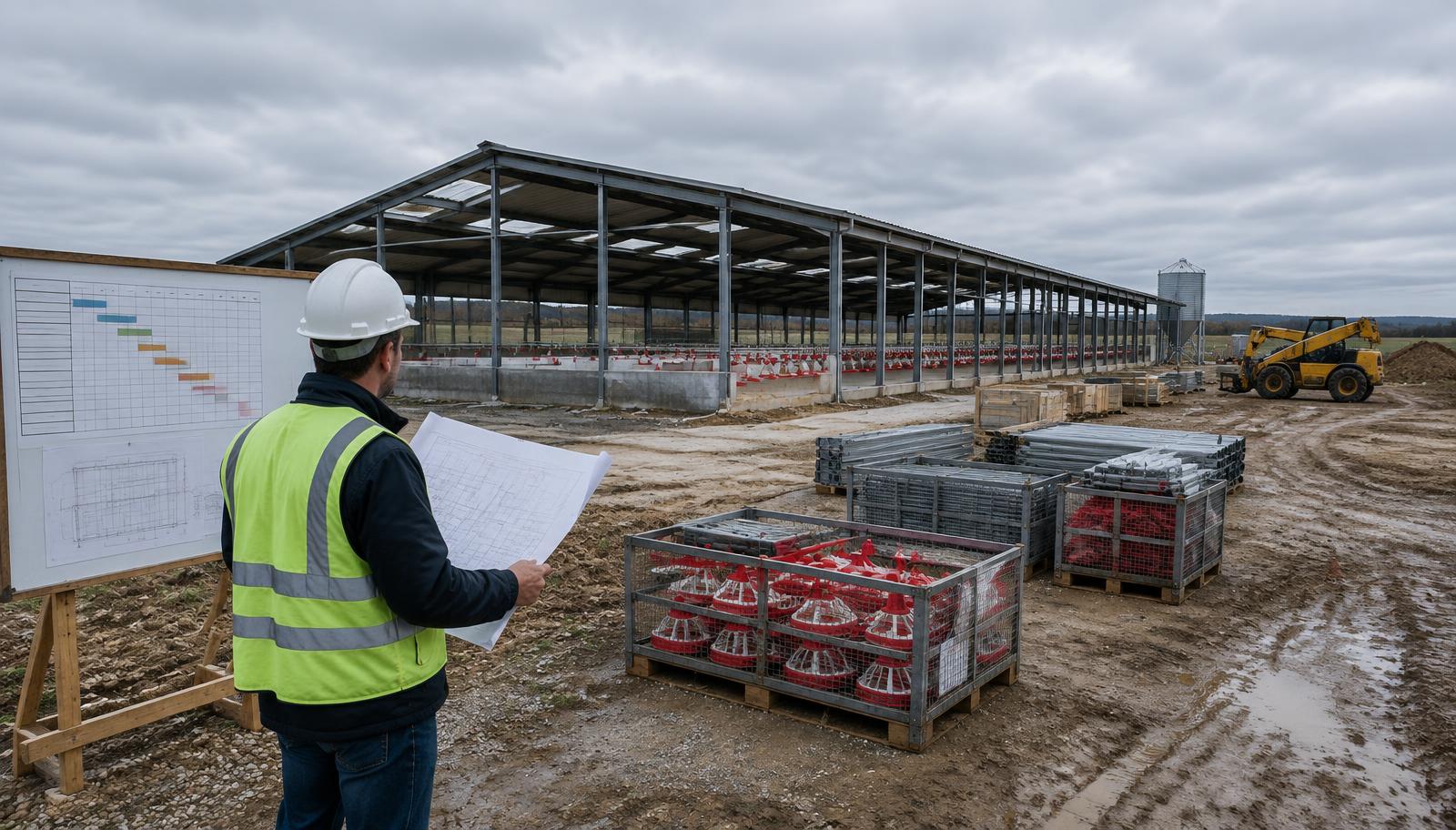
A buyer's guide to the eight most common causes of budget overruns on commercial poultry projects, with what to document, questions to ask suppliers and a checklist to control cost before you sign.
By HatchMatch Group Sourcing Desk · Last updated 2026-10-10
In short
Short answer. Commercial poultry projects most often go over budget because the initial estimate covered equipment but not the full scope: site works, freight, duty, currency movement, contingency, utilities connection and commissioning were underestimated or left out entirely, and late design changes and delays then add cost on top of a budget that had no room to absorb them. The fix is not a better guess — it is writing a complete scope, pricing every line with a named supplier or contractor, and holding a contingency reserve you do not spend on the first problem that appears.
Key takeaways
- The most common cause of overrun is simple: the number that got approved was an equipment price, not a project price.
- Site works are consistently underpriced because they depend on ground conditions that are only fully known once excavation starts.
- Projects that import equipment are exposed to three cost drivers that are easy to underestimate: freight rates that rise between quotation and shipment, import duty and tax rules that differ from what was assumed (or change), and currency movement between the day the budget was set and the day invoices are paid, often many months apart on a multi-container project.
- Many first budgets carry no contingency line at all, or a token 2–3% that is absorbed by the first unexpected invoice.
- Decisions made after construction starts cost far more than the same decision made on paper: moving a wall after foundations are poured, upgrading ventilation capacity after ducting is installed, or adding a house to the project after the site layout is finalised all carry a premium for rework, demolition and schedule disruption on top of the new item's own cost.
Short answer. Commercial poultry projects most often go over budget because the initial estimate covered equipment but not the full scope: site works, freight, duty, currency movement, contingency, utilities connection and commissioning were underestimated or left out entirely, and late design changes and delays then add cost on top of a budget that had no room to absorb them. The fix is not a better guess — it is writing a complete scope, pricing every line with a named supplier or contractor, and holding a contingency reserve you do not spend on the first problem that appears.
This guide is for poultry investors, integrators and project teams who have a first budget figure — often from a feasibility study, a single equipment quote or the farm cost calculator — and want to understand where that figure typically breaks down before construction starts. It does not predict your costs; it explains the mechanisms that cause real projects to overrun so you can test your own budget against them.
1. Incomplete scope: the budget only covered equipment
The most common cause of overrun is simple: the number that got approved was an equipment price, not a project price. Civil works, electrical infrastructure beyond the house, roads, fencing, water source development, staff housing, office and storage buildings, environmental and social studies, permits, and project management fees are frequently absent from the first estimate because they were never priced — they were assumed, estimated from memory, or left for "later." Each one is a real cost that eventually appears on an invoice. What to do about it. Build a full cost breakdown structure before approving any budget: land and site preparation, civil works, utilities and infrastructure, equipment (by system), freight and logistics, installation and commissioning, permits and professional fees, working capital, and contingency. Price every line with a real quote or a documented estimate from an engineer, not a round number. The farm cost calculator is a useful starting point for ranges across these categories, but it is a planning estimate to replace with supplier and contractor quotes, not a substitute for them.
2. Site works underestimated
Want these figures for your own site, capacity and country? A HatchMatch specialist builds the budget with you — no buyer fees.
Start freeSite works are consistently underpriced because they depend on ground conditions that are only fully known once excavation starts. Soft or expansive soil that needs extra foundation work, rock that needs blasting or breaking, a higher water table than assumed, longer access-road construction than planned, and drainage works sized from a quick look rather than a soil and topographic survey all add cost after the contract is signed, when the buyer has little leverage to say no. What to do about it. Commission a soil test and topographic survey before finalising the civil works budget, not after. Ask the civil contractor to separate the quote into a fixed-price portion and a provisional-sum portion for ground conditions that cannot be confirmed until excavation, and agree in writing how provisional sums will be measured and approved.
3. Freight, duty and currency movement
Projects that import equipment are exposed to three cost drivers that are easy to underestimate: freight rates that rise between quotation and shipment, import duty and tax rules that differ from what was assumed (or change), and currency movement between the day the budget was set and the day invoices are paid, often many months apart on a multi-container project. A freight rate increase or a currency swing of even a few percent on an equipment package worth hundreds of thousands of dollars is a large absolute number. What to do about it. Confirm the Incoterm and who pays freight and duty for every shipment — see our guide to Incoterms for poultry equipment imports — and get a written, dated freight estimate close to the shipment date rather than relying on a quote from months earlier. If your project borrows or budgets in one currency but pays suppliers in another, build a currency buffer into the budget or discuss hedging options with your bank, rather than assuming today's exchange rate will hold for the life of the project.
4. Missing or inadequate contingency
Many first budgets carry no contingency line at all, or a token 2–3% that is absorbed by the first unexpected invoice. Every construction and equipment project encounters some unplanned cost — a damaged shipment, a design clash discovered on site, a permit condition that requires extra work. Without a reserve set aside for exactly this, each surprise becomes a budget crisis rather than a planned draw-down. What to do about it. Hold a contingency reserve as a visible, separate line in the budget — many project teams plan in the range of roughly 8–15% of the construction and equipment cost depending on project complexity and how firm the scope is — and track what it is spent on. A contingency that is spent before the roof is on is itself a warning sign that the base scope was underpriced.
5. Late design or scope changes
Decisions made after construction starts cost far more than the same decision made on paper: moving a wall after foundations are poured, upgrading ventilation capacity after ducting is installed, or adding a house to the project after the site layout is finalised all carry a premium for rework, demolition and schedule disruption on top of the new item's own cost. Buyers often make these changes because the original design did not account for their real production target, or because they changed their mind about flock size or automation level partway through. What to do about it. Lock the design and equipment specification before construction contracts are signed, using a realistic target — checked with tools such as the birds per house calculator and egg production calculator where relevant — rather than a provisional number you expect to revise. Put a formal change-order process in the contract so any later change is priced and approved in writing before work proceeds, instead of being absorbed informally and discovered at invoicing.
6. Delays, storage and demurrage
Time costs money on a poultry project in ways that are easy to miss in a budget built around unit prices. A delayed civil works schedule can push equipment arrival into a period when the site is not ready to receive it, triggering port demurrage and detention charges, paid storage, or re-handling costs. A delayed permit can push the whole project into a different season, changing labour availability and material costs. Financing costs also continue to accrue during delays on a project funded by a loan. What to do about it. Build a realistic project schedule with dependencies between civil works, utilities, equipment delivery and commissioning, and review it with both the civil contractor and the equipment supplier before committing to delivery dates. Ask suppliers what happens — and who pays — if the site is not ready to receive a shipment on the planned date, and get the storage and demurrage terms in writing before goods are shipped.
7. Utilities connection costs
Grid power connection, transformer upgrades, borehole drilling and testing, water treatment, and sometimes new road access for utility contractors are often estimated from a rough per-metre or per-connection figure rather than a site-specific quote from the utility or drilling contractor. The actual distance to the nearest transformer, the yield and quality of the water source, and the utility's own connection fees and timeline frequently differ from the planning assumption, sometimes substantially. What to do about it. Get a written connection quote and timeline from the power utility and a tested yield report from the water source before finalising the budget, not after site works begin. Use the generator sizing calculator and water consumption calculator to confirm the capacity you actually need, then price that capacity with a named contractor rather than a planning estimate.
8. Commissioning and start-up costs
The period between equipment arriving and the first flock performing normally has its own costs that are frequently left out of the capital budget entirely: supplier commissioning fees and travel, extended on-site supervision if issues appear, staff training, extra fuel and feed during a trial run, and a slower-than-planned ramp-up to full production. Treating commissioning as a free add-on to the equipment price is one of the most common gaps in first-pass budgets. What to do about it. Ask every equipment supplier to price installation supervision, commissioning and training as separate, written line items, not an assumed inclusion. Budget working capital for the start-up period separately from construction capital, since a house that is built but not yet producing at target still has ongoing costs.
A documentation checklist for cost control
| Cost area | What to document before approving the budget | Who should confirm it |
|---|---|---|
| Full scope | Written cost breakdown covering land, civil, utilities, equipment, logistics, commissioning, fees | Project team, quantity surveyor or engineer |
| Site works | Soil test and topographic survey, fixed vs. provisional sum split | Civil contractor, geotechnical engineer |
| Freight, duty, currency | Incoterm, named place, dated freight quote, currency assumption and buffer | Freight forwarder, customs broker, bank |
| Contingency | Explicit reserve line as a percentage of project cost, tracked spend | Project owner, finance team |
| Scope changes | Written change-order process with pricing before work proceeds | Contractor, equipment supplier, project owner |
| Schedule and storage | Realistic schedule with dependencies, storage and demurrage terms in writing | Civil contractor, equipment supplier, freight forwarder |
| Utilities | Utility connection quote and timeline, tested water yield | Power utility, drilling contractor |
| Commissioning | Separate written price for installation, commissioning, training, start-up working capital | Equipment supplier, project owner |
Questions to ask suppliers and contractors
Does your quote include installation, commissioning and training, or are these priced separately? What Incoterm and named place does your freight quote assume, and how long is it valid for? What happens, and who pays, if our site is not ready to receive the shipment on the planned date? Which items in your civil works quote are fixed price, and which are provisional sums subject to site conditions? What is your standard process and pricing for a scope change requested after the contract is signed? Request written answers and keep them with the contract, not only in email threads.
Common mistakes
Approving a budget based on one equipment quote without pricing civil works, utilities or commissioning separately. Treating a feasibility-study estimate as a fixed budget rather than a planning range to be replaced with real quotes. Setting contingency at a token percentage instead of a reserve sized to the project's actual scope certainty. Allowing design changes to proceed informally without a written change order and price. Assuming today's freight rate and exchange rate will hold for the life of a multi-month import project. Signing civil works contracts before a soil test, so ground conditions become a dispute instead of a planned provisional sum. And leaving commissioning, training and start-up working capital out of the capital budget entirely.
Where HatchMatch fits
HatchMatch is a supplier-neutral procurement platform for commercial poultry projects, typically USD 250,000 and above. It is not a manufacturer, installer, EPC contractor, inspector, consultant, certification body or lender, and it does not sign supply contracts — buyers contract directly with the suppliers they choose. HatchMatch helps you turn your requirements into one written specification so offers can be compared line by line, which reduces the scope gaps and late changes that drive budgets over plan. Every brief receives human review, and HatchMatch aims to reply within two business days. To start, submit a poultry project request with your target capacity, site details and budget range.
FAQ
What percentage over budget is normal for a poultry project? There is no reliable industry-wide figure, because it depends heavily on how complete the original scope was. Projects that price a full cost breakdown with contingency before construction typically see far smaller overruns than those budgeted from an equipment quote alone.
How much contingency should a poultry project budget? Many project teams plan in the range of roughly 8–15% of construction and equipment cost, higher where ground conditions, permits or import logistics are less certain. Confirm the right figure for your project with your engineer or quantity surveyor.
Does the farm cost calculator include site works and commissioning? The farm cost calculator gives a planning-level estimate across common cost categories; always replace its assumptions with a soil test, utility quotes and supplier quotes for your actual site and scope before finalising a budget.
Why do freight and duty costs cause overruns if they were quoted upfront? Freight rates and exchange rates can move between the date of the quote and the date of shipment or payment, sometimes months later; duty rules can also differ from what was assumed. A dated, written quote close to shipment and a currency buffer reduce this exposure.
Who should price civil works and site infrastructure if the equipment supplier does not? A local civil contractor or engineer familiar with the site, working from a soil test and topographic survey, should price civil works and infrastructure separately from the equipment package, even on a turnkey project, so the full scope is documented in writing.
Frequently asked questions
- Does your quote include installation, commissioning and training, or are these priced separately?
- What Incoterm and named place does your freight quote assume, and how long is it valid for? What happens, and who pays, if our site is not ready to receive the shipment on the planned date? Which items in your civil works quote are fixed price, and which are provisional sums subject to site conditions? What is your standard process and pricing for a scope change requested after the contract is signed? Request written answers and keep them with the contract, not only in email threads.
- What percentage over budget is normal for a poultry project?
- There is no reliable industry-wide figure, because it depends heavily on how complete the original scope was. Projects that price a full cost breakdown with contingency before construction typically see far smaller overruns than those budgeted from an equipment quote alone.
- How much contingency should a poultry project budget?
- Many project teams plan in the range of roughly 8–15% of construction and equipment cost, higher where ground conditions, permits or import logistics are less certain. Confirm the right figure for your project with your engineer or quantity surveyor.
- Does the farm cost calculator include site works and commissioning?
- The farm cost calculator gives a planning-level estimate across common cost categories; always replace its assumptions with a soil test, utility quotes and supplier quotes for your actual site and scope before finalising a budget.
- Why do freight and duty costs cause overruns if they were quoted upfront?
- Freight rates and exchange rates can move between the date of the quote and the date of shipment or payment, sometimes months later; duty rules can also differ from what was assumed. A dated, written quote close to shipment and a currency buffer reduce this exposure.
- Who should price civil works and site infrastructure if the equipment supplier does not?
- A local civil contractor or engineer familiar with the site, working from a soil test and topographic survey, should price civil works and infrastructure separately from the equipment package, even on a turnkey project, so the full scope is documented in writing.
More buyer questions are answered in our poultry procurement FAQ — also available in Español, Français, Português, Deutsch, العربية, Русский, Türkçe, Tiếng Việt.
From this article to a procurement-ready RFQ
HatchMatch Group is an independent sourcing desk — not a manufacturer or EPC contractor. These are the four steps we actually use with commercial poultry and hatchery buyers. If you are still deciding scope, start with what commercial poultry equipment includes and how suppliers are compared.
- 1. Plan the projectCapacity, climate and house layout in one guided workflowOpen
- 2. Build the RFQScope, specifications and comparable line itemsOpen
- 3. Submit the requestReviewed manually before any supplier introductionOpen
- 4. Track and compareFollow status and normalise supplier responsesOpen
Prefer the numbers first? Start with the poultry project cost calculator or browse the project planning guides.