
Layer Cage Systems: Tiers, Bird Density, Galvanizing and How to Specify and Buy
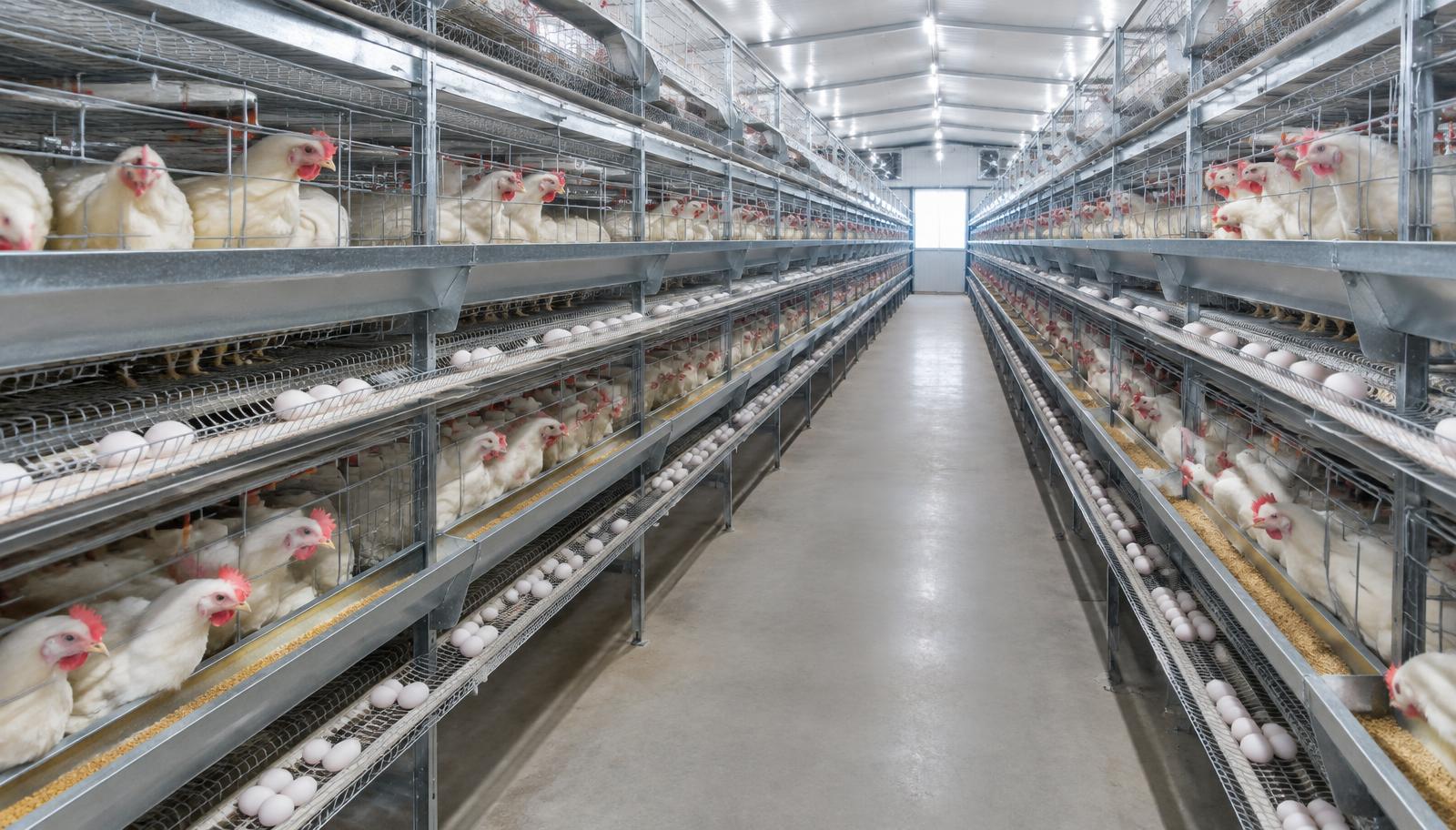
A practical guide to specifying layer cage equipment — tiers, density, steel and galvanizing, feeding, drinking and manure systems — so supplier quotes can be compared on the same basis.
By HatchMatch Group Sourcing Desk · Last updated 2026-10-07
In short
Short answer. Specifying a layer cage system means fixing five things in writing before you ask for quotes: tier count and cage style (conventional, enriched colony or combi), bird density per cage area, steel grade and galvanizing standard, and the feeding, drinking and manure-belt layout. This guide covers how to specify and buy cage equipment for commercial layer houses; it does not compare cages with cage-free systems on economics.
Key takeaways
- Layer cage systems are commonly supplied as 3- to 5-tier A-frame or stepped structures, and sometimes higher in tall houses with mechanical ventilation designed for it.
- Density is usually expressed as a minimum floor area per bird (for example, so many cm² per hen) or a maximum number of birds per unit of usable cage area, and the figure a supplier proposes should match the rule that applies to your country and, if you plan to export eggs, the destination market's rule as well — these are not always the same number.
- A layer house is an aggressive environment for steel: ammonia, humidity and manure contact attack coatings over years of continuous use.
- Feed is normally delivered to a trough running the length of each tier by chain or trolley feeders, with troughs sized to give each bird enough linear feeding space; ask the supplier to state the feeding space per bird their design provides and compare it to the welfare rule and breed guide.
- Belt manure removal under each tier is now close to standard on multi-tier cage systems because it keeps ammonia down and allows manure to be dried or moved off-site frequently; specify belt material, running schedule and how often belts are designed to run per day.
Short answer. Specifying a layer cage system means fixing five things in writing before you ask for quotes: tier count and cage style (conventional, enriched colony or combi), bird density per cage area, steel grade and galvanizing standard, and the feeding, drinking and manure-belt layout. This guide covers how to specify and buy cage equipment for commercial layer houses; it does not compare cages with cage-free systems on economics. Welfare and density rules differ by country and by export market, so always confirm the figures in this guide against your national regulation and the buyer specification of any market you plan to export eggs to.
This guide is for investors, integrators and project teams who have already decided on a caged layer system and now need to turn that decision into a specification suppliers can price on the same basis, typically for projects of USD 250,000 or more.
Choosing tier count and cage style
Layer cage systems are commonly supplied as 3- to 5-tier A-frame or stepped structures, and sometimes higher in tall houses with mechanical ventilation designed for it. More tiers raise bird numbers per square metre of floor but also raise building height, structural load, manure-belt length per row and the complexity of even ventilation and lighting across tiers. Cage style is usually one of: conventional battery cages (where still permitted), enriched colony cages with nest, perch and scratch area per group, or combi systems that can be configured either way. Many markets have moved away from conventional battery cages or are phasing them out — check your national welfare legislation and any export-market requirements before fixing the style, not after ordering steel.
| Decision | What to fix in the spec | Why it matters |
|---|---|---|
| Tier count | 3, 4 or 5 tiers; house height and roof design to match | More tiers need taller houses, stronger structure, longer manure belts |
| Cage style | Conventional, enriched colony, or combi | Determines legality in many markets and the fittings required (nest, perch, scratch pad) |
| Cage depth and aisle width | Front-to-back depth; service aisle width for inspection trolleys | Affects bird access to feed/water and how easily staff can walk and catch birds |
| Group size | Birds per cage or per colony group | Interacts with welfare area-per-bird rules and feeder/drinker space per bird |
Want these figures for your own site, capacity and country? A HatchMatch specialist builds the budget with you — no buyer fees.
Start freeBird density: plan from the rule, not the catalogue
Density is usually expressed as a minimum floor area per bird (for example, so many cm² per hen) or a maximum number of birds per unit of usable cage area, and the figure a supplier proposes should match the rule that applies to your country and, if you plan to export eggs, the destination market's rule as well — these are not always the same number. Ask each supplier to state the density their design assumes and the standard it is based on, in writing, rather than accepting a bird count without the area it is based on. Use the egg production calculator and birds per house calculator for a first estimate of flock size and expected output once you have a density and house size in mind; treat both as planning tools, not a substitute for the supplier's own cage-count calculation.
Steel, galvanizing and corrosion
A layer house is an aggressive environment for steel: ammonia, humidity and manure contact attack coatings over years of continuous use. Specify the steel wire diameter and coating, not just "galvanized". Ask whether wire is galvanized before or after welding (post-weld galvanizing coats the weld points that are otherwise the first to rust), the zinc coating weight or equivalent standard, and whether the supporting frame is hot-dip galvanized or painted steel. For manure-belt frames and feed troughs, ask about the grade of stainless or coated steel used where moisture collects. A cage system that looks identical to a cheaper one in a photograph can differ greatly in service life once the coating specification is compared.
Feeding, drinking and egg collection on the cage line
Feed is normally delivered to a trough running the length of each tier by chain or trolley feeders, with troughs sized to give each bird enough linear feeding space; ask the supplier to state the feeding space per bird their design provides and compare it to the welfare rule and breed guide. Nipple drinkers with drip cups are standard on cage tiers; specify the number of nipples per bird and the pressure regulation per tier, since pressure needed at the top tier differs from the bottom. Egg collection is usually by a sloped cage floor feeding a longitudinal belt per tier that merges onto a cross-conveyor; see our dedicated guide to layer house egg collection systems for how to specify belt speed, gentle-collection features and elevator-to-packing integration. Water planning should use the water consumption calculator for an early estimate of demand.
Manure belts, ventilation and lighting across tiers
Belt manure removal under each tier is now close to standard on multi-tier cage systems because it keeps ammonia down and allows manure to be dried or moved off-site frequently; specify belt material, running schedule and how often belts are designed to run per day. Even ventilation across tiers is harder to achieve than in a single-level house, because the top tier is warmer and closer to the ceiling than the bottom; ask how the supplier's design evens airflow and use the ventilation calculator as a starting estimate before reviewing the supplier's own fan and inlet calculation. Lighting must also reach every tier at a similar intensity, not just the top row; the poultry lighting calculator gives a first planning figure, and you should ask suppliers to show measured or modelled lux at bird level on every tier, not only at the light fitting.
Structure, access and biosecurity
A multi-tier cage system is a load on the building structure as well as the floor — confirm the supplier's design loads match your building engineer's figures before steel is ordered. Service aisles need enough width for inspection trolleys and for staff to reach and remove birds safely at every tier, including the top one; ask how birds and eggs are accessed on upper tiers and what platform or ladder access is provided for routine checks. Plan end-of-row access for depopulation and cleaning, and ask how the system is cleaned and disinfected between flocks, since residue in a multi-tier system is harder to reach than on open floor housing.
What to include in the RFQ
A layer cage RFQ that suppliers can price on the same basis should state: target flock size and house dimensions; cage style and tier count; the density standard you are designing to (with the figure, not just the standard's name) and any export-market requirement; feeder and drinker specification per bird; manure-belt material and schedule; steel wire diameter and galvanizing method with coating weight; ventilation and lighting design targets per tier; structural load data for your building; scope of installation, commissioning and training; and warranty and spare-parts terms in writing, following our guide to warranty, spare parts and after-sales terms. Ask for the delivery basis and named place so import costs can be compared, as explained in our guide to Incoterms for poultry equipment imports.
Questions to ask every supplier
What density does your design assume, in birds per unit area, and which standard is it based on? Is the wire galvanized before or after welding, and what is the coating weight? How do you equalise ventilation and lighting between the top and bottom tier? How many nipples per bird and what pressure range do you run at each tier? How is the system accessed and cleaned on upper tiers? What is the structural load per square metre your design imposes on the building? Ask for answers in writing and put every supplier's figures in one comparison table before negotiating price.
Common mistakes
Fixing tier count or cage style before checking local welfare legislation and any export-market rules. Accepting a bird count from a supplier without the area or density standard behind it. Treating "galvanized" as one fixed specification instead of asking for wire diameter, galvanizing method and coating weight. Comparing quotes that assume different densities, tier counts or scopes of installation as if they were the same offer. Underestimating ventilation and lighting difficulty on upper tiers. And leaving warranty, spare parts and cleaning access out of the written specification.
Where HatchMatch fits
HatchMatch is a supplier-neutral procurement platform for commercial poultry projects, typically USD 250,000 and above. It is not a manufacturer, installer, EPC contractor or consultant, and it does not sign supply contracts — buyers contract directly with the suppliers they choose. HatchMatch helps you turn your cage specification into one written document so offers can be compared line by line. Every brief receives human review, and HatchMatch aims to reply within two business days. To start, submit a poultry project request with your target flock size, cage style, country and timeline.
Frequently asked questions
How many tiers should a layer cage system have? It depends on house height, ventilation design and your target bird numbers; 3 to 5 tiers are common, with more tiers needing taller houses and stronger structure. Ask suppliers to propose tier count against your house dimensions rather than fixing a number first.
What bird density should I design for? There is no single global figure — density limits vary by country and by export-market rule, and conventional battery cages are restricted or phased out in a growing number of markets. Confirm the applicable rule before specifying density, and ask each supplier to state the standard their design meets.
What does galvanizing standard actually control? It controls how long the wire and frame resist corrosion from ammonia and humidity in the house. Ask for the galvanizing method (before or after welding) and the coating weight in writing rather than accepting the word "galvanized" alone.
Can I use the same cage system across multiple tiers for different group sizes? Many systems are modular and can be configured with different group sizes per tier, but feeder, drinker and manure-belt sizing must still match the welfare area rule for each configuration — ask the supplier to confirm this in writing for your specific layout.
Is cage-free a better investment than caged systems? That comparison depends on market premiums, labour, feed conversion and local regulation, and is outside the scope of this specification guide. If you are still deciding between systems, treat this guide as covering the caged option only and get separate advice on the economics of each system for your market.
Frequently asked questions
- What density does your design assume, in birds per unit area, and which standard is it based on? Is the wire galvanized before or after welding, and what is the coating weight?
- How do you equalise ventilation and lighting between the top and bottom tier? How many nipples per bird and what pressure range do you run at each tier? How is the system accessed and cleaned on upper tiers? What is the structural load per square metre your design imposes on the building? Ask for answers in writing and put every supplier's figures in one comparison table before negotiating price.
- How many tiers should a layer cage system have?
- It depends on house height, ventilation design and your target bird numbers; 3 to 5 tiers are common, with more tiers needing taller houses and stronger structure. Ask suppliers to propose tier count against your house dimensions rather than fixing a number first.
- What bird density should I design for?
- There is no single global figure — density limits vary by country and by export-market rule, and conventional battery cages are restricted or phased out in a growing number of markets. Confirm the applicable rule before specifying density, and ask each supplier to state the standard their design meets.
- What does galvanizing standard actually control?
- It controls how long the wire and frame resist corrosion from ammonia and humidity in the house. Ask for the galvanizing method (before or after welding) and the coating weight in writing rather than accepting the word "galvanized" alone.
- Can I use the same cage system across multiple tiers for different group sizes?
- Many systems are modular and can be configured with different group sizes per tier, but feeder, drinker and manure-belt sizing must still match the welfare area rule for each configuration — ask the supplier to confirm this in writing for your specific layout.
- Is cage-free a better investment than caged systems?
- That comparison depends on market premiums, labour, feed conversion and local regulation, and is outside the scope of this specification guide. If you are still deciding between systems, treat this guide as covering the caged option only and get separate advice on the economics of each system for your market.
More buyer questions are answered in our poultry procurement FAQ — also available in Español, Français, Português, Deutsch, العربية, Русский, Türkçe, Tiếng Việt.
From this article to a procurement-ready RFQ
HatchMatch Group is an independent sourcing desk — not a manufacturer or EPC contractor. These are the four steps we actually use with commercial poultry and hatchery buyers. If you are still deciding scope, start with what commercial poultry equipment includes and how suppliers are compared.
- 1. Plan the projectCapacity, climate and house layout in one guided workflowOpen
- 2. Build the RFQScope, specifications and comparable line itemsOpen
- 3. Submit the requestReviewed manually before any supplier introductionOpen
- 4. Track and compareFollow status and normalise supplier responsesOpen
Prefer the numbers first? Start with the poultry project cost calculator or browse the project planning guides.