
How to plan a poultry farm, house or hatchery expansion: infrastructure, biosecurity, welfare, staffing and total cost
This language edition is awaiting human editorial review.
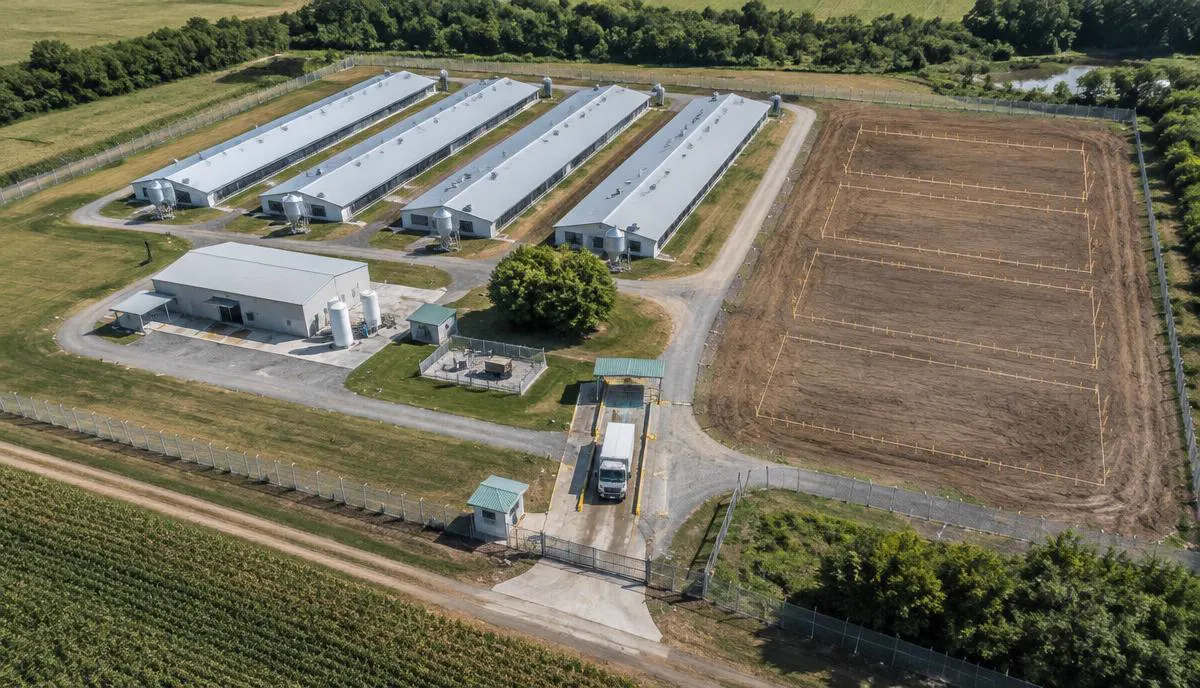
An expansion succeeds or fails on the whole site, not only on the new house. Check first whether water, power, feed delivery, roads, manure handling and staff can carry the extra load, then design biosecurity zones and traffic so the new unit does not weaken the existing one. Set bird-welfare and space requirements from the rules that apply to you, and compare total cost of ownership over the planned life, not only the purchase price. For hatcheries, chick output must match the placement plan.
Can your site infrastructure carry the expansion?
| Infrastructure | Question | Data you already hold |
|---|---|---|
| Water | Peak daily demand incl. cooling vs. source and storage | Meter readings in your hottest weeks |
| Power | Connection capacity and backup for new fans, heaters, hatchery machines | Utility contract, peak kW, generator size |
| Feed | Bin storage, delivery frequency, truck access | Delivery records |
| Manure and litter | Storage, spreading or off-take capacity, permits | Current volumes and contracts |
| Roads and loading | Separate clean/dirty routes, catching and egg collection | Site plan |
| Permits | Planning, environmental and animal-health approvals | Existing permits and local authority guidance |
How should biosecurity shape the layout?
WOAH biosecurity procedures for poultry production and FAO guidance stress controlled entry, separation of ages and species, and clean and dirty traffic. In practice:
- Define a perimeter, one controlled entry and a clean/dirty line for staff and vehicles.
- Keep the hatchery's clean flow (eggs in, chicks out) separate from farm traffic and waste.
- Plan distances and order of visits so staff move from younger or cleaner units to older ones.
- Review the plan with your veterinarian and local animal-health authority before design is frozen.
Staffing and welfare requirements
- List daily tasks per house (walks, records, maintenance, catching) and the hours each takes now; add the new units.
- Check that alarms reach a person who can respond at night.
- Take stocking density, lighting and environment requirements from the rules applicable to you (for example EU Directive 2007/43/EC for meat chickens in the EU) and any buyer or certification scheme.
- Plan training before the first placement, not after.
Total cost template
Use your own quotes; the categories matter more than any example figure.
| Category | Includes | Your figure |
|---|---|---|
| Capital | Houses or hatchery building, equipment, site works, utilities, permits, design | … |
| Start-up | Commissioning, training, first-flock learning period | … |
| Operating | Labour, energy, maintenance, insurance, health programme set by your vet | … |
| Lifecycle | Spare parts, major replacements, end-of-life | … |
| Risk allowance | Delays, price changes, market volume | … |
Run the farm cost calculator with your inputs to see a range for payback; it is an estimate, not a forecast.
Expansion planning checklist
- Baseline of current houses and hatchery.
- Market or contract volume confirmed.
- Infrastructure capacity checked for each utility.
- Biosecurity zoning and traffic plan reviewed with your vet.
- Welfare and legal requirements listed.
- Staffing plan and training schedule.
- Total cost model with risk allowance.
- Phasing: which units first, how existing production continues.
- Structured RFQ with acceptance KPIs.
What if you lack some data?
Mark each gap with the decision it affects. Peak water and power demand can be logged over one hot period; permit requirements come from the local authority; staffing hours can be timed for two weeks. Do not size infrastructure on guesses.
Results vary by breed or genetic line, age, climate, housing system and local rules. Use this guide for planning and discussion with your veterinarian, integrator or technical adviser, not as a diagnosis or a performance promise.
Frequently asked questions
Should a hatchery be on the same site as the farm?
It is possible, but biosecurity separation, traffic and waste flows need careful design. Review the layout with your veterinarian and local authority.
How do I size a hatchery expansion?
Work back from your chick placement plan: required chicks per week, your historic hatchability and fertility, and planned setting days. Use your own records, not generic figures.
Is buying land next door always cheaper than a new site?
Not always. Shared infrastructure saves cost, but disease risk, permits and spacing may favour a separate site. Compare both on total cost and risk.
Can HatchMatch arrange financing?
HatchMatch does not lend. A well-structured project file and RFQ can help when you approach external financiers of your choice.
Sources
- WOAH Terrestrial Animal Health Code — Biosecurity procedures in poultry production
- USDA APHIS — Defend the Flock: biosecurity basics
- FAO — Biosecurity for highly pathogenic avian influenza
- EUR-Lex — Council Directive 2007/43/EC on the protection of chickens kept for meat production
- FAO — Poultry production and products
Sources checked: 2026-10-13
Knowledge Center · Email updates
Get updates
Choose the reading that matters to your project.
Email subscriptions are not available yet.