
Sudden Poultry Mortality or Respiratory Signs: Avian Influenza and Newcastle Concerns and the First Response
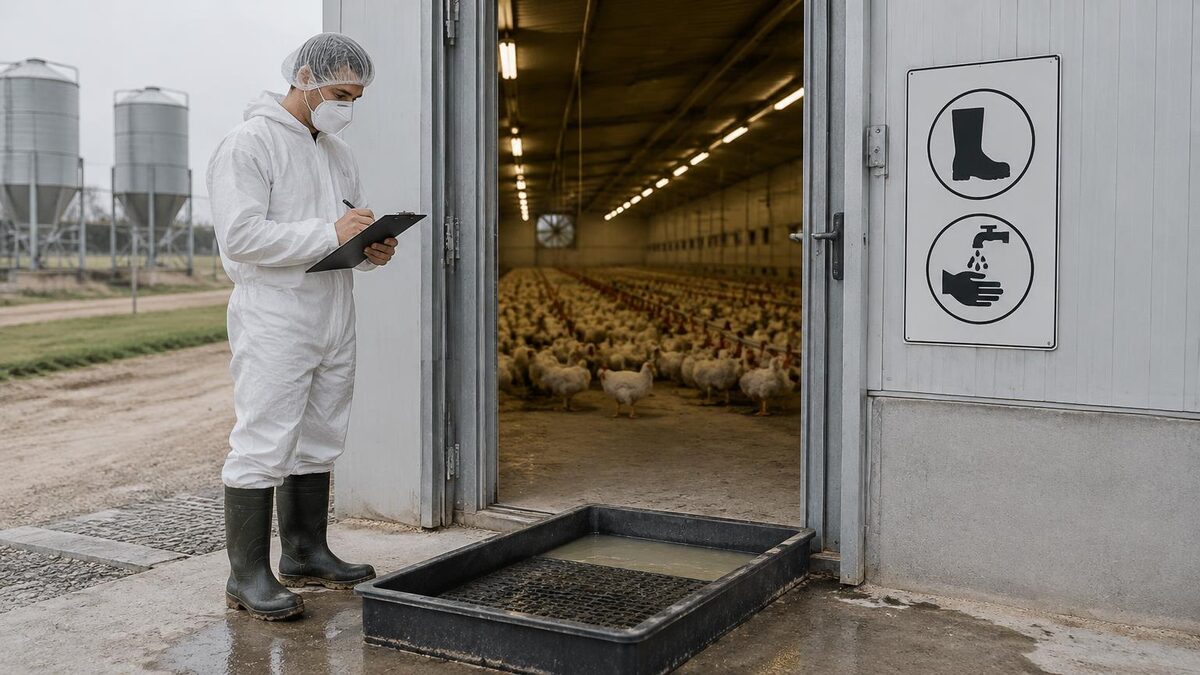
What a commercial farm should do in the first hours after unexplained mortality, a drop in feed, water or egg output, or respiratory signs: stop movement, record, apply biosecurity and call the flock veterinarian and the animal-health authority.
By HatchMatch Group Editorial Desk · Last updated 2026-10-13
In short
Short answer. If birds die suddenly or show respiratory signs, a drop in feed or water intake or a sharp fall in egg production, treat it as a possible notifiable disease such as avian influenza or Newcastle disease until a veterinarian says otherwise. Stop moving birds, people, eggs and equipment off and onto the farm, write down what you see and when, follow your biosecurity plan, and promptly contact your flock veterinarian and the local animal-health authority.
Key takeaways
- Public guidance from USDA APHIS and WOAH lists signs that can appear with avian influenza and with Newcastle disease (USDA APHIS, WOAH).
- Both are viral diseases of birds that can spread quickly between flocks and are notifiable in many countries.
- Print this table (Ctrl/Cmd + P) and keep one sheet per house.
- - Mortality counted and recorded per house, compared with the previous days - Feed and water meters read at the same time each day - Egg count and egg-quality changes noted (layers, breeders) - Birds' behaviour: activity, distribution, sounds, breathing - House temperature, humidity, ventilation and alarms checked - Drinker lines and feeders working; litter condition checked - Biosecurity entry log, footbaths and clothing change in use - Anything unusual reported the same day to the farm manager and veterinarian
- Keep these numbers posted at the farm office: your flock veterinarian, your national or regional animal-health authority, and the emergency disease hotline where one exists.
Short answer. If birds die suddenly or show respiratory signs, a drop in feed or water intake or a sharp fall in egg production, treat it as a possible notifiable disease such as avian influenza or Newcastle disease until a veterinarian says otherwise. Stop moving birds, people, eggs and equipment off and onto the farm, write down what you see and when, follow your biosecurity plan, and promptly contact your flock veterinarian and the local animal-health authority. Only official laboratory testing can confirm the cause; follow their testing, movement and reporting directions. *Reviewed 13 October 2026.*
> Educational guide, not a diagnosis. This page does not diagnose disease or recommend treatment, medication or vaccination. Reporting rules, testing and approved measures differ by country and region — check them with your veterinarian and your national or local animal-health authority.
Warning signs that need a veterinarian (non-diagnostic)
Public guidance from USDA APHIS and WOAH lists signs that can appear with avian influenza and with Newcastle disease (USDA APHIS, WOAH). Many other conditions — heat stress, ventilation or water failures, feed problems and other infections — cause similar signs, so none of these proves a specific disease:
- Sudden or unexplained increase in deaths, often without earlier signs - Marked drop in feed or water consumption - Sudden fall in egg production, or soft-shelled or misshapen eggs - Coughing, sneezing, gasping, nasal discharge or swelling around the head and eyes - Lethargy, ruffled feathers, unusual quietness or huddling - Purple discoloration of combs, wattles or legs - Nervous signs such as twisted neck, tremors or loss of coordination - Diarrhea
Want these figures for your own site, capacity and country? A HatchMatch specialist builds the budget with you — no buyer fees.
Start freeAvian influenza and Newcastle disease at a high level
Both are viral diseases of birds that can spread quickly between flocks and are notifiable in many countries. Avian influenza is caused by influenza A viruses; highly pathogenic strains can cause very high mortality, and some strains also concern human and animal health authorities (WOAH). Newcastle disease is caused by a different virus (avian paramyxovirus type 1), and virulent forms can also cause severe losses. On the farm the two can look alike, which is why the distinction is made by official laboratory testing, not by observation.
The first response: what to do in the first hours
1. Stop movement. Pause bird, egg, litter, manure and equipment movements off the farm and limit visitors, vehicles and staff movement between houses until you have advice. 2. Separate and protect people. Assign one trained person per affected house where possible, with dedicated clothing and footwear; avoid unprotected handling of sick or dead birds. 3. Record. Note house, date and time, daily mortality, feed and water intake, egg output, temperature and ventilation readings, and what you observed. Use the log below. 4. Apply your biosecurity plan. Keep entry procedures, footbaths, hand hygiene, clean/dirty zones and vehicle controls in force (USDA APHIS biosecurity basics, FAO). 5. Call the flock veterinarian and the animal-health authority promptly. Describe what you recorded. Do not wait to see if it gets worse. 6. Follow official directions. Sampling, testing, movement restrictions, carcass handling and reporting must follow the instructions you receive; requirements are set locally.
Do not move or sell birds, dispose of carcasses off site, or start treatment on your own while waiting for advice.
Printable outbreak log
Print this table (Ctrl/Cmd + P) and keep one sheet per house. Accurate timing helps the veterinarian and the authority.
| Date / time | House | Birds dead today | Feed intake | Water intake | Eggs collected | House temp / ventilation | Signs observed | Who was informed |
|---|
Daily flock observation checklist
- Mortality counted and recorded per house, compared with the previous days - Feed and water meters read at the same time each day - Egg count and egg-quality changes noted (layers, breeders) - Birds' behaviour: activity, distribution, sounds, breathing - House temperature, humidity, ventilation and alarms checked - Drinker lines and feeders working; litter condition checked - Biosecurity entry log, footbaths and clothing change in use - Anything unusual reported the same day to the farm manager and veterinarian
Who to contact
Keep these numbers posted at the farm office: your flock veterinarian, your national or regional animal-health authority, and the emergency disease hotline where one exists. In the United States, USDA APHIS lists how to report sick birds (USDA APHIS); elsewhere, WOAH links to each member country's veterinary services (WOAH). Reporting duties, compensation and approved control measures vary by location, so confirm them before an emergency.
Planning a new or upgraded farm?
Biosecurity is easier when it is designed in: perimeter and vehicle control, clean/dirty zoning, shower-in facilities, carcass handling and monitoring alarms. If you are planning a commercial project, see the poultry biosecurity hub and avian influenza prevention scope, estimate costs with the farm-cost calculator, or describe your project for a structured, human-reviewed RFQ (projects generally from USD 250,000).
Sources
- USDA APHIS — Avian influenza - USDA APHIS — Biosecurity basics - WOAH — Avian influenza - FAO — Introduction to on-farm biosecurity
FAQ
Can I tell avian influenza from Newcastle disease by looking at the birds? No. The signs overlap with each other and with many other problems. Only official laboratory testing arranged through your veterinarian or the animal-health authority can identify the cause.
Should I treat the flock while waiting for results? Do not start any treatment, medication or vaccination on your own. Follow the instructions of your flock veterinarian and the animal-health authority, which depend on local rules.
Do I have to report suspected avian influenza or Newcastle disease? In many countries both are notifiable, but reporting duties differ by location. Check the rules with your veterinarian and national or local animal-health authority before an emergency.
What should I record before the veterinarian arrives? Daily mortality per house, feed and water intake, egg output, house temperature and ventilation, the signs you saw and the time you first noticed them, plus recent bird, people and vehicle movements.
Frequently asked questions
- Can I tell avian influenza from Newcastle disease by looking at the birds?
- No. The signs overlap with each other and with many other problems. Only official laboratory testing arranged through your veterinarian or the animal-health authority can identify the cause.
- Should I treat the flock while waiting for results?
- Do not start any treatment, medication or vaccination on your own. Follow the instructions of your flock veterinarian and the animal-health authority, which depend on local rules.
- Do I have to report suspected avian influenza or Newcastle disease?
- In many countries both are notifiable, but reporting duties differ by location. Check the rules with your veterinarian and national or local animal-health authority before an emergency.
- What should I record before the veterinarian arrives?
- Daily mortality per house, feed and water intake, egg output, house temperature and ventilation, the signs you saw and the time you first noticed them, plus recent bird, people and vehicle movements.
More buyer questions are answered in our poultry procurement FAQ — also available in Español, Français, Português, Deutsch, العربية, Русский, Türkçe, Tiếng Việt.
From this article to a procurement-ready RFQ
HatchMatch Group is an independent sourcing desk — not a manufacturer or EPC contractor. These are the four steps we actually use with commercial poultry and hatchery buyers. If you are still deciding scope, start with what commercial poultry equipment includes and how suppliers are compared.
- 1. Plan the projectCapacity, climate and house layout in one guided workflowOpen
- 2. Build the RFQScope, specifications and comparable line itemsOpen
- 3. Submit the requestReviewed manually before HatchMatch contacts any supplier on the buyer's behalfOpen
- 4. Track and compareFollow status and normalise supplier responsesOpen
Prefer the numbers first? Start with the poultry project cost calculator or browse the project planning guides.