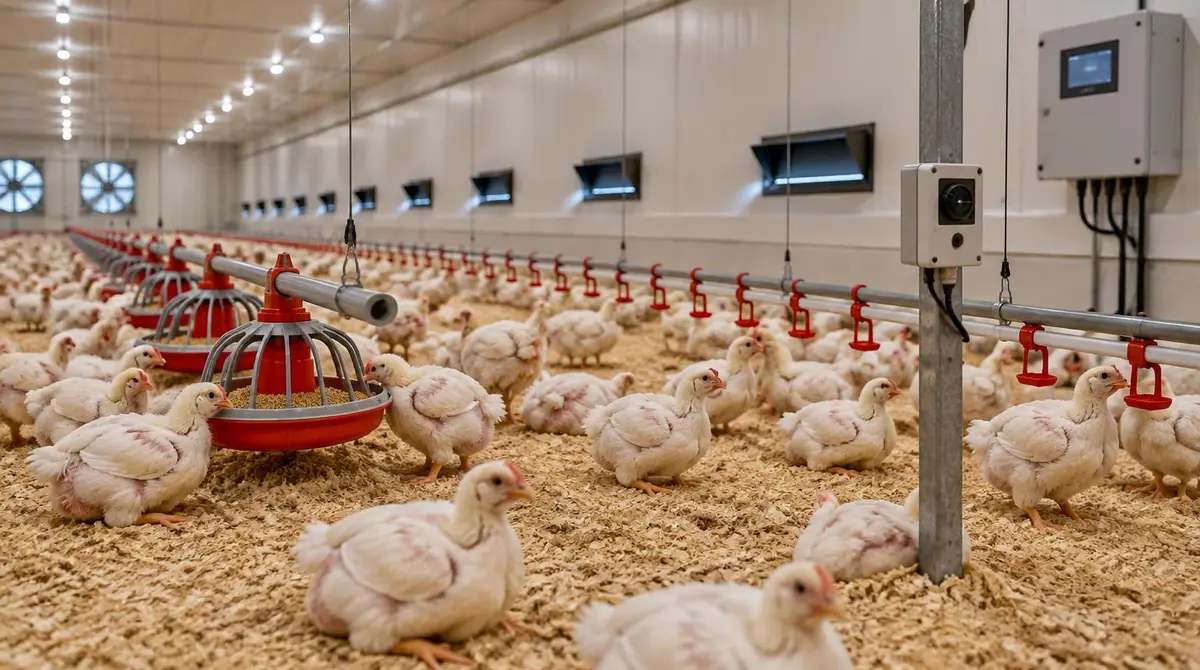
Poultry project planning: housing, hatchery and production
Plan housing, hatchery, broiler and layer systems around one documented production basis. Connect capacity, equipment scope, capital budget and financing readiness before preparing comparable project enquiries.
An integrated poultry project: housing, hatchery and equipment
Define the intended output first: broilers, table eggs or chicks. Coordinate houses, hatchery and downstream product handling against the site and supply chain; do not transfer broiler assumptions automatically to layers or incubation.
Construction and procurement boundaries
Record whether this is a new build, expansion or retrofit. Separate land rights, permits and civil works from equipment, utilities and installation. Compare turnkey and multi-package procurement through one responsibility schedule covering final design, interfaces, commissioning and acceptance. HatchMatch coordinates sourcing; independent providers execute their contracted scope.
Production phases and shared utilities
Match hatchery output to placement plans and layer output to egg collection, grading and packing. Identify storage, transport, feed, water, electricity and standby-power boundaries, then confirm controls and commissioning interfaces with specialists. Processing plants need their own product, capacity and utility brief, not a farm per-bird cost estimate.
An evidenced budget and schedule
Record current quotations, quantities, currencies and exclusions. Separate assets, construction and utilities from operating cash. Compare the requested schedule with site readiness, permits, payments and confirmed provider milestones; there is no universal project duration. Use consistent scope and evidence, not promises of cost or performance.
HatchMatch is not a lender, does not currently introduce projects to financing providers and does not guarantee funding. Buyers choose an external financier who decides independently. Assisted infrastructure sourcing starts at USD 250,000; inquiry details remain private to the team.
Poultry project topics: the buyer reading path
Start with the production outcome and site, then read the topic that resolves the next open decision. The complete poultry project cluster connects the corresponding housing, hatchery, broiler, layer, equipment and financing guides.
Poultry housing
Settle the footprint, usable area, site conditions and responsibility for the shell and utilities before equipment quotes. A house drawing and a supplier package must describe the same project.
Bring a dated site/house drawing, new-build or retrofit status, utility evidence and the approvals still unresolved.
Weekly egg supply and batch flow must align with setter, hatcher and room capacity. Include handling, hygiene separation and utilities rather than treating cabinet count as a complete hatchery plan.
State species, eggs set per week, batch schedule, egg supply, chick offtake and the room/equipment boundary.
Use one capacity, live-weight and climate basis for feeding, drinking, ventilation, brooding, controls and backup. Ask bidders to document duty and exclusions, not simply a total per house.
Attach the agreed capacity basis, utility records, retained systems and an interface owner for every package.
Choose housing against applicable rules and the egg buyer's documented requirements. Compare hen places, egg handling, manure scope and operating assumptions without assuming a cage-free premium or universal cost advantage.
Confirm housing requirements, hen capacity, egg formats, collection/packing flow and the basis of any selling-price assumption.
A complete list distinguishes broiler, layer and hatchery needs and assigns building, power, water and controls interfaces. Reconcile included, excluded and buyer-supplied items before comparing landed totals.
List the production systems, named delivery place, installation responsibilities, commissioning records and priced spares.
Keep confirmed funds separate from financing still being sought and align cash needs with procurement milestones. HatchMatch is not a lender and does not currently introduce projects to financing providers.
Bring the CAPEX register, separate working-capital assumptions, buyer contribution evidence and payment triggers.
Separate birds placed per cycle from saleable birds and annual output. House capacity depends on usable floor area, target live weight and the density permitted for your site and production system. A placement target alone is not a complete equipment specification.
Prepare the evidence
Record the production model, house count, usable dimensions, target weight, cycle and downtime assumptions. Check the density basis with the responsible local adviser; calculator settings are not permission to operate at that density.
Carry one agreed house layout into every equipment enquiry. Confirm chick supply, feed deliveries, water availability, power resilience and the buyer or processor's offtake schedule before committing to expansion.
There is no verified universal cost per bird place. Land, site works, house structures, production equipment, utilities and installation are different cost lines. Compare a complete scope rather than a low equipment-only headline against a complete farm offer.
Prepare the evidence
Use dated local quotations and documented allowances in one currency. Mark every item quoted, budgetary or unpriced. Keep initial working capital separate from fixed-asset CAPEX and identify freight, duties, taxes, commissioning, training and spare parts explicitly.
Use the farm-cost calculator for disclosed scenarios, not a binding quotation or promised return. Test the effect of your feed price, production cycles, mortality, final weight and selling-price assumptions; replace model assumptions with evidence as the project develops.
A financing file starts with a documented project, not an approval estimate. Match the budget to the capacity plan, land or lease evidence, permits status, buyer contribution, cash-flow assumptions and the construction and commissioning stages.
Prepare the evidence
Separate confirmed funding from funding still being sought. Record when deposits, construction payments, delivery balances and operating cash are needed. Ask your chosen provider about borrower eligibility, security, currency, costs and disbursement conditions; there is no universal contribution percentage or approval timeline.
HatchMatch is not a lender and does not currently introduce projects to financing providers. Readiness guidance is not underwriting, pre-approval or an offer. The buyer chooses any external provider, and that provider makes its own decision.
Translate the agreed layout into feeding, drinking, ventilation, cooling where appropriate, brooding, lighting, controls, alarms and backup-power packages. Ask bidders to confirm their design conditions, utility loads and interfaces rather than accepting equipment counts as proof of capacity.
Prepare the evidence
State the same site climate, house drawings, water source, power outages, automation level and delivery basis in each enquiry. Name who supplies foundations, openings, wiring, pipework, installation and integration; agree the acceptance records and exclusions before comparing totals.
Choose whether to compare a turnkey/EPC package or separately procured lots. HatchMatch facilitates sourcing and proposal comparison; it does not design, construct, install or operate the farm. Appointed providers retain their contractual and legal responsibilities, and supplier participation is not guaranteed.
Separate procurement readiness from credit decisions, and record the funding status of each project phase.
Turn the decisions into a quote brief
Record country and site, new build or retrofit, birds per cycle, house layout, climate and utilities, equipment lots, contracting model, budget evidence, funding status and desired project stages. Leave unknowns explicit rather than inventing inputs. The poultry quote checklist helps organise the same requirements for every bidder.
Assisted equipment and infrastructure sourcing starts at USD 250,000. HatchMatch reviews the buyer's brief and coordinates enquiries on the buyer's behalf; it does not execute the project or guarantee supplier responses. Smaller projects can still use the free guides and calculators.
HatchMatch Group Sourcing Desk · This hub organises the linked guides and their disclosed sources. It provides no market-price benchmark, local permit approval, financing offer or production guarantee.