
Feed Silos and Automatic Feed Lines for Poultry Houses: Sizing and Buying Guide
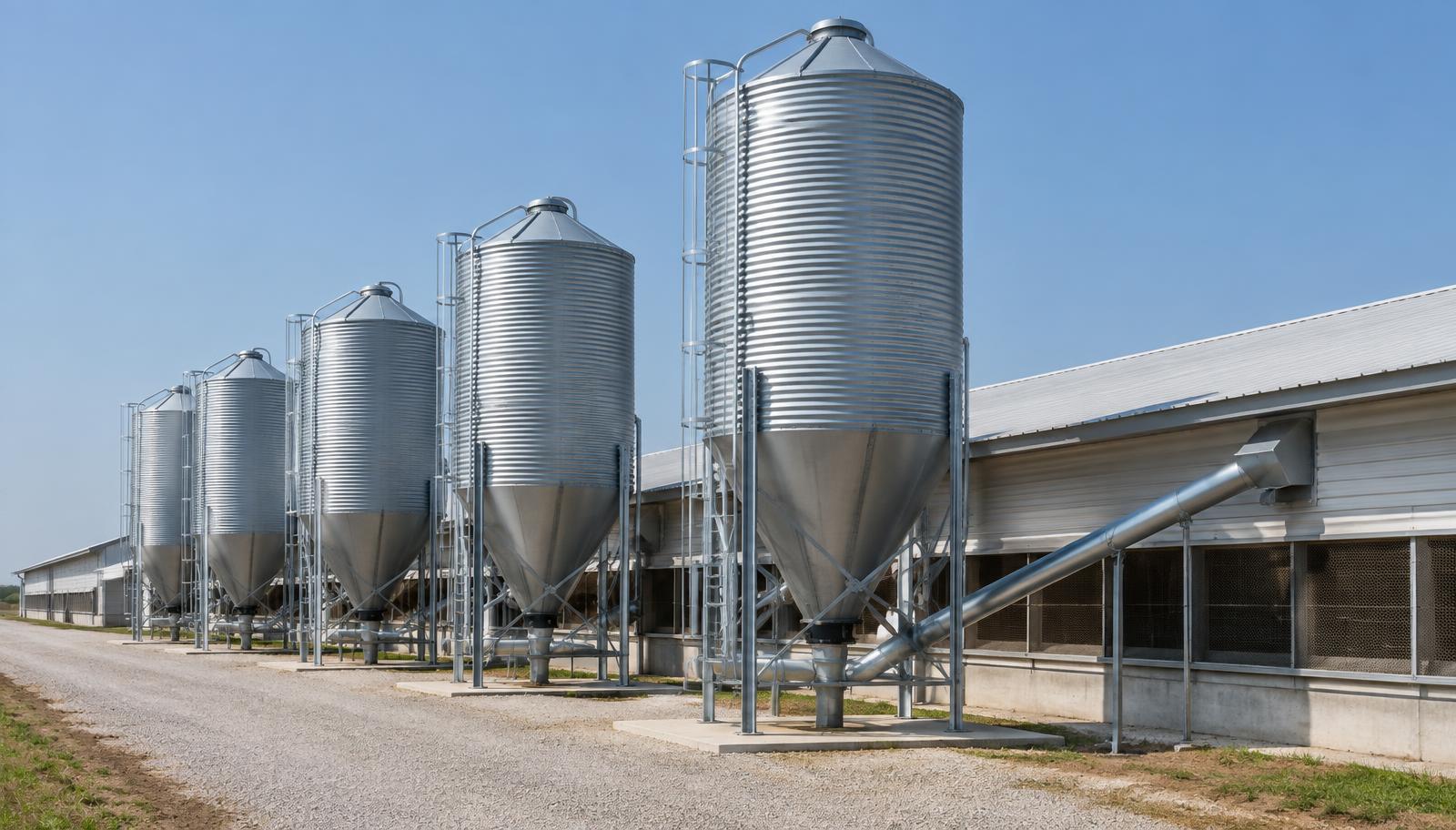
A buyer's guide to feed silos and automatic feed lines: sizing silo capacity to consumption and delivery logistics, choosing auger or chain feed systems, and writing a specification suppliers can price consistently.
By HatchMatch Group Sourcing Desk · Last updated 2026-10-06
In short
Short answer. A feed silo stores bulk feed outside the house and an automatic feed line moves it to feeders inside, so birds always have fresh feed with minimal labour. Silo capacity is planned from daily feed consumption, delivery truck size and the maximum acceptable number of deliveries per week — not from a round tonnage figure.
Key takeaways
- Undersized silos run empty between deliveries, forcing emergency top-ups or feed gaps that hurt growth and uniformity.
- Start from total expected daily consumption at the heaviest point of the cycle (for broilers, near slaughter age; for layers, near peak production), multiplied by flock size.
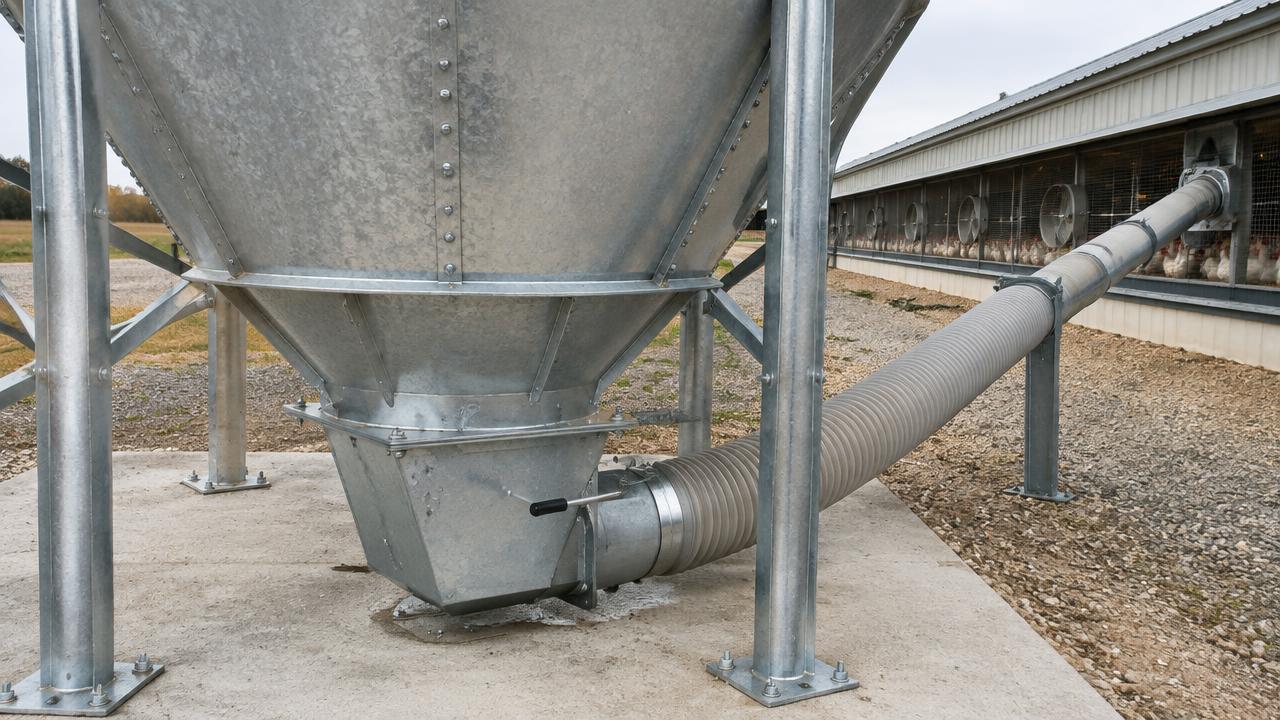
- Feed moves from silo to feeder along an auger (flexible spiral inside a tube) or a chain-and-disc system inside a tube, feeding pan feeders, chain feeders or trough lines depending on the house.
- Automatic feed systems are normally run from the house controller, which triggers feeding cycles, monitors motor load and raises an alarm on jams or empty-silo conditions.
- Silos need a concrete base rated for the full loaded weight, anchored against wind, and positioned so a delivery truck can reach it without driving close to other houses.
Short answer. A feed silo stores bulk feed outside the house and an automatic feed line moves it to feeders inside, so birds always have fresh feed with minimal labour. Silo capacity is planned from daily feed consumption, delivery truck size and the maximum acceptable number of deliveries per week — not from a round tonnage figure. The feed line (auger or chain-disc) must match the feeder type already chosen for the house, and both should be sized with a safety margin above peak daily intake at the oldest bird age.
This guide is for broiler, layer, breeder and pullet projects planning new houses or replacing manual feeding with automatic systems. It gives planning ranges to work from; always confirm final sizing with the breed guide, your feed supplier's delivery logistics and the equipment supplier's own calculation.
Why silo and feed-line sizing matters
Undersized silos run empty between deliveries, forcing emergency top-ups or feed gaps that hurt growth and uniformity. Oversized silos tie up capital and can let feed age before it is used, which matters for medicated or short-shelf-life rations. An undersized feed line cannot refill feeder pans fast enough during peak intake at market age, causing birds to compete and uneven growth. Getting both right starts with the same number: expected daily feed intake per bird across the flock's life, which rises sharply as birds approach market weight or peak lay.
Sizing silo capacity
Want these figures for your own site, capacity and country? A HatchMatch specialist builds the budget with you — no buyer fees.
Start freeStart from total expected daily consumption at the heaviest point of the cycle (for broilers, near slaughter age; for layers, near peak production), multiplied by flock size. Use the feed consumption calculator for a first planning estimate. Then decide how many days of buffer stock you want to hold: many projects plan for roughly a week of supply per silo as a starting point, more where roads, weather or feed-mill distance make deliveries unreliable, less where a feed mill is close and delivers frequently.
| Planning input | What to confirm | Why it matters |
|---|---|---|
| Peak daily consumption | Breed guide curve at your target slaughter age or peak lay | Silos must cover the heaviest demand day, not the flock average |
| Delivery truck capacity | Local bulk feed truck sizes in your region | Silo capacity should be a clean multiple of a full truckload where possible |
| Delivery frequency tolerance | How many deliveries per week the farm and feed mill can realistically manage | Fewer, larger deliveries reduce cost and biosecurity visits but need bigger silos |
| Number of houses per silo | Whether one silo feeds one house or several via a distribution line | Shared silos need a distribution system and careful capacity planning so no house runs short |
| Feed changeovers | How many feed phases (starter, grower, finisher or pre-lay, layer) the farm uses | More phases may call for more, smaller silos instead of one large one |
Run the feed silo calculator with your own flock numbers and delivery assumptions; treat the result as a planning estimate to confirm with your feed-mill logistics and the supplier's own sizing, not a final order quantity.
Choosing the feed-line type
Feed moves from silo to feeder along an auger (flexible spiral inside a tube) or a chain-and-disc system inside a tube, feeding pan feeders, chain feeders or trough lines depending on the house. Auger systems suit pan-feeder houses and are common in broiler and breeder houses; chain systems suit longer runs and some layer house layouts. The feed line must be sized to the feeder type already specified for the house — choosing the feed line before the feeder, or the reverse, without checking compatibility is a common and costly mistake.
Ask each supplier to state the feed-line's delivery rate (how fast it can refill the house) against your peak daily feed intake and the time the house controller allows for a feeding cycle. A line that is technically adequate on paper but too slow in practice causes some feeders to run low while others are still filling.
Controls, hoppers and weighing
Automatic feed systems are normally run from the house controller, which triggers feeding cycles, monitors motor load and raises an alarm on jams or empty-silo conditions. Specify: a low-level sensor in the silo linked to an alarm (and, where offered, to automatic ordering or a delivery notification); a weighing system if you want per-house feed consumption data for flock performance records; hopper or boot design at the base of the silo to prevent bridging of fine feed; and a backup power connection so feeding continues through a power cut, alongside your generator plan (see the generator sizing calculator).
Civil works, access and biosecurity
Silos need a concrete base rated for the full loaded weight, anchored against wind, and positioned so a delivery truck can reach it without driving close to other houses. Keep the delivery point at the farm's perimeter or in a controlled area to limit truck access into the clean zone — this is a basic biosecurity measure many new farms underestimate during site layout. Confirm ladder, platform and fall-protection requirements for safe inspection, and ask how the silo is cleaned out between feed changes or for maintenance.
What to include in the RFQ
A feed-silo and feed-line RFQ that suppliers can price on the same basis should state: number of houses and birds per house; breed and target market age or production cycle; number of feed phases; preferred delivery frequency and local truck capacity; number of silos per house or shared silo configuration; feed-line type already matched to the feeder system; controller integration and alarm requirements; weighing requirements if any; power backup; and installation, commissioning and training scope. Ask for the delivery basis and named place (see our guide to Incoterms for poultry equipment imports) and warranty and spare-parts terms in writing — see our guide to warranty and spare parts after-sales terms.
Questions to ask every supplier
What delivery rate does your feed line achieve, and how was it tested? How many silos of which capacity do you recommend for our flock size and delivery plan, and why? How does the controller alert us to a near-empty silo or a jammed line? What is the feed-line's power draw, and is it covered on our generator sizing? Which components are made by you and which are bought in? Who services the system in our country? Ask for written answers and compare them in one table.
Common mistakes
Sizing silos from a round tonnage figure instead of actual daily consumption at peak demand. Choosing feed-line type before confirming the feeder system it must serve. Ignoring delivery-truck capacity when setting silo size, leading to part-loads or wasted trips. Placing silos where delivery trucks must cross the clean zone. Leaving feed systems off the generator circuit. And comparing supplier quotes that assume different numbers of silos, phases or houses per line.
Where HatchMatch fits
HatchMatch is a supplier-neutral procurement platform for commercial poultry projects, typically USD 250,000 and above. It is not a manufacturer, installer, EPC contractor or consultant, and it does not sign supply contracts — buyers contract directly with the suppliers they choose. HatchMatch helps you turn your requirements into one written specification so offers can be compared line by line. Every brief receives human review, and HatchMatch aims to reply within two business days. To start, submit a poultry project request with your house numbers, flock sizes, feed phases and timeline.
FAQ
How many days of feed should a silo hold? Many projects plan for roughly a week of buffer stock as a starting point, adjusted for delivery reliability and distance to the feed mill; confirm with your feed-mill logistics.
Can one silo feed several houses? Yes, with a distribution line, but capacity planning must ensure no house runs short during peak demand; discuss shared-silo layouts carefully with your supplier.
Auger or chain feed line — which is better? Neither is universally better; the right choice follows the feeder type already specified for the house. Ask suppliers to justify their recommendation against your feeder system.
Do feed silos need a weighing system? It is optional but useful for tracking feed conversion and flock performance by house; decide based on how you plan to use the data, and confirm cost against the benefit with your supplier.
What happens to feeding during a power cut? Automatic feed systems normally stop without power unless on a backup circuit. Confirm your generator covers feed motors and controllers; the generator sizing calculator gives a planning estimate.
Frequently asked questions
- What delivery rate does your feed line achieve, and how was it tested? How many silos of which capacity do you recommend for our flock size and delivery plan, and why?
- How does the controller alert us to a near-empty silo or a jammed line? What is the feed-line's power draw, and is it covered on our generator sizing? Which components are made by you and which are bought in? Who services the system in our country? Ask for written answers and compare them in one table.
- How many days of feed should a silo hold?
- Many projects plan for roughly a week of buffer stock as a starting point, adjusted for delivery reliability and distance to the feed mill; confirm with your feed-mill logistics.
- Can one silo feed several houses?
- Yes, with a distribution line, but capacity planning must ensure no house runs short during peak demand; discuss shared-silo layouts carefully with your supplier.
- Do feed silos need a weighing system?
- It is optional but useful for tracking feed conversion and flock performance by house; decide based on how you plan to use the data, and confirm cost against the benefit with your supplier.
- What happens to feeding during a power cut?
- Automatic feed systems normally stop without power unless on a backup circuit. Confirm your generator covers feed motors and controllers; the generator sizing calculator gives a planning estimate.
More buyer questions are answered in our poultry procurement FAQ — also available in Español, Français, Português, Deutsch, العربية, Русский, Türkçe, Tiếng Việt.
From this article to a procurement-ready RFQ
HatchMatch Group is an independent sourcing desk — not a manufacturer or EPC contractor. These are the four steps we actually use with commercial poultry and hatchery buyers. If you are still deciding scope, start with what commercial poultry equipment includes and how suppliers are compared.
- 1. Plan the projectCapacity, climate and house layout in one guided workflowOpen
- 2. Build the RFQScope, specifications and comparable line itemsOpen
- 3. Submit the requestReviewed manually before any supplier introductionOpen
- 4. Track and compareFollow status and normalise supplier responsesOpen
Prefer the numbers first? Start with the poultry project cost calculator or browse the project planning guides.