
Poultry House LED Lighting Systems: Lux Levels, Dimming, Layout and How to Buy
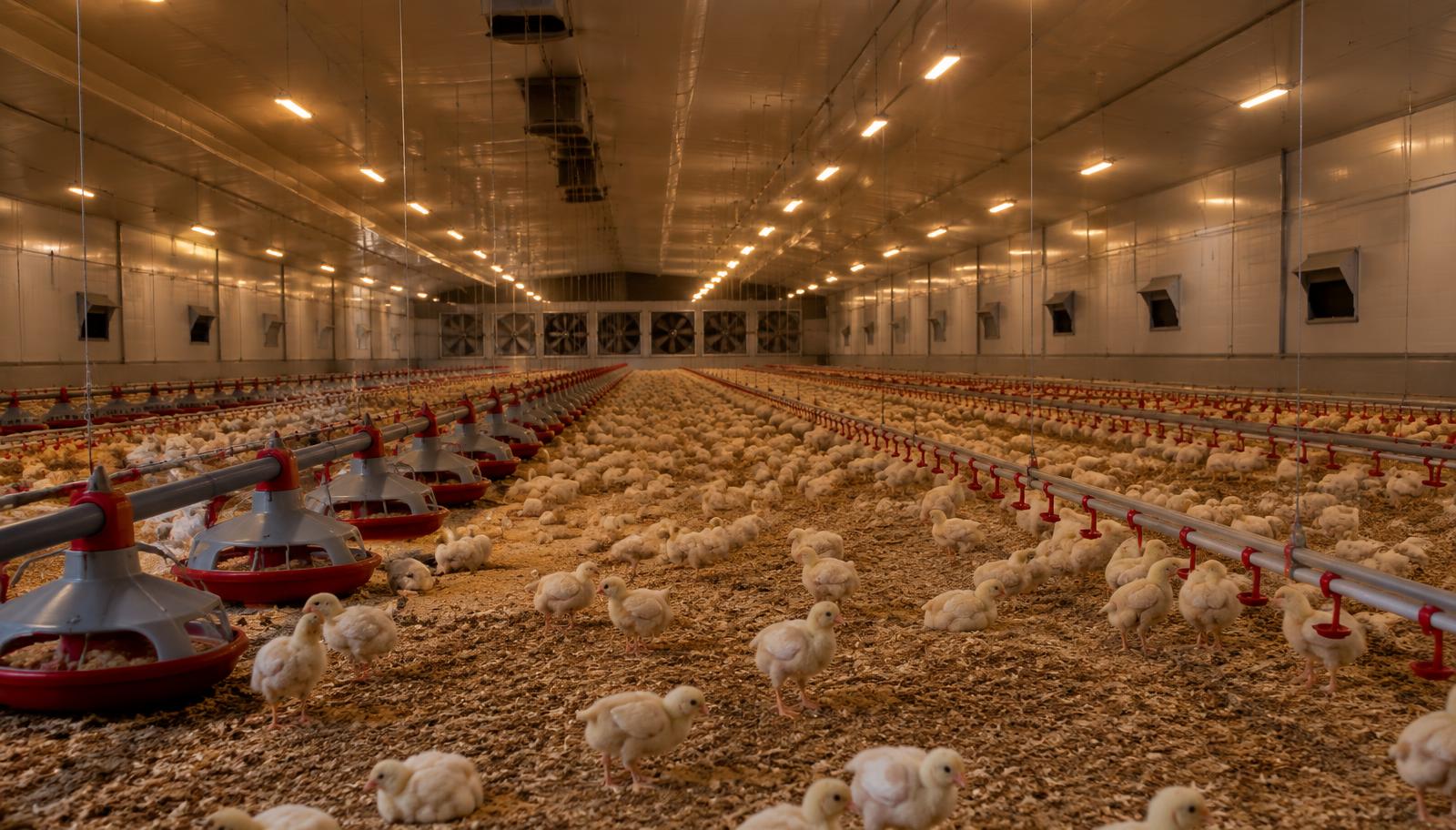
A buyer's guide to poultry house LED lighting: setting lux and dimming targets, planning fixture layout for even light, and writing a specification suppliers can price on the same basis.
By HatchMatch Group Sourcing Desk · Last updated 2026-10-07
In short
Short answer. Lighting drives feeding behaviour, activity, sexual maturity and welfare in every poultry house. The buying decisions that matter most are: the light intensity (lux) and day-length program your birds need at each stage, a dimmable LED fixture that can hold that program reliably over years of operation, a layout that gives even light across the whole floor or every cage tier, and a controller that ties lighting to your overall house automation.
Key takeaways
- Light intensity and day length affect feed intake, activity level, leg health, aggression and, for layers and breeders, the onset and persistence of lay.
- Lighting needs change through the production cycle: broilers typically start with near-continuous light and higher intensity in the first days to help chicks find feed and water, then move to a reduced light program with a dark period for welfare and leg health before a brighter finishing phase; layers and breeders need a controlled, usually increasing, day-length program from rearing into lay to trigger and hold sexual maturity; pullet rearing houses often use a step-down program during the juvenile phase.
- LED fixtures dominate new poultry lighting because they dim smoothly, last long and use less power than older lamp types, but not all LED fixtures are built for a poultry house.
- Uneven light creates crowding in darker areas and can slow uniformity.
- Specify a controller that can run a programmed day-length and intensity curve automatically, including sunrise/sunset-style ramping rather than abrupt on/off, which reduces panic and piling.
Short answer. Lighting drives feeding behaviour, activity, sexual maturity and welfare in every poultry house. The buying decisions that matter most are: the light intensity (lux) and day-length program your birds need at each stage, a dimmable LED fixture that can hold that program reliably over years of operation, a layout that gives even light across the whole floor or every cage tier, and a controller that ties lighting to your overall house automation. Confirm exact lux and photoperiod targets with your breed guide and local welfare rules — this guide gives planning ranges, not fixed values.
This guide is for broiler, layer, breeder and pullet-rearing projects choosing or replacing a house lighting system. It explains the equipment and layout decisions in plain terms and lists what to include in a request for quotation (RFQ) so suppliers quote on a comparable basis.
Why lighting is a production decision, not just an electrical one
Light intensity and day length affect feed intake, activity level, leg health, aggression and, for layers and breeders, the onset and persistence of lay. A lighting program that is too bright or too long for young broilers can increase activity and leg problems; one that is too dim or inconsistent across a layer house can create uneven stimulation and a ragged start of lay. Because lighting interacts with ventilation, stocking density and feeding, it is normally specified alongside the other house systems rather than bought as an afterthought.
Setting lux and day-length targets by stage
Want these figures for your own site, capacity and country? A HatchMatch specialist builds the budget with you — no buyer fees.
Start freeLighting needs change through the production cycle: broilers typically start with near-continuous light and higher intensity in the first days to help chicks find feed and water, then move to a reduced light program with a dark period for welfare and leg health before a brighter finishing phase; layers and breeders need a controlled, usually increasing, day-length program from rearing into lay to trigger and hold sexual maturity; pullet rearing houses often use a step-down program during the juvenile phase. Because exact lux levels and hour counts depend on breed, strain and your national welfare rules, treat published figures as a starting point and confirm the program with your breed's management guide before finalising the specification.
| House type | Typical lighting approach | Key buying point |
|---|---|---|
| Broiler | Bright start, reduced-intensity program with a dark period, brighter finish | Dimmer range and dark-period light-tightness |
| Layer (cage or aviary) | Controlled, stepped day-length program rising into lay | Even lux across tiers and aisles |
| Breeder | Day-length program tied to body-weight and maturity targets | Fine dimming steps and reliable scheduling |
| Pullet rearing | Step-down program during juvenile growth | Consistent light across all rearing tiers |
Choosing the fixtures: LED, dimming and build quality
LED fixtures dominate new poultry lighting because they dim smoothly, last long and use less power than older lamp types, but not all LED fixtures are built for a poultry house. Ask every supplier to confirm: an ingress-protection rating suitable for washdown and dusty, humid conditions; a dimming range wide enough to reach the low intensities used in some broiler and rearing programs without flicker; a stated lumen-depreciation or lifetime figure; and a housing material that resists the ammonia atmosphere of a working house. Flicker and poor dimming at low output are common complaints — ask for the dimmer and driver brand and whether the combination has been tested together, not just each component separately.
Layout: getting even light to every bird
Uneven light creates crowding in darker areas and can slow uniformity. Ask the supplier to provide a lighting layout drawing showing fixture spacing, mounting height and the calculated lux at bird level across the floor plan, including aisles, corners and — in cage or aviary systems — every tier, since upper and lower tiers can receive very different intensity from the same fixture row if spacing is wrong. The poultry lighting calculator gives a first planning estimate of fixture count and spacing for your house dimensions; treat it as a starting point and ask the supplier to confirm with their own photometric calculation for the fixture they propose.
Controllers, dimming and integration
Specify a controller that can run a programmed day-length and intensity curve automatically, including sunrise/sunset-style ramping rather than abrupt on/off, which reduces panic and piling. Ask whether the lighting controller is a standalone unit or integrates with your main house environmental controller, since running lighting, ventilation and feeding from one system simplifies record-keeping and alarms. For multi-house sites, ask whether programs can be set per house and adjusted remotely, and how a power interruption affects the saved program.
Power, backup and wiring
LED fixtures draw far less power than older lighting, but the controller and dimmer still need a stable, filtered supply — poor power quality is a common cause of flicker and premature driver failure. Confirm lighting is on the emergency generator circuit; a dark house is a welfare and safety issue as serious as a ventilation failure, and the generator sizing calculator helps size backup capacity across lighting, ventilation and other critical loads together. Ask about cable routing and fixture mounting in houses with manure-belt or aviary structures so fixtures remain accessible for cleaning and bulb or driver replacement.
What to include in the RFQ
A lighting RFQ that suppliers can price on the same basis should state: house dimensions and mounting height available; bird type and target lighting program by stage (or a request for the supplier to propose one against your breed guide); whether tiers or cages need individual light calculation; dimming range required; ingress-protection and ammonia-resistance requirements; controller integration requirements (standalone or tied to house automation); power supply and backup; and installation, commissioning and training scope. Ask for a lux layout drawing and fixture lumen-depreciation data as part of the technical offer, and request spare driver and dimmer parts priced separately, as recommended in our guide to warranty, spare parts and after-sales terms.
Questions to ask every supplier
What lux level and uniformity can you guarantee at bird level across the whole floor or every tier, and how is that measured at commissioning? What is the dimming range of your fixture and driver combination, and is it flicker-free at the lowest setting? What ingress-protection rating and housing material does the fixture use? Can the controller run an automatic ramping program, and does it integrate with our main house controller? What happens to the saved lighting program during a power interruption? What is the expected service life and lumen depreciation of the fixture, and what is the warranty on drivers and dimmers? Ask for written answers and compare them in one table.
Common mistakes
Choosing fixtures on price per unit without checking dimming range or ingress-protection rating. Specifying lighting without a layout drawing, so corners and tier edges end up under-lit. Leaving lighting off the generator circuit. Running abrupt on/off switching instead of a ramped program. Mixing fixtures, drivers and dimmers from different sources without confirming compatibility. And finalising lux and day-length targets without checking the current breed management guide.
Where HatchMatch fits
HatchMatch is a supplier-neutral procurement platform for commercial poultry projects, typically USD 250,000 and above. It is not a manufacturer, installer, EPC contractor or consultant, and it does not sign supply contracts — buyers contract directly with the suppliers they choose. HatchMatch helps you turn your requirements into one written specification so offers can be compared line by line. Every brief receives human review, and HatchMatch aims to reply within two business days. To start, submit a poultry project request with your house dimensions, bird type, country and timeline.
FAQ
What lux level does a poultry house need? It depends on bird type and production stage — broiler, layer and breeder programs each use different intensity and day-length targets, and some stages deliberately use lower light. Use the poultry lighting calculator for a planning estimate and confirm exact values with your breed's management guide and local welfare rules.
Why use dimmable LED instead of fixed-output lighting? Dimming lets you run the exact program your birds need at each stage — bright for early feeding, reduced for welfare and leg health, stepped up again toward lay — from the same fixtures, without replacing lamps.
How do I know the light is even across my house? Ask the supplier for a lighting layout drawing with calculated lux at bird level across the floor plan and, for cage or aviary systems, every tier, then verify with a lux meter at commissioning.
Does lighting need to be on the backup generator? Yes. A lighting failure affects feeding, activity and welfare in the same way a ventilation failure does, so lighting circuits should be included when sizing backup generator capacity.
Can I keep my existing fixtures and just add a new controller? Sometimes, but only if the existing fixtures dim smoothly across the full range your program needs without flicker. Ask the supplier to test compatibility before quoting a controller-only upgrade.
Frequently asked questions
- What lux level and uniformity can you guarantee at bird level across the whole floor or every tier, and how is that measured at commissioning?
- What is the dimming range of your fixture and driver combination, and is it flicker-free at the lowest setting? What ingress-protection rating and housing material does the fixture use? Can the controller run an automatic ramping program, and does it integrate with our main house controller? What happens to the saved lighting program during a power interruption? What is the expected service life and lumen depreciation of the fixture, and what is the warranty on drivers and dimmers? Ask for written answers and compare them in one table.
- What lux level does a poultry house need?
- It depends on bird type and production stage — broiler, layer and breeder programs each use different intensity and day-length targets, and some stages deliberately use lower light. Use the poultry lighting calculator for a planning estimate and confirm exact values with your breed's management guide and local welfare rules.
- Why use dimmable LED instead of fixed-output lighting?
- Dimming lets you run the exact program your birds need at each stage — bright for early feeding, reduced for welfare and leg health, stepped up again toward lay — from the same fixtures, without replacing lamps.
- How do I know the light is even across my house?
- Ask the supplier for a lighting layout drawing with calculated lux at bird level across the floor plan and, for cage or aviary systems, every tier, then verify with a lux meter at commissioning.
- Does lighting need to be on the backup generator?
- Yes. A lighting failure affects feeding, activity and welfare in the same way a ventilation failure does, so lighting circuits should be included when sizing backup generator capacity.
- Can I keep my existing fixtures and just add a new controller?
- Sometimes, but only if the existing fixtures dim smoothly across the full range your program needs without flicker. Ask the supplier to test compatibility before quoting a controller-only upgrade.
More buyer questions are answered in our poultry procurement FAQ — also available in Español, Français, Português, Deutsch, العربية, Русский, Türkçe, Tiếng Việt.
From this article to a procurement-ready RFQ
HatchMatch Group is an independent sourcing desk — not a manufacturer or EPC contractor. These are the four steps we actually use with commercial poultry and hatchery buyers. If you are still deciding scope, start with what commercial poultry equipment includes and how suppliers are compared.
- 1. Plan the projectCapacity, climate and house layout in one guided workflowOpen
- 2. Build the RFQScope, specifications and comparable line itemsOpen
- 3. Submit the requestReviewed manually before any supplier introductionOpen
- 4. Track and compareFollow status and normalise supplier responsesOpen
Prefer the numbers first? Start with the poultry project cost calculator or browse the project planning guides.