
Goose Farm Renovation vs New Build: Buyer Checks
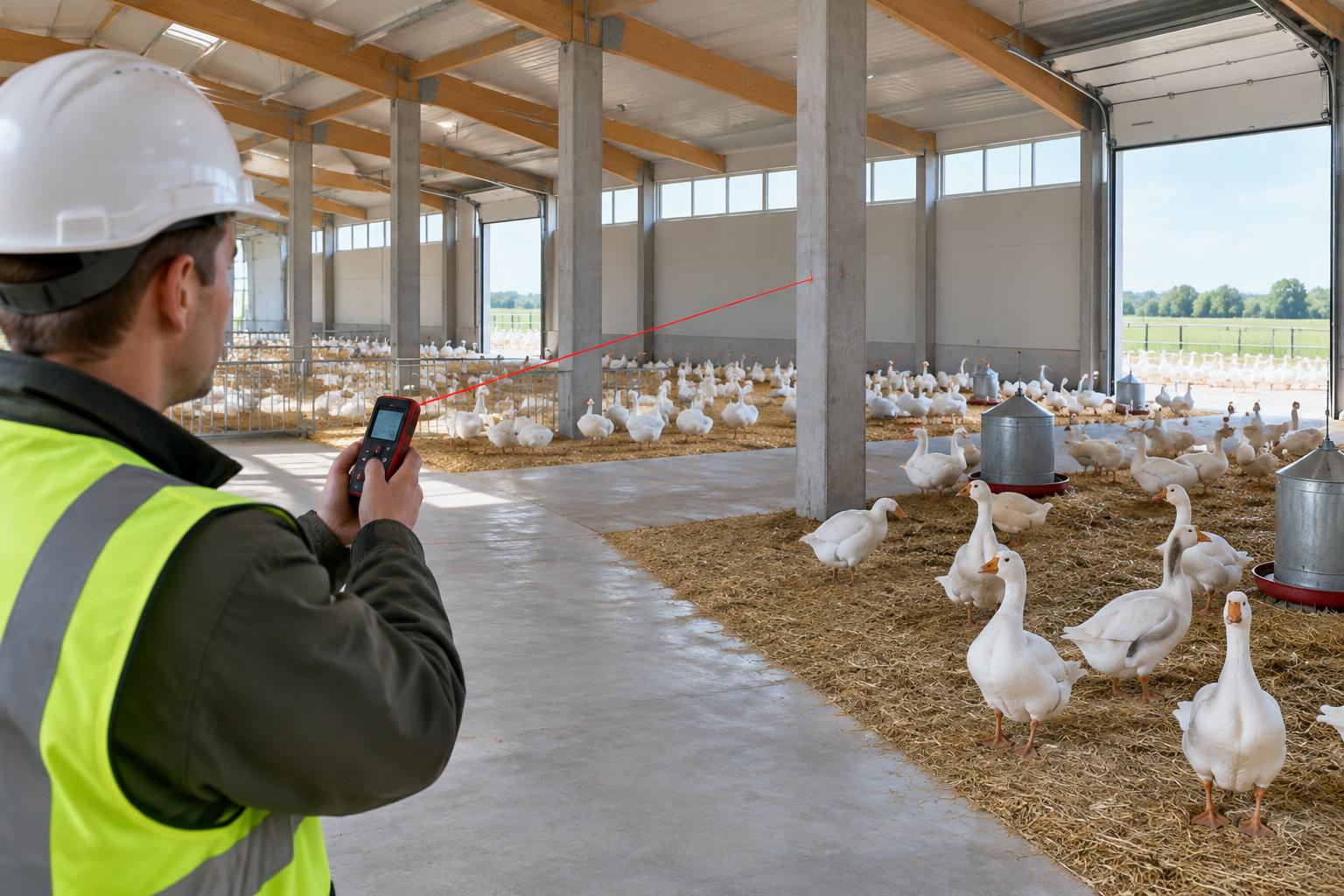
Record floor condition, drainage, roof and wall integrity, structural loads, usable bird space and installation access. An existing agricultural building is not automatically suitable for the proposed goose system. Obtain a qualified building and utility survey before asking for equal-scope proposals.
By HatchMatch Group Editorial Desk · Last updated 2026-10-16
Editorial draft — human language and technical review pending. Not a diagnosis or treatment plan.
In short
Scope: Buyer decision support, not veterinary, welfare, engineering or financial advice. Original AI-generated illustration; not a customer project or validated equipment layout.
Key takeaways
- Record floor condition, drainage, roof and wall integrity, structural loads, usable bird space and installation access.
- Name goose type, breeder or grow-out purpose, stage transfers, outdoor access and market route.
- Renovation and new-build offers must provide the same usable capacity, utilities, controls, alarms, cleaning access and commissioning.
- State whether production stops and how contractor access, placements and transfers are managed.
- Duck nest and feeder catalogues can prompt questions but do not verify goose suitability.
Scope: Buyer decision support, not veterinary, welfare, engineering or financial advice. Original AI-generated illustration; not a customer project or validated equipment layout.
Survey before buying equipment
Record floor condition, drainage, roof and wall integrity, structural loads, usable bird space and installation access. An existing agricultural building is not automatically suitable for the proposed goose system. Obtain a qualified building and utility survey before asking for equal-scope proposals.
Define the goose operation
Name goose type, breeder or grow-out purpose, stage transfers, outdoor access and market route. Keep goose requirements separate from ducks and chickens. Ask the local designer and authority to confirm current housing, welfare, environmental and permitting obligations; this guide states no universal limits.
Want these figures for your own site, capacity and country? A HatchMatch specialist builds the budget with you — no buyer fees.
Start freeCompare the same productive scope
Renovation and new-build offers must provide the same usable capacity, utilities, controls, alarms, cleaning access and commissioning. Record exclusions and necessary repairs. A smaller renovation price may simply omit civil works, permits or installation.
Keep downtime visible
State whether production stops and how contractor access, placements and transfers are managed. Use the farm's schedule rather than a generic construction duration. Place-days unavailable describe capacity interruption, not a financial loss or mortality estimate.
Require goose-specific documentation
Duck nest and feeder catalogues can prompt questions but do not verify goose suitability. Require dimensions, access, cleaning procedures and written goose-stage applicability. Check references independently; a catalogue is not proof of local execution capacity.
Record the decision basis
Compare remaining building life, repairs, integration risks, equal-scope quotes and production disruption. An independent cash-flow review should include working capital and maintenance. The lower capital price is not necessarily the better project; no savings or payback is promised.
Compare on one basis
| Evidence | Buyer asks | Compare on |
|---|---|---|
| Production context | Species, strain, stage and objective | Same flock and capacity denominator |
| Installed scope | Inclusions, exclusions and interfaces | Same surveyed site and utilities |
| Operation | Cleaning, maintenance and service | Same measurement period |
| Acceptance | Documents, training, tests and remedies | Written responsibilities, no assumed results |
Sources and boundaries
Big Dutchman Pekino describes supplementary duck cup drinking, used with conventional nipple drinkers. Vencomatic Duck Nest describes duck breeder nests, access and egg handling. These are manufacturer disclosures, not independent performance evidence, endorsements or goose suitability. FAO livestock definitions distinguish ducks but aggregate geese and guinea fowls; aggregated figures are not goose-only demand. Sources checked 16 October 2026; no husbandry target, price or regulation is imported.
Next step
Use the goose project hub for input-only planning and a species-preserving three-step RFQ. Compare proposals, check RFQ completeness, and review financing readiness. Buyer service is free; assisted procurement starts at USD 250,000. Every brief receives human review; supplier response times vary.
From this article to a procurement-ready RFQ
HatchMatch Group is an independent sourcing desk — not a manufacturer or EPC contractor. These are the four steps we actually use with commercial poultry and hatchery buyers. If you are still deciding scope, start with what commercial poultry equipment includes and how suppliers are compared.
- 1. Plan the projectCapacity, climate and house layout in one guided workflowOpen
- 2. Build the RFQScope, specifications and comparable line itemsOpen
- 3. Submit the requestReviewed manually before HatchMatch contacts any supplier on the buyer's behalfOpen
- 4. Track and compareFollow status and normalise supplier responsesOpen
Prefer the numbers first? Start with the poultry project cost calculator or browse the project planning guides.