
Poultry Farm Mortality Disposal: Incinerators, Composting and Rendering — How to Size, Permit and Buy
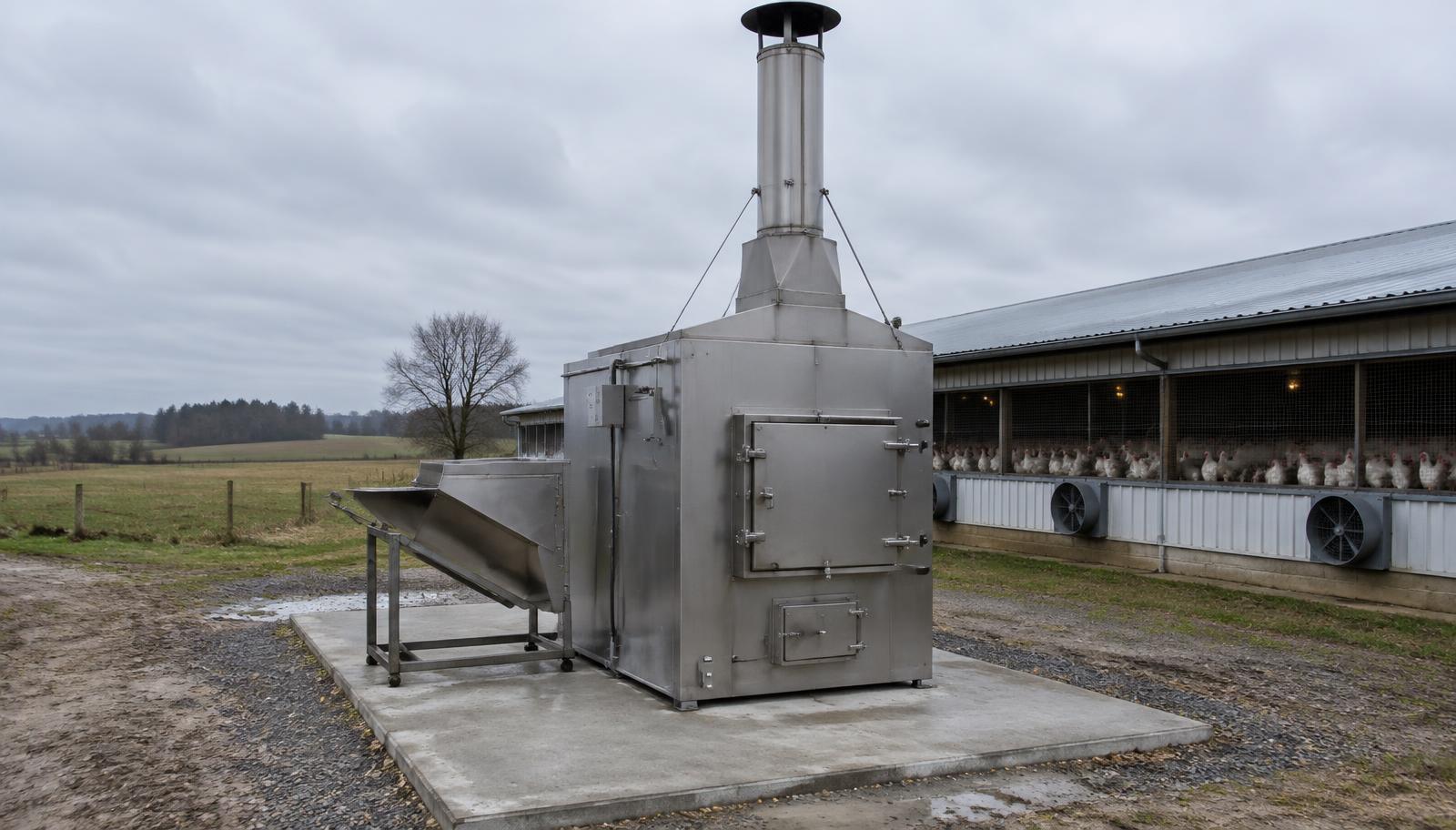
A buyer's guide to daily mortality disposal: comparing incineration, composting and rendering, sizing equipment to flock size, and the permits and RFQ details to confirm before you buy.
By HatchMatch Group Sourcing Desk · Last updated 2026-10-08
In short
Short answer. Every commercial flock has daily mortality, and it must be removed from the house and dealt with every day, not stored. The three common on-farm methods are incineration (burns carcasses to ash), composting (controlled aerobic decomposition in bins or windrows) and rendering (carcasses collected, chilled and sent off-site for processing into meal and fat).
Key takeaways
- Daily mortality on a healthy commercial flock is normally a small percentage of the birds placed, rising sharply during disease events, heat stress or culls.
- | Method | How it works | Typical fit | Main buying considerations | |---|---|---|---| | Incineration | Carcasses burned in a dedicated chamber, reduced to ash | Farms without nearby rendering, or where regulations require destruction rather than reuse | Combustion chamber and afterburner capacity, fuel type and consumption, emissions compliance, ash handling, daily throughput vs peak mortality | | Composting | Carcasses layered with a carbon source (litter, sawdust, straw) in bins or windrows and left to decompose aerobically | Farms with land, a carbon source nearby and a regulator that permits on-site composting | Bin or windrow volume for daily throughput, roof and leachate containment, turning equipment or schedule, finished-compost end use and testing | | Rendering | Carcasses chilled or frozen on-farm and collected by a licensed renderer for off-site processing | Farms near an operating rendering plant, especially in regions with established collection routes | Refrigerated storage capacity between collections, collection frequency and contract terms, biosecurity of the collection point, cost per tonne or per visit |
- Size disposal equipment from your flock's daily mortality curve, not from an average figure picked off the internet.
- Environmental and veterinary rules for carcass disposal differ by country, and often by province or municipality within a country — covering permitted methods, air-emissions limits for incinerators, siting distances from water sources and neighbours, record-keeping and who may operate or transport animal by-products.
- A mortality-disposal RFQ that suppliers can price on the same basis should state: flock type, size and placement schedule; average and peak-day mortality estimates with live weight; the method you have been approved to use, or that you are evaluating; site conditions (climate, available land, access, distance to houses and neighbours); utilities available (power, water, fuel); whether the unit must handle disease-event volumes separately from routine mortality; required documentation or record-keeping features; and the scope of installation, commissioning, training and spare parts.
Short answer. Every commercial flock has daily mortality, and it must be removed from the house and dealt with every day, not stored. The three common on-farm methods are incineration (burns carcasses to ash), composting (controlled aerobic decomposition in bins or windrows) and rendering (carcasses collected, chilled and sent off-site for processing into meal and fat). The right choice depends on flock size, climate, land available and — above all — what your local environmental and veterinary authority permits. Confirm the applicable rules before you size or buy anything; this article gives planning ranges, not a substitute for that approval.
This guide is for broiler, layer and breeder project teams planning mortality management as part of a new farm, typically in projects of USD 250,000 and above. It explains how the three main methods work, how to size equipment to your flock, and what to put in a request for quotation (RFQ) so supplier offers can be compared on the same basis. Rules on carcass disposal vary enormously by country and even by region — some jurisdictions require rendering or regulated incineration, others allow on-farm composting with inspection, and open burial is restricted or banned in many places. Always confirm with your local environmental and veterinary authority before finalising a method.
Why mortality disposal is a planning decision, not an afterthought
Daily mortality on a healthy commercial flock is normally a small percentage of the birds placed, rising sharply during disease events, heat stress or culls. Whatever the average, the farm needs a method that can absorb both the routine daily volume and a sudden spike without carcasses accumulating near the houses, because that is a biosecurity and odour risk as well as, in most jurisdictions, a compliance failure. Many investors size the farm's houses, feed and water systems carefully but leave mortality disposal as an afterthought; it then becomes a rushed, undersized or non-compliant add-on after houses are already built. Decide the method and size the equipment at the same time as the rest of the farm layout, and route it into site planning — disposal areas need their own access road, water point and distance from the houses and from neighbours.
Comparing the three main methods
Want these figures for your own site, capacity and country? A HatchMatch specialist builds the budget with you — no buyer fees.
Start free| Method | How it works | Typical fit | Main buying considerations |
|---|---|---|---|
| Incineration | Carcasses burned in a dedicated chamber, reduced to ash | Farms without nearby rendering, or where regulations require destruction rather than reuse | Combustion chamber and afterburner capacity, fuel type and consumption, emissions compliance, ash handling, daily throughput vs peak mortality |
| Composting | Carcasses layered with a carbon source (litter, sawdust, straw) in bins or windrows and left to decompose aerobically | Farms with land, a carbon source nearby and a regulator that permits on-site composting | Bin or windrow volume for daily throughput, roof and leachate containment, turning equipment or schedule, finished-compost end use and testing |
| Rendering | Carcasses chilled or frozen on-farm and collected by a licensed renderer for off-site processing | Farms near an operating rendering plant, especially in regions with established collection routes | Refrigerated storage capacity between collections, collection frequency and contract terms, biosecurity of the collection point, cost per tonne or per visit |
The table is a starting point, not a rule. Many farms combine methods — for example, routine mortality goes into a permitted composting system while a small incinerator or freezer handles diagnostic samples or disease events. Ask each supplier which method their equipment is designed for and whether it is approved or commonly used by farms of your type in your country.
Sizing to your flock, not a round number
Size disposal equipment from your flock's daily mortality curve, not from an average figure picked off the internet. Broiler mortality is typically low per day but totals meaningfully over a cycle; layer and breeder mortality runs over a much longer flock life with its own pattern. Build the sizing on three numbers: average daily mortality for the flock size and age range you will run, a peak-day allowance for disease events or heat stress, and the total live weight represented by those birds, since incinerator and composting capacity are usually rated by weight per day, not by bird count. The birds per house calculator and farm cost calculator help establish flock size and the budget envelope for mortality-management equipment alongside the rest of the farm; both give planning estimates and should be confirmed against your own flock data and supplier calculations.
Permits and regulation: confirm before you commit
Environmental and veterinary rules for carcass disposal differ by country, and often by province or municipality within a country — covering permitted methods, air-emissions limits for incinerators, siting distances from water sources and neighbours, record-keeping and who may operate or transport animal by-products. Some authorities require every mortality event to be documented; others require a licensed contractor for off-site rendering, or specific afterburner temperatures and retention times for incineration to be considered compliant. Before you choose a method or finalise a budget, contact your local environmental agency and veterinary authority (or your consultant) and get the applicable requirements in writing. Build the permit timeline into your project schedule, since obtaining an incineration or composting permit can take longer than installing the equipment itself.
What to include in the RFQ
A mortality-disposal RFQ that suppliers can price on the same basis should state: flock type, size and placement schedule; average and peak-day mortality estimates with live weight; the method you have been approved to use, or that you are evaluating; site conditions (climate, available land, access, distance to houses and neighbours); utilities available (power, water, fuel); whether the unit must handle disease-event volumes separately from routine mortality; required documentation or record-keeping features; and the scope of installation, commissioning, training and spare parts. For incinerators, ask for the rated throughput in kilograms per hour and per day, fuel consumption, and emissions data for your country's standard. For composting systems, ask for bin or windrow volume, carbon-source requirements and expected cycle time to stabilised compost. For rendering, ask about collection frequency, refrigerated-storage sizing and contract terms. Request delivery terms and the warranty in writing — see our guide to warranty, spare parts and after-sales terms for the clauses to specify.
Questions to ask every supplier
Is this equipment approved or commonly used for poultry mortality in our country, and can you show the relevant certification? What is the rated capacity in kilograms per day, and how does that change with wet or cold carcasses? What fuel or power does the unit need, and what is typical consumption at our expected volumes? How do we handle a mortality spike well above your rated daily capacity? What maintenance and consumables does the unit need, and how often? Who installs, commissions and trains our staff, and what documentation do we receive? Ask for answers in writing and compare them in one table alongside the quoted price.
Common mistakes
Choosing a method before confirming it is permitted locally. Sizing equipment to average mortality with no allowance for a disease event or heat-stress spike. Siting the disposal area too close to the houses or to a neighbouring property or water source. Underestimating fuel or power consumption for incineration, which can be a meaningful running cost over the equipment's life. Skipping record-keeping features that a regulator later requires. And comparing quotes for different methods as if they were interchangeable, without checking that each is actually approved for your site.
Where HatchMatch fits
HatchMatch is a supplier-neutral procurement platform for commercial poultry projects, typically USD 250,000 and above. It is not a manufacturer, installer, EPC contractor or consultant, and it does not sign supply contracts — buyers contract directly with the suppliers they choose. HatchMatch helps you turn your mortality-management requirements into one written specification so offers can be compared line by line. Every brief receives human review, and HatchMatch aims to reply within two business days. To start, submit a poultry project request with your flock size, site location, mortality-management method under consideration and timeline.
FAQ
Can I just bury mortality on the farm? In many jurisdictions burial is restricted, banned, or allowed only under specific conditions (depth, distance from water, lining). Confirm with your local environmental authority before relying on burial as a method.
How big an incinerator do I need? Size it from your flock's average and peak-day mortality weight, not bird count, and confirm the supplier's rated throughput against your climate and carcass condition. The farm cost calculator helps place the equipment budget alongside the rest of the project.
Is composting legal for poultry mortality? It is permitted in many places under specific conditions — a roofed, contained system, an approved carbon source, record-keeping and sometimes testing of the finished compost — but rules vary widely. Confirm with your local authority before building a composting system.
Do I need a separate plan for disease-event mortality? Yes. Routine daily mortality and a sudden spike from a disease event or heat-stress mortality often require different capacity and sometimes different methods; discuss both scenarios with your veterinary authority and with suppliers before sizing equipment.
Does mortality disposal belong in the main farm RFQ or a separate one? Either can work, but keep the specification clear either way, with its own throughput figures and site requirements, so suppliers price it accurately rather than as an afterthought to the housing package.
Frequently asked questions
- Is this equipment approved or commonly used for poultry mortality in our country, and can you show the relevant certification?
- What is the rated capacity in kilograms per day, and how does that change with wet or cold carcasses? What fuel or power does the unit need, and what is typical consumption at our expected volumes? How do we handle a mortality spike well above your rated daily capacity? What maintenance and consumables does the unit need, and how often? Who installs, commissions and trains our staff, and what documentation do we receive? Ask for answers in writing and compare them in one table alongside the quoted price.
- Can I just bury mortality on the farm?
- In many jurisdictions burial is restricted, banned, or allowed only under specific conditions (depth, distance from water, lining). Confirm with your local environmental authority before relying on burial as a method.
- How big an incinerator do I need?
- Size it from your flock's average and peak-day mortality weight, not bird count, and confirm the supplier's rated throughput against your climate and carcass condition. The farm cost calculator helps place the equipment budget alongside the rest of the project.
- Is composting legal for poultry mortality?
- It is permitted in many places under specific conditions — a roofed, contained system, an approved carbon source, record-keeping and sometimes testing of the finished compost — but rules vary widely. Confirm with your local authority before building a composting system.
- Do I need a separate plan for disease-event mortality?
- Yes. Routine daily mortality and a sudden spike from a disease event or heat-stress mortality often require different capacity and sometimes different methods; discuss both scenarios with your veterinary authority and with suppliers before sizing equipment.
- Does mortality disposal belong in the main farm RFQ or a separate one?
- Either can work, but keep the specification clear either way, with its own throughput figures and site requirements, so suppliers price it accurately rather than as an afterthought to the housing package.
More buyer questions are answered in our poultry procurement FAQ — also available in Español, Français, Português, Deutsch, العربية, Русский, Türkçe, Tiếng Việt.
From this article to a procurement-ready RFQ
HatchMatch Group is an independent sourcing desk — not a manufacturer or EPC contractor. These are the four steps we actually use with commercial poultry and hatchery buyers. If you are still deciding scope, start with what commercial poultry equipment includes and how suppliers are compared.
- 1. Plan the projectCapacity, climate and house layout in one guided workflowOpen
- 2. Build the RFQScope, specifications and comparable line itemsOpen
- 3. Submit the requestReviewed manually before any supplier introductionOpen
- 4. Track and compareFollow status and normalise supplier responsesOpen
Prefer the numbers first? Start with the poultry project cost calculator or browse the project planning guides.