
Commercial Poultry RFQ — Get a Poultry Project Quote
Submit one structured commercial poultry RFQ for a broiler, layer, breeder, hatchery, processing, feed mill or integrated project. The HatchMatch project team reviews every request personally — nothing reaches a supplier automatically.
Direct answer
A commercial poultry RFQ is a structured request describing your project scope — bird type, capacity, climate control, feeding, housing, biosecurity, power, budget and delivery terms. This page helps you clarify those decisions before any supplier outreach. It is written for owners, integrators, investors and public authorities preparing projects generally from an expected total project value of USD 250,000. HatchMatch reviews the brief free of charge; where a project qualifies, the team decides manually how it should be routed. Below that level you still get the calculators, checklist and planning guidance — but no supplier routing or financing-pathway preparation.
Workflow: initial question → structured requirements → project or RFQ brief → human review → appropriate supplier or financing-pathway routing where justified.
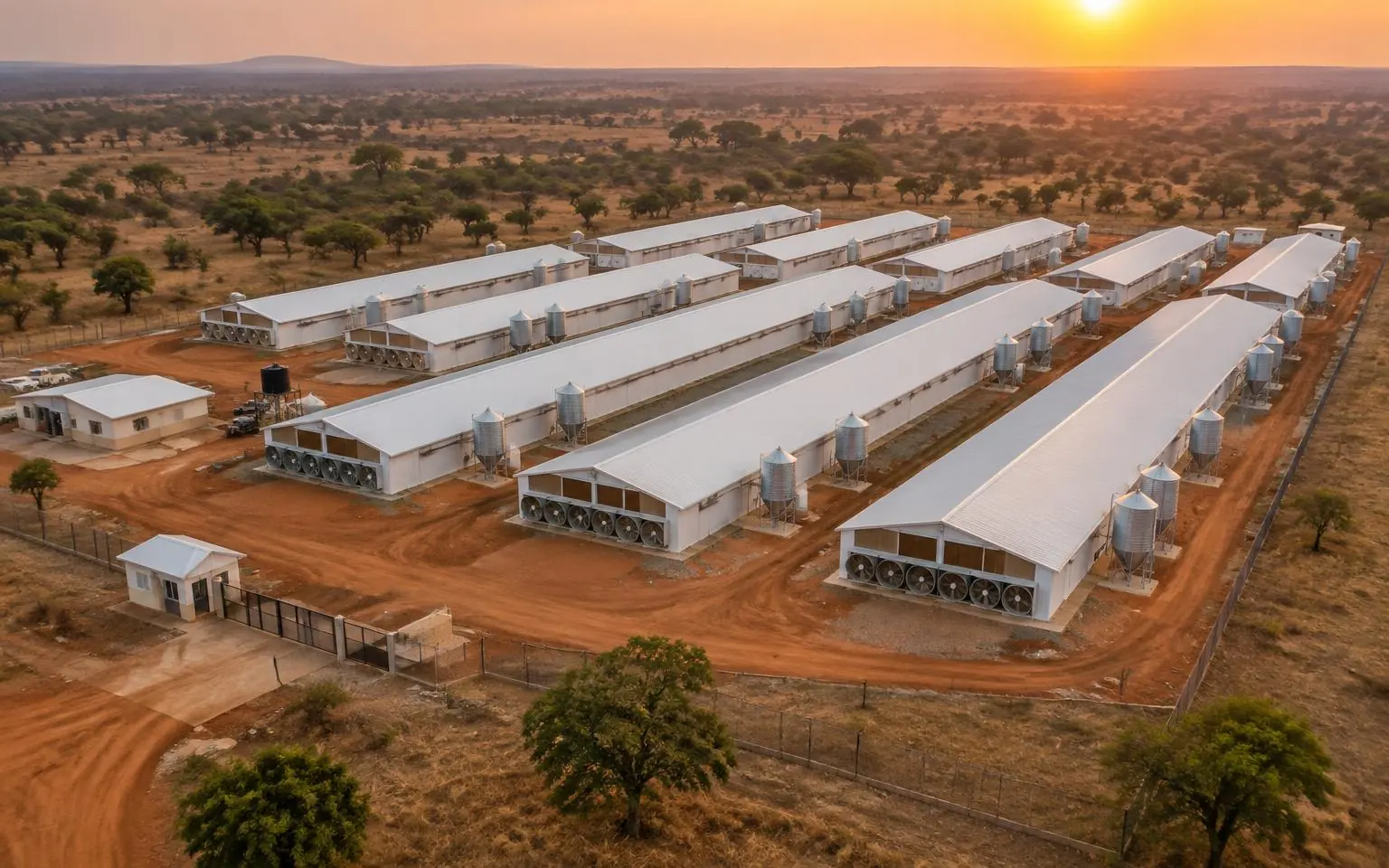
What your poultry project quote includes
Structured RFQ review
We check your scope for missing details — capacity, climate-control scope, power, Incoterms — before it reaches manufacturers, so quotes come back comparable.
Human review before any routing
The HatchMatch project team assesses seriousness, scale, country and technical fit. Only qualifying projects are routed, manually, to third-party manufacturers that already export to your market.
Comparable quotes
Multiple suppliers price the same scope, letting you compare CAPEX, lead time, warranty and installation terms side by side.
One written specification — fewer gaps between supplier quotes
When manufacturers price different scopes, the quotes that come back cannot be compared: one price may include climate control while another leaves it out. A short written project specification — bird type, capacity, housing system, climate control, feeding, automation, power, biosecurity, budget range, timeline and delivery terms — gives each supplier the same baseline. Against one written brief you can see what every price includes and what it omits, which is how the gaps between supplier quotes narrow before negotiation begins.
HatchMatch helps you structure this written brief and reviews it by hand. It does not coordinate the project: final design, contracting, installation and performance remain with you and the supplier you choose.
How to compare supplier offers line by line
When offers arrive, check each one against the same written brief before comparing totals:
- Capacity assumptions — bird places, stocking basis and house dimensions the price is based on.
- Equipment scope — which systems are included: housing, feeding, water, ventilation, lighting, incubation, egg or chick handling.
- Compatibility — whether items fit your existing houses, power supply and other suppliers' equipment.
- Controls and data — controller model, sensors, alarms and remote access.
- Welfare and biosecurity documents — which standards the supplier says the design supports, and what paperwork they provide.
- Exclusions — civil works, freight, duties, installation labour and anything left to the buyer.
- Installation, commissioning and training — who does each, for how long, and what acceptance looks like.
- Service — warranty start, spare parts and local support.
This checklist helps you compare scope. It does not predict animal health or production results; those depend on your management and your supplier's design.
Not a poultry project?
HatchMatch covers poultry and hatchery projects. For other sectors, use our sister platforms: FeedMatch for feed mills and feed supply, FishMatch for aquaculture, ColdMatch for cold storage and cold chain, and Global B2B Group for custom machinery and packaging across sectors.
Managed poultry project procurement — every request is reviewed by the HatchMatch sourcing team first.
- A farm owner, hatchery owner, integrator or investor submits a poultry project request.
- The HatchMatch sourcing team reviews project seriousness, farm type, country, capacity, budget, technical requirements, regulation, timeline and supplier fit.
- Only after manual approval, HatchMatch Group selects which — if any — manufacturers, suppliers or integrators are a fit for the project.
- Introductions are made manually and in a controlled way — never automatically through the website.
Supplier and manufacturer listings are provided for research, transparency and discovery only. HatchMatch Group does not connect buyers directly with suppliers. Every poultry project request is reviewed manually by the HatchMatch sourcing team, and HatchMatch contacts suitable suppliers on the buyer's behalf only after internal approval, then presents their organised responses.
Poultry project quotes by region
Climate, regulation, power reliability and import logistics change the right specification — and the price. Tell us your country in the RFQ so the review can take your region's sourcing context into account.
United States & Canada
Cage-free transitions, tunnel ventilation, NRCS/EPA-aware layouts; quotes quoted FOB or CIF major US ports with installation support.
India & South Asia
High-heat broiler and layer houses, evaporative cooling, and budget-optimized feed mill packages; local erection partners available.
Europe (EU & UK)
EU welfare and cage-ban compliance (Directive 1999/74/EC timelines), low-energy ventilation, and documented CE-equivalent specifications.
Latin America
Brazil and Mexico integrators: high-density broiler complexes, heat-stress mitigation, and Spanish/Portuguese-language documentation.
Middle East & Gulf
Extreme-heat climate control, water-efficient cooling, and halal-compliant processing-adjacent planning.
Africa
Grid-unstable power design (solar + generator), biosecurity zoning for HPAI risk, and durable, serviceable equipment lines.
Southeast Asia
Thailand, Indonesia, and Vietnam: humid-climate ventilation, disease-pressure biosecurity, and integrated broiler supply chains.
Poultry project checklist — what a strong RFQ includes.
Clarify these fourteen points before any supplier outreach. With them in place your broiler farm setup, layer farm equipment, hatchery supply or turnkey poultry farm project can be reviewed — and, where it qualifies, prepared for comparable quotes — in days instead of weeks of back-and-forth.
01Country & site
Destination country, nearest port, and site address — drives import rules, logistics cost and climate design.
02Project type
Broiler, layer, breeder, hatchery, feed mill or turnkey farm — each needs a different equipment scope.
03Capacity
Birds per cycle or eggs per day, and number of houses. Quotes are priced on capacity, so vague numbers slow everything down.
04New build vs. retrofit
Whether houses already exist, plus dimensions if they do — determines whether you need full poultry houses or equipment-only.
05Climate control
Ventilation, cooling and heating targets for your climate zone — tunnel vs. natural ventilation changes the whole specification.
06Feeding & drinking
Feed lines, silos, drinker type and the level of poultry farm automation you want (feed, water, egg collection, environment).
07Housing system
For layers and breeders: enriched cages vs. cage-free or aviary systems — a major cost and compliance decision.
08Biosecurity
Zoning, showers, quarantine and HPAI readiness — now part of every serious commercial RFQ, not an afterthought.
09Power & water
Grid reliability, backup power needs and water source/quality — critical for hatcheries and automated houses.
10Budget & financing
A realistic budget range (commercial projects typically USD 250,000+) and whether you want an introduction to a financing partner.
11Timeline
Target commissioning date and any fixed deadlines (grant windows, growing seasons) suppliers must plan around.
12Scope of delivery
Equipment-only vs. delivery, installation, commissioning and operator training — defines who is responsible for what on-site.
13Confirmed facts vs. assumptions
Mark which figures are confirmed (land, permits, budget approval, offtake) and which are still assumptions — reviewers and suppliers price the two very differently.
14Acceptance-test criteria
How performance will be verified on handover: climate targets, feeding and water delivery, energy use and output. Agreeing this before quoting prevents disputes at commissioning.
Want the full template? See the poultry RFQ template or read what to prepare before you request quotes. Start your RFQ
Not sure what to include? Review commercial poultry equipment by category with indicative prices before you submit.
Submit in your language: Español·Français·Português·日本語·한국어·العربية