
Manure Belts and Drying Systems for Layer Farms: How to Choose, Size and Buy
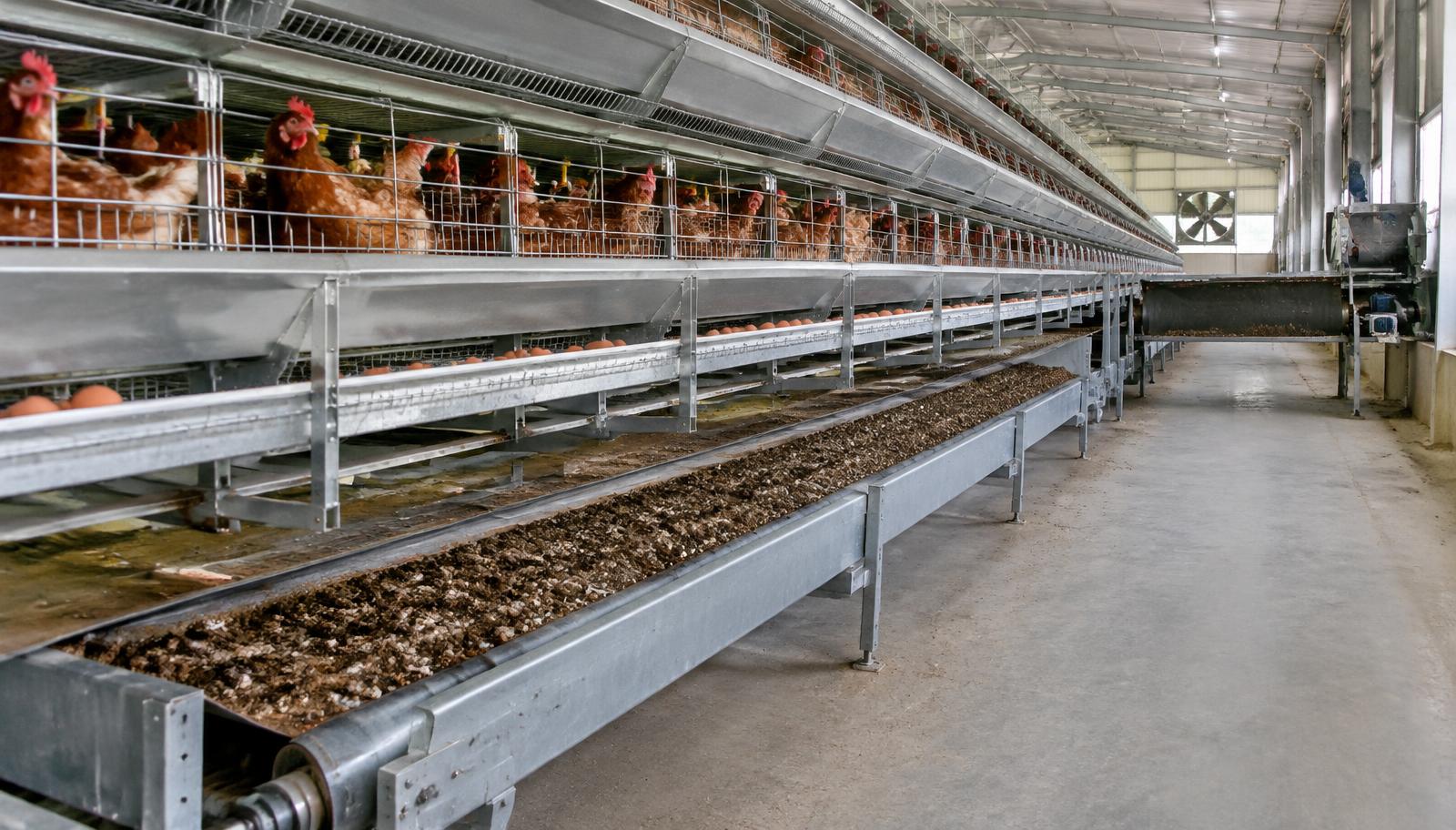
Manure is the largest daily output of an egg farm after eggs. This guide compares manure belts, in-house belt drying and drying tunnels, and lists what to specify so suppliers can quote on the same basis.
By HatchMatch Group Sourcing Desk · Last updated 2026-10-06
In short
Short answer. In modern cage and aviary layer houses, manure falls onto belts under each tier and is carried out of the house to a cross conveyor several times a week. Fresh layer manure is wet — roughly three-quarters water — so the main design choice is how much to dry it: removing it wet to storage, drying it on the belts with ventilated air inside the house, or drying it further in a separate drying tunnel.
Key takeaways
- A laying hen produces a substantial amount of fresh manure every day, and a 100,000-hen farm handles many tonnes daily.
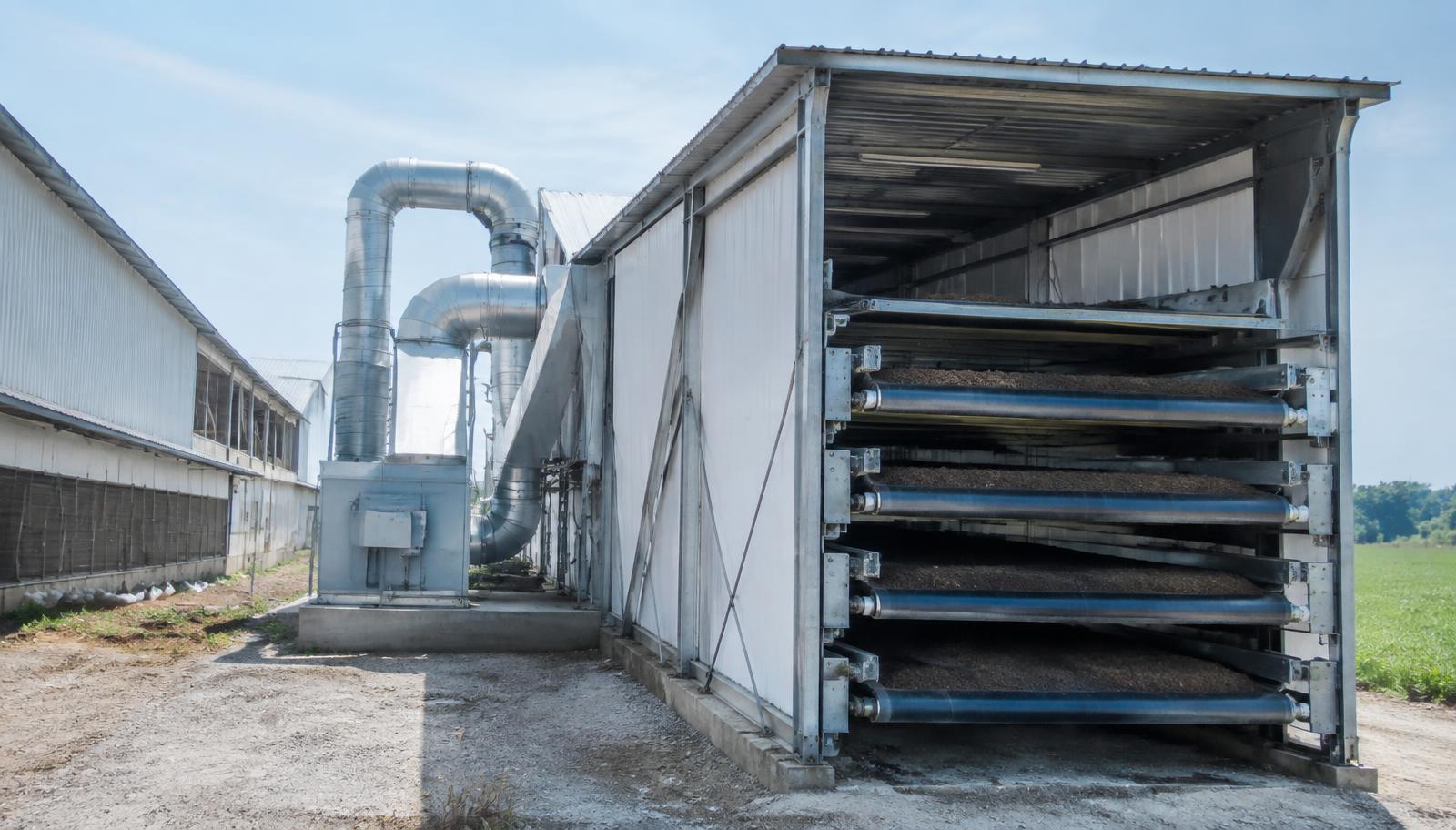
- | Approach | How it works | Typical result | Buying points | |---|---|---|---| | Manure belts, removed wet | Belts run under each tier; manure is removed frequently to external storage | Wet manure; low ammonia in the house if removed often | Belt width and material, drive power, removal frequency, cross-conveyor and loading point | | Belt drying in the house | Air ducts or tubes blow air over the manure on the belts | Partly dried manure; lower ammonia and fly pressure | Fan capacity, duct design, heat recovery, energy use, cleaning access | | Drying tunnel | Manure goes to a separate building with stacked perforated belts dried with warm house exhaust air | Much drier, granular manure suitable for sale or pelleting | Throughput, building footprint, airflow from the layer house, fire and dust safety, odour control |
- Ask suppliers to specify belt material (polypropylene belts are common), width matched to the cage or aviary module, drive and tensioning system, scrapers at the discharge end, and how belt tracking is kept straight in long houses.
- Belt drying uses fans, so it adds electricity cost, but it can reduce ammonia in the house and the ventilation needed to control it.
- Manure leaving the house must go somewhere: covered storage, a composting area, a drying tunnel, a pelleting line or a buyer's truck.
Short answer. In modern cage and aviary layer houses, manure falls onto belts under each tier and is carried out of the house to a cross conveyor several times a week. Fresh layer manure is wet — roughly three-quarters water — so the main design choice is how much to dry it: removing it wet to storage, drying it on the belts with ventilated air inside the house, or drying it further in a separate drying tunnel. Drier manure means lower ammonia and fewer flies in the house, smaller storage and a product that is easier to sell or transport.
This guide is for layer projects, from new farms to cage-free conversions. Manure regulations differ widely by country and region — storage, spreading and odour rules can decide the design — so confirm the permit requirements before choosing equipment.
How much manure a layer farm produces
A laying hen produces a substantial amount of fresh manure every day, and a 100,000-hen farm handles many tonnes daily. The exact figure depends on feed, water intake, climate and system. Use the poultry manure calculator for a planning estimate of daily and annual volume, then size belts, conveyors and storage with a margin. The calculator gives planning figures, not a guarantee of output.
The three main approaches
Want these figures for your own site, capacity and country? A HatchMatch specialist builds the budget with you — no buyer fees.
Start free| Approach | How it works | Typical result | Buying points |
|---|---|---|---|
| Manure belts, removed wet | Belts run under each tier; manure is removed frequently to external storage | Wet manure; low ammonia in the house if removed often | Belt width and material, drive power, removal frequency, cross-conveyor and loading point |
| Belt drying in the house | Air ducts or tubes blow air over the manure on the belts | Partly dried manure; lower ammonia and fly pressure | Fan capacity, duct design, heat recovery, energy use, cleaning access |
| Drying tunnel | Manure goes to a separate building with stacked perforated belts dried with warm house exhaust air | Much drier, granular manure suitable for sale or pelleting | Throughput, building footprint, airflow from the layer house, fire and dust safety, odour control |
Many farms combine the options: belts in the house with belt drying, plus a drying tunnel where there is a market for dry manure or limited land for spreading. The right choice depends on climate, energy cost, local rules and what you plan to do with the manure.
Belt and conveyor design details
Ask suppliers to specify belt material (polypropylene belts are common), width matched to the cage or aviary module, drive and tensioning system, scrapers at the discharge end, and how belt tracking is kept straight in long houses. Cross conveyors at the end of the house and an inclined conveyor to the trailer or storage area should be sized for the daily volume at your removal frequency. In long houses, ask for the maximum belt length and whether the design uses drives at one or both ends.
Ventilation, ammonia and the energy question
Belt drying uses fans, so it adds electricity cost, but it can reduce ammonia in the house and the ventilation needed to control it. In cold climates, warm air pre-heated by a heat exchanger can be used for drying. In hot climates, the house ventilation rate is already high, and belt drying may give a smaller benefit. Ask every supplier to state the expected manure dry-matter content at removal, the fan power and the operating hours their figure assumes — and treat the result as a design target, not a guarantee.
Storage, sale and permits
Manure leaving the house must go somewhere: covered storage, a composting area, a drying tunnel, a pelleting line or a buyer's truck. Storage capacity is often set by law (for example, months of storage required when spreading is not allowed). Dry manure has a market value in many regions as fertiliser, which can offset part of the drying cost, but prices and demand vary. Check fire safety for dry manure storage and dust control for conveyors and tunnels.
Cage-free conversions and existing houses
Converting a house from cages to aviary or barn changes manure handling: part of the manure falls on litter on the floor, and litter has to be managed and removed between flocks. Aviary systems still use belts under the tiers. When upgrading existing houses, check that floor levels, end walls and doorways allow new cross conveyors, and whether the existing ventilation can support belt drying. See the cage-free layer house equipment page for system choices.
What to include in the RFQ
State: number of hens per house and number of houses; housing system and module dimensions; house length; target removal frequency; target dry-matter content at removal; whether belt drying, a drying tunnel or both are required; storage or loading arrangements; climate data; electrical supply and energy cost; local manure and odour rules; and the scope of installation, commissioning and training. Ask for spare belts, scrapers, bearings and drive parts as a separate priced list, and for a written statement of which parts are made in-house and which are bought in.
Questions to ask every supplier
What dry-matter content do your references achieve in a climate like ours, and can we visit one? What is the electricity consumption of the drying system per 1,000 hens? How is belt tracking maintained in a house of our length? What is the replacement interval for belts and scrapers? How does your system interface with the cage or aviary supplier if they are different companies?
Common mistakes
Choosing the system before checking manure permits. Under-sizing cross conveyors and storage. Assuming dry-matter figures from a different climate. Buying belts and cages from different suppliers without a written interface. And forgetting the energy cost of drying when comparing offers.
Operation, maintenance and running cost
Manure systems run every week of the laying cycle, so reliability matters as much as purchase price. Budget for electricity for belt drives and drying fans, replacement belts over the life of the house, scrapers, bearings and drive parts, and the labour to load and move manure. Ask each supplier for an annual maintenance schedule and an estimate of running cost per 1,000 hens in your climate, and compare these figures alongside the equipment price. Belt tracking and tension need regular checks; a belt that runs off-track in a long house can stop removal for a whole row of cages until it is repaired.
Between flocks, belts, conveyors and drying ducts must be cleaned and disinfected. Ask how the design allows access for cleaning, whether ducts can be washed, and how long cleaning typically takes, because empty days between flocks cost egg production.
Where HatchMatch fits
HatchMatch is a supplier-neutral procurement platform for commercial poultry projects, typically USD 250,000 and above. It is not a manufacturer, installer, EPC contractor or consultant, and it does not sign supply contracts — buyers contract directly with the suppliers they choose. HatchMatch helps you turn your requirements into one written specification so offers can be compared line by line. Every brief receives human review, and HatchMatch aims to reply within two business days. To start, submit a poultry project request with hen numbers, housing system, country and your manure plan. For overall budgeting, use the farm cost calculator.
Frequently asked questions
How often should manure belts run? Common practice is several times a week; more frequent removal lowers ammonia. Follow the supplier's design and local rules.
Is manure drying worth the cost? It depends on energy cost, climate, local rules and whether there is a market for dry manure. Compare the energy and equipment cost with storage, transport and spreading savings.
Can I add belt drying to an existing cage system? Sometimes. Ask the cage supplier whether ducts fit between tiers and whether the house ventilation can supply the airflow.
What is a manure drying tunnel? A separate building with stacked perforated belts where manure is dried using warm exhaust air from the layer house, producing a much drier product.
Frequently asked questions
- What dry-matter content do your references achieve in a climate like ours, and can we visit one? What is the electricity consumption of the drying system per 1,000 hens?
- How is belt tracking maintained in a house of our length? What is the replacement interval for belts and scrapers? How does your system interface with the cage or aviary supplier if they are different companies?
- How often should manure belts run?
- Common practice is several times a week; more frequent removal lowers ammonia. Follow the supplier's design and local rules.
- Is manure drying worth the cost?
- It depends on energy cost, climate, local rules and whether there is a market for dry manure. Compare the energy and equipment cost with storage, transport and spreading savings.
- Can I add belt drying to an existing cage system?
- Sometimes. Ask the cage supplier whether ducts fit between tiers and whether the house ventilation can supply the airflow.
- What is a manure drying tunnel?
- A separate building with stacked perforated belts where manure is dried using warm exhaust air from the layer house, producing a much drier product.
More buyer questions are answered in our poultry procurement FAQ — also available in Español, Français, Português, Deutsch, العربية, Русский, Türkçe, Tiếng Việt.
From this article to a procurement-ready RFQ
HatchMatch Group is an independent sourcing desk — not a manufacturer or EPC contractor. These are the four steps we actually use with commercial poultry and hatchery buyers. If you are still deciding scope, start with what commercial poultry equipment includes and how suppliers are compared.
- 1. Plan the projectCapacity, climate and house layout in one guided workflowOpen
- 2. Build the RFQScope, specifications and comparable line itemsOpen
- 3. Submit the requestReviewed manually before any supplier introductionOpen
- 4. Track and compareFollow status and normalise supplier responsesOpen
Prefer the numbers first? Start with the poultry project cost calculator or browse the project planning guides.