
Buying Table Eggs in Bulk: A Commercial Buyer’s Specification and RFQ Guide
Buying table eggs in bulk starts with one comparable specification: shell colour, destination-defined grade and weight, pack and pallet counts, date coding, traceability, handling, delivery point and documented acceptance terms. Put the same requirements in every RFQ. HatchMatch reviews qualifying annual or seasonal programs of at least USD 250,000; buyer requests are free.
By HatchMatch Group Editorial Desk · Last updated 2026-10-19
Editorial draft — technical, legal and language review pending. Not published.
In short
Buying table eggs in bulk starts with one comparable specification: shell colour, destination-defined grade and weight, pack and pallet counts, date coding, traceability, handling, delivery point and documented acceptance terms. Put the same requirements in every RFQ. HatchMatch reviews qualifying annual or seasonal programs of at least USD 250,000; buyer requests are free.
Key takeaways
- A search for ‘egg wholesale suppliers’ or ‘bulk eggs suppliers near me’ can identify a buying question, but proximity is not evidence of suitability.
- State species, shell colour and whether mixing colours is acceptable.
- Record eggs per tray, trays per carton, cartons per pallet, pallet footprint and height, gross weight and permitted stacking.
- Identify the claimed country and establishment of production, packing location and any permitted mixed origins.
- Have qualified parties define suitable storage, loading and transport conditions for the actual product, route and destination; record the monitoring method, responsibility for records and escalation for deviations.
Buying table eggs in bulk starts with one comparable specification: shell colour, destination-defined grade and weight, pack and pallet counts, date coding, traceability, handling, delivery point and documented acceptance terms. Put the same requirements in every RFQ. HatchMatch reviews qualifying annual or seasonal programs of at least USD 250,000; buyer requests are free.
Table eggs are shell eggs bought for consumption. This guide does not cover hatching eggs, chicks or liquid, frozen and dried egg products. An RFQ is a request for comparable quotations, not an order or proof of inventory. A purchasing program defines quantities and deliveries over a stated year or season. The minimum is not USD 250,000 per shipment.
HatchMatch provides human-reviewed sourcing, not egg production or trading. It does not own inventory, certify farms, inspect consignments or guarantee food safety, quality, availability, price, delivery or import approval. Buyer service is free and supplier-funded. This is general procurement guidance, not legal, veterinary or food-safety advice.
Begin with the destination, not a supplier list
A search for ‘egg wholesale suppliers’ or ‘bulk eggs suppliers near me’ can identify a buying question, but proximity is not evidence of suitability. Define the receiving country and address, intended retail or food-service channel, importer where relevant, and first delivery window. Have the competent authority, customs broker and qualified food-safety personnel confirm applicable rules before seeking origin-specific offers. Existing trade does not prove that a particular establishment or shipment is eligible.
Poultry or egg purchasing brief
Prepare product sourcing briefSpecify shell colour, grade and weight separately
State species, shell colour and whether mixing colours is acceptable. Colour is a requested attribute, not proof of superior quality or a production method. Name the destination’s grade system and weight or size basis, its applicable version, measurement units and agreed tolerances. ‘Large’ and ‘Grade A’ alone do not describe a universal specification. The European Commission’s egg overview describes EU quality/weight grading and marking rules; it is an EU example, not a global standard.
Ask how the offered lot is graded and how a receiving sample will be assessed. Keep commercial weight tolerances separate from legal and hygiene requirements. Do not accept an average carton weight as evidence that every egg meets the agreed band.
Translate a tray price into a complete pack configuration
Record eggs per tray, trays per carton, cartons per pallet, pallet footprint and height, gross weight and permitted stacking. Match materials and load limits to the receiving warehouse. Confirm whether packaging is included, returnable or separately charged; require written agreement for substitutions. A cheaper tray can contain fewer eggs or a different weight mix. Normalize offers to an identical egg count and grade before comparing transport-inclusive costs.
Require evidence for origin and production claims
Identify the claimed country and establishment of production, packing location and any permitted mixed origins. Ask for records connecting these statements to the offered lots. Free-range, organic or other production claims need evidence appropriate to the named scheme and destination: issuer, scope, validity and an authenticity check where applicable. A certificate request or supplier photograph is not certification, and HatchMatch does not certify farms. Keep unconfirmed claims explicitly unresolved.
Define freshness and lot traceability at acceptance
‘Fresh eggs’ is insufficient. Identify what each date means: laying, packing, dispatch or a destination-required durability/date code. Agree the minimum remaining life at the named acceptance point, supporting records and how different dates are reconciled. This guide supplies no universal shelf-life limit. Ask for lot identifiers linking egg/tray/carton markings to production and packing records, dispatch records and a responsible recall contact. Traceability supports investigation; it does not by itself establish food safety.
Agree handling, temperature and breakage responsibilities
Have qualified parties define suitable storage, loading and transport conditions for the actual product, route and destination; record the monitoring method, responsibility for records and escalation for deviations. Do not copy meat-freezing conditions into a shell-egg RFQ. The FDA egg guidance hub illustrates US-specific production, transport and storage oversight. The Codex egg hygiene code is a reference framework, not a substitute for destination rules.
Agree how cracked eggs, leakage, damaged packs and shortages are recorded: sampling location, denominator, timing, photographs or inspection evidence, notice period and responsible claims party. Any commercial breakage allowance needs a written acceptance and remedy process; it is not permission to distribute unsuitable eggs or override hygiene rules. Distinguish transport damage from grading deviations so the remedy and evidence are clear.
Buyer-ready table-egg RFQ checklist
| Area | Requirement to record | Evidence or confirmation |
|---|---|---|
| Product | Table shell eggs, species, shell colour | No hatching eggs or egg-product substitution |
| Grade | Destination system, weight band, units, tolerances | Grading basis and receiving assessment |
| Packaging | Eggs/tray, trays/carton, cartons/pallet, dimensions | Pack drawing or load plan; included charges |
| Origin/claims | Production and packing origins; named claims | Lot-linked records; relevant scheme evidence |
| Dates/traceability | Date meanings, remaining life, lot codes | Records and recall contact |
| Handling | Qualified temperature/handling requirements | Monitoring owner and deviation procedure |
| Acceptance | Breakage, shortage and grading assessment | Sampling, notification and remedy terms |
| Labels/documents | Required language, marking, shipment evidence | Destination authority/broker confirmation |
| Delivery/program | Receiving place, window, frequency, period, value | Committed versus indicative quantities |
Compare quotations on the same basis
Provide one version-controlled specification and ask suppliers to identify exceptions rather than silently change requirements. Keep egg count, weight grade, packaging, currency, destination and delivery period identical. State the chosen Incoterms® rule, edition and named place where applicable; confirm responsibilities rather than assuming a delivered quote includes unloading, duties or inspection.
| Comparison line | Question for each offer |
|---|---|
| Product and count | Same grade/weight band and number of eggs? |
| Packing | Same tray/carton/pallet configuration and charges? |
| Delivery cost | Which freight, insurance, taxes, duties and unloading are included? |
| Evidence | Which claims and route documents remain unconfirmed? |
| Acceptance | Same date basis, remaining life, breakage and claims terms? |
| Schedule/payment | Same delivery window, quote validity and payment conditions? |
Use only your own quantities, assumed prices and delivery schedule to estimate total annual or seasonal program value in one currency. Identify firm and optional volume and conversion evidence when needed. This is purchase-value arithmetic, not a farm profit model; financial projections remain with the existing farm-cost calculator. A low headline price with missing evidence or unspecified acceptance terms is not yet a comparable offer.
How to request human-reviewed sourcing
Use the existing poultry and egg sourcing request, select table eggs and enter your specifications, quantity/frequency, destination, window and estimated program value. The assisted sourcing minimum is USD 250,000 total annual or seasonal contract value, not each shipment. Smaller programs are not qualified assisted RFQs. There is no public live inventory or instant order.
The team reviews the brief and relevant supplier information before any screened introduction. Identities and contact details remain private; no direct unreviewed buyer-supplier contact is permitted. An introduction requires team approval and the specific consent of both parties, and is not promised. Buyers and suppliers remain responsible for their own checks and any subsequent contract. Use buyer-country research as dated context, not clearance; Knowledge Center resources remain free to access.
Frequently asked buyer questions
Where can I buy eggs in bulk for a commercial program? Start with a destination-specific specification and a qualified sourcing request, not an unreviewed supplier list. No stock or supplier participation is promised.
Do brown shells, ‘large’ or ‘Grade A’ prove higher quality? No. State colour separately and name the applicable grade and weight system, measurement basis and evidence.
What freshness or temperature should I request? Have qualified parties confirm requirements for your product and destination. Define date meanings, remaining life at acceptance and monitoring responsibilities; this guide gives no universal limits.
How should I compare tray prices? First normalize to the same egg count, grade, pack and delivery basis. Then compare included costs, evidence gaps, schedule and acceptance terms.
Is the USD 250,000 minimum per shipment? No. It is total annual or seasonal program value; buyer RFQs are free. Sub-threshold programs do not qualify for this assisted sourcing flow.
Does HatchMatch certify farms or guarantee food safety? No. Relevant supplier information receives human review before any approved introduction; qualified authorities and contracting parties remain responsible for applicable checks.
Prepare your table-egg request
Complete the checklist, mark unresolved requirements, then prepare a qualified table-egg RFQ. If you are buying a laying farm or packing equipment rather than eggs, use the separate poultry project request.
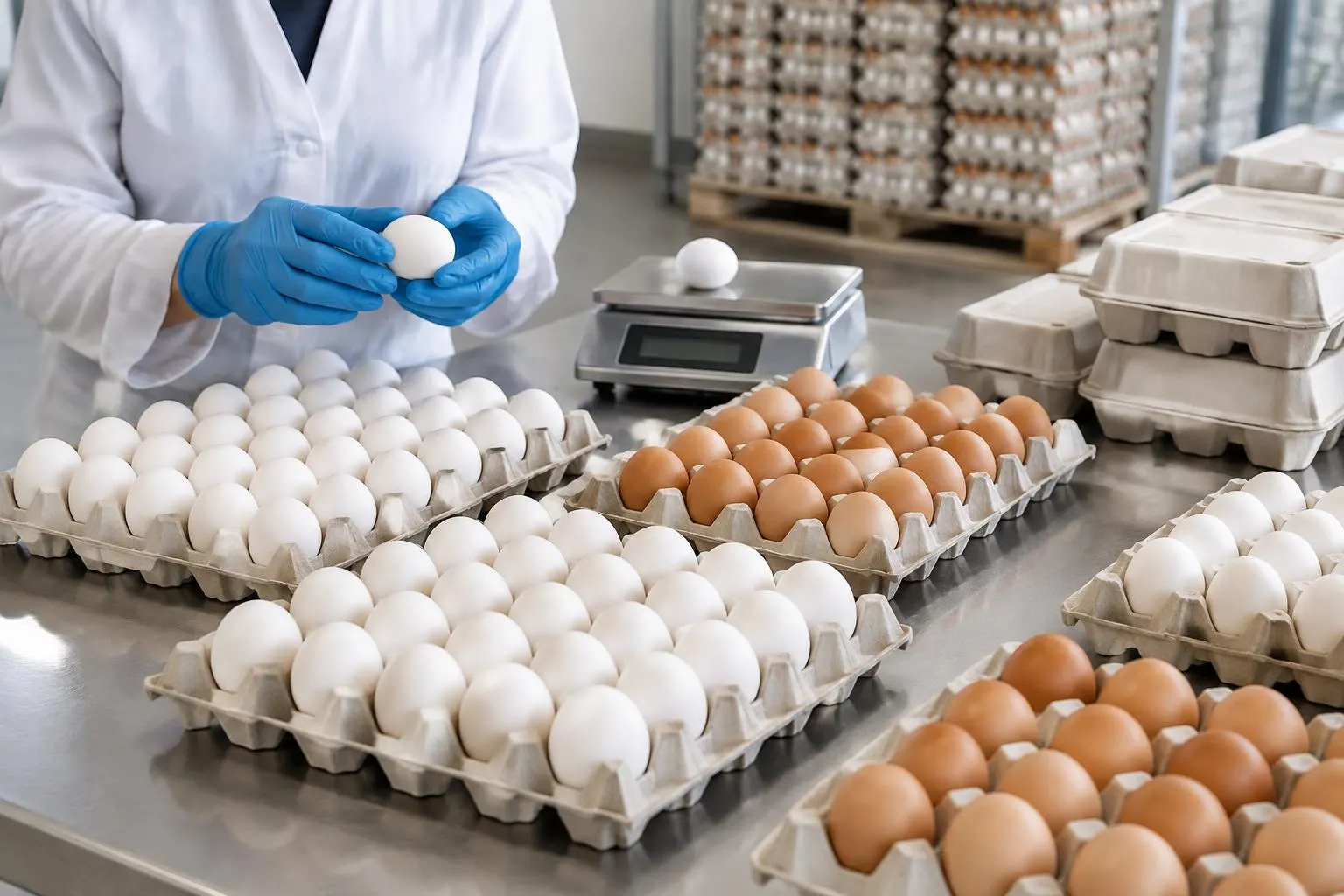
*Image: AI-generated editorial illustration of shell-egg checking and packing, not a HatchMatch/supplier facility or compliance evidence. Sources checked 19 October 2026; confirm current destination rules before shipment.*
Frequently asked buyer questions
- Where can I buy eggs in bulk for a commercial program?
- Start with a destination-specific specification and a qualified sourcing request, not an unreviewed supplier list. No stock or supplier participation is promised.
- Do brown shells, ‘large’ or ‘Grade A’ prove higher quality?
- No. State colour separately and name the applicable grade and weight system, measurement basis and evidence.
- What freshness or temperature should I request?
- Have qualified parties confirm requirements for your product and destination. Define date meanings, remaining life at acceptance and monitoring responsibilities; this guide gives no universal limits.
- How should I compare tray prices?
- First normalize to the same egg count, grade, pack and delivery basis. Then compare included costs, evidence gaps, schedule and acceptance terms.
- Is the USD 250,000 minimum per shipment?
- No. It is total annual or seasonal program value; buyer RFQs are free. Sub-threshold programs do not qualify for this assisted sourcing flow.
- Does HatchMatch certify farms or guarantee food safety?
- No. Relevant supplier information receives human review before any approved introduction; qualified authorities and contracting parties remain responsible for applicable checks.
More buyer questions are answered in our poultry procurement FAQ — also available in Español, Français, Português, Deutsch, العربية, Русский, Türkçe, Tiếng Việt.
Blog · Email updates
Get updates
Choose the reading that matters to your project.
Email subscriptions are not available yet.