
Egg Cold Rooms for Layer Farms: How to Size, Specify and Buy On-Farm Egg Storage
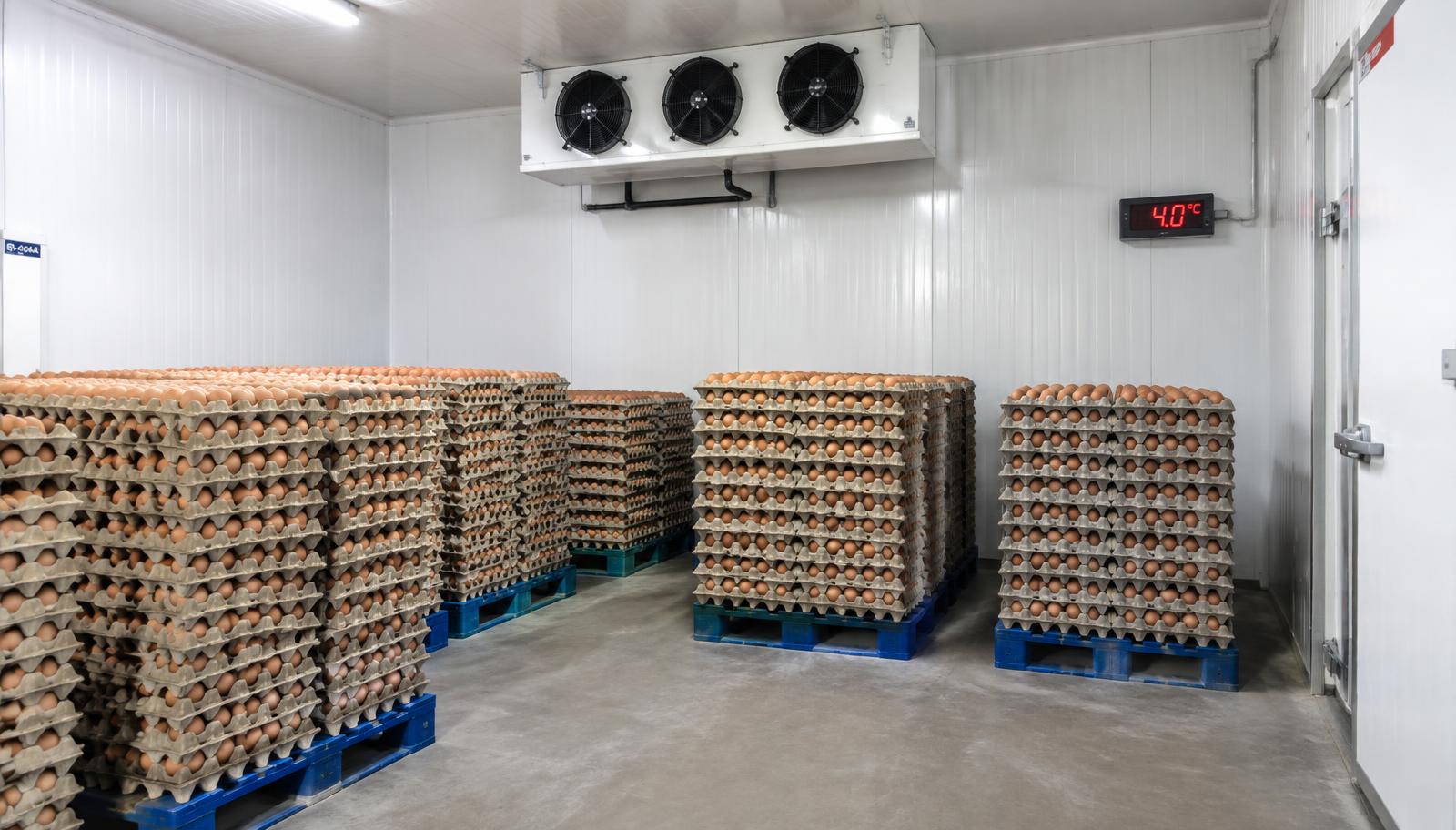
A practical guide to on-farm egg storage: turning daily egg output into pallet positions, choosing temperature and humidity, avoiding condensation and specifying refrigeration suppliers can quote on one basis.
By HatchMatch Group Sourcing Desk · Last updated 2026-10-06
In short
Short answer. An egg cold room keeps eggs at a stable, cool temperature and controlled humidity between collection and dispatch. Size it from daily egg output, the number of days eggs may wait on the farm and the pallet format, then add space for aisles, handling and peak periods.
Key takeaways
- Daily egg output is hens × hen-day production.
- Specify the target temperature and humidity range in writing, based on your market's rules and buyers' requirements.
- Most egg cold rooms use insulated sandwich panels with a hygienic, washable internal finish and a sealed, drained floor that can carry pallet trucks.
- Breeder farms and hatcheries store hatching eggs under different conditions, and storage length affects hatchability.
- State: flock size and production curve; eggs per day at peak; tray and pallet format; storage days; whether grading and packing take place on the farm; target temperature and humidity ranges and the market rules behind them; room dimensions or a request for the supplier to propose them; door and handling requirements; climate data; refrigeration redundancy; generator connection; monitoring and alarm requirements; and the installation, commissioning, training and spare parts scope.
Short answer. An egg cold room keeps eggs at a stable, cool temperature and controlled humidity between collection and dispatch. Size it from daily egg output, the number of days eggs may wait on the farm and the pallet format, then add space for aisles, handling and peak periods. The most important specification points are stable temperature, humidity, avoiding condensation when eggs move between warm and cold areas, and refrigeration with backup so a single failure does not spoil several days of production.
This guide is for layer farms storing table eggs, and touches on hatching-egg storage at breeder farms. Storage temperature rules differ by market — some countries require refrigeration of shell eggs below a set temperature, while others recommend a constant moderate temperature to avoid condensation. Confirm the rules for your sales market first.
Step 1: Turn hens into pallets
Daily egg output is hens × hen-day production. As a planning example, 50,000 hens at 90% production give about 45,000 eggs a day, or 1,500 trays of 30 eggs. If a pallet holds roughly 300–360 trays, depending on tray type and stacking height, that is about four to five pallets a day. The egg production calculator gives the daily figure for your flock.
Multiply by the maximum number of days eggs stay on the farm. Collection frequency, weekends, public holidays and transport disruptions all matter; many farms design for three to seven days. In the example, five days at five pallets a day means 25 pallet positions, before aisles and a margin for peak production. If eggs are graded and packed on the farm, add separate storage for packed product and packaging materials.
Want these figures for your own site, capacity and country? A HatchMatch specialist builds the budget with you — no buyer fees.
Start free| Item | Planning example (50,000 hens) |
|---|---|
| Eggs per day at 90% production | about 45,000 |
| 30-egg trays per day | about 1,500 |
| Pallets per day (300–360 trays each) | about 4–5 |
| Storage days designed for | 5 |
| Pallet positions before aisles and margin | about 21–25 |
These figures illustrate the method. Use your own flock size, production curve, tray and pallet format and logistics plan.
Step 2: Temperature, humidity and condensation
Specify the target temperature and humidity range in writing, based on your market's rules and buyers' requirements. Relative humidity is usually kept moderate to high to limit moisture loss without causing mould. The most common practical problem is condensation, or 'sweating': when cold eggs move into warm, humid air, water condenses on the shell, which can let bacteria penetrate. Plan the flow so eggs move from the house to the grading area to the cold room in one direction, and consider an anteroom or a temperature step if eggs leave the cold room into a hot loading area.
Step 3: Building and refrigeration
Most egg cold rooms use insulated sandwich panels with a hygienic, washable internal finish and a sealed, drained floor that can carry pallet trucks. Ask suppliers to state panel thickness and core material, floor insulation, door type (sliding or rapid-roll doors for forklift traffic), strip curtains and lighting. Refrigeration should be sized for the full egg load entering at the collection temperature, the door openings and your design summer temperature.
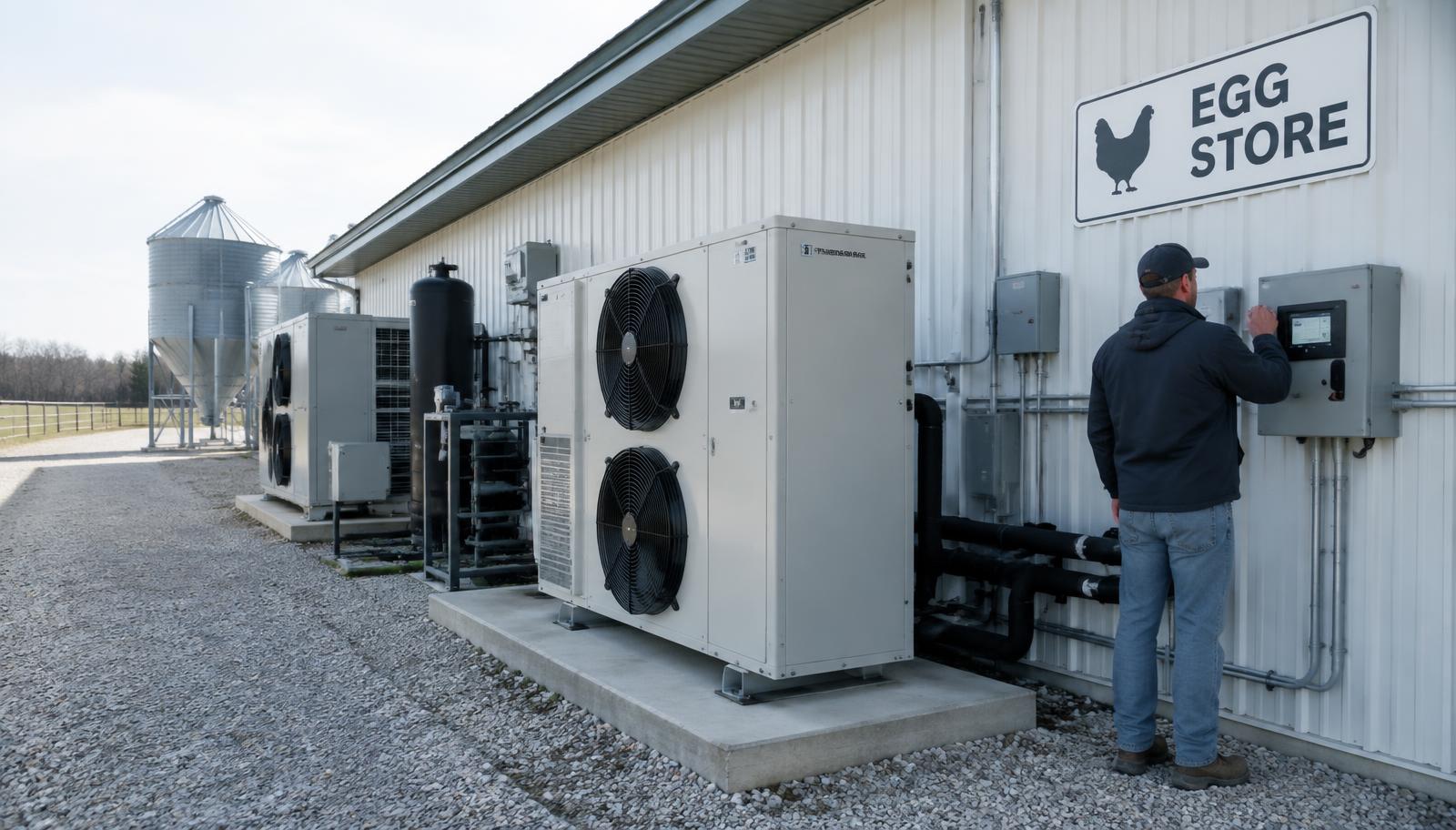
For a room holding several days of production, a single compressor failure is a serious risk. Specify at least two independent refrigeration circuits or units that can each hold the temperature at partial load, connection to the farm generator and a temperature and humidity logger with remote alarms. Ask the supplier which refrigerant they use and whether it meets current and expected local regulations, because refrigerant rules are tightening in many markets.
Step 4: Hatching-egg storage is different
Breeder farms and hatcheries store hatching eggs under different conditions, and storage length affects hatchability. Do not use a table-egg cold room specification for hatching eggs; follow the breeder and hatchery guidance, and see the hatchery planning pages for incubation-related equipment.
What to include in the RFQ
State: flock size and production curve; eggs per day at peak; tray and pallet format; storage days; whether grading and packing take place on the farm; target temperature and humidity ranges and the market rules behind them; room dimensions or a request for the supplier to propose them; door and handling requirements; climate data; refrigeration redundancy; generator connection; monitoring and alarm requirements; and the installation, commissioning, training and spare parts scope. If the egg grading machine comes from another supplier, describe the interface. The egg handling and grading systems page covers that equipment.
Questions to ask every supplier
What refrigeration capacity have you calculated, and with which assumptions for egg load, door openings and outdoor temperature? How many independent circuits does the design have, and can one hold temperature alone? What temperature variation do you expect across the room? Who services the refrigeration in our country, and how fast? Which refrigerant does the system use?
Common mistakes
Sizing the room for the average day rather than the longest wait between collections. Forgetting aisles and packaging storage. A single refrigeration unit with no backup. Placing condensers in direct sun. No plan for condensation at the loading door. And comparing quotes with different storage days, temperatures or redundancy.
Layout, hygiene and running cost
Place the cold room so that the route from the layer houses through egg collection and grading to dispatch is short and runs in one direction, with the loading dock on the clean, public side of the farm and away from bird areas. Trucks collecting eggs should not need to enter the production zone. Inside, plan pallet positions by date so the oldest eggs leave first, and keep a clear aisle for the pallet truck or forklift. Washable walls, floor drains with traps and good lighting make cleaning routine rather than an occasional effort.
Running cost is mainly electricity for refrigeration, which rises with outdoor temperature, door openings and poor insulation. Ask suppliers for an estimated annual energy use under your climate and operating pattern, and consider rapid doors, strip curtains and a shaded location for condensers to keep it down. Include periodic refrigeration servicing in the after-sales agreement.
Finally, decide early how temperature records will be kept. Egg buyers and food-safety audits increasingly ask for continuous temperature logs, so a logger with stored history is worth specifying from the start rather than adding later.
Where HatchMatch fits
HatchMatch is a supplier-neutral procurement platform for commercial poultry projects, typically USD 250,000 and above. It is not a manufacturer, installer, EPC contractor or consultant, and it does not sign supply contracts — buyers contract directly with the suppliers they choose. HatchMatch helps you turn your requirements into one written specification so offers can be compared line by line. Every brief receives human review, and HatchMatch aims to reply within two business days. To start, submit a poultry project request with your hen numbers, egg logistics and country.
Frequently asked questions
What temperature should an egg cold room be? It depends on your market's rules and buyers. Some markets require refrigeration below a set limit; others recommend a constant moderate temperature. Specify the range in writing after checking the rules.
How big should an egg cold room be? Calculate eggs per day, convert to pallets, multiply by maximum storage days and add aisles and a margin. A 50,000-hen farm storing five days needs roughly two dozen pallet positions before aisles.
Do I need two refrigeration units? For a room holding several days of production, redundancy is strongly recommended so one failure does not spoil stock.
Can the egg store be part of the layer house? It is often a separate building or a separate insulated section of the egg-handling building, with a one-way flow from the houses.
Frequently asked questions
- What refrigeration capacity have you calculated, and with which assumptions for egg load, door openings and outdoor temperature?
- How many independent circuits does the design have, and can one hold temperature alone? What temperature variation do you expect across the room? Who services the refrigeration in our country, and how fast? Which refrigerant does the system use?
- What temperature should an egg cold room be?
- It depends on your market's rules and buyers. Some markets require refrigeration below a set limit; others recommend a constant moderate temperature. Specify the range in writing after checking the rules.
- How big should an egg cold room be?
- Calculate eggs per day, convert to pallets, multiply by maximum storage days and add aisles and a margin. A 50,000-hen farm storing five days needs roughly two dozen pallet positions before aisles.
- Do I need two refrigeration units?
- For a room holding several days of production, redundancy is strongly recommended so one failure does not spoil stock.
- Can the egg store be part of the layer house?
- It is often a separate building or a separate insulated section of the egg-handling building, with a one-way flow from the houses.
More buyer questions are answered in our poultry procurement FAQ — also available in Español, Français, Português, Deutsch, العربية, Русский, Türkçe, Tiếng Việt.
From this article to a procurement-ready RFQ
HatchMatch Group is an independent sourcing desk — not a manufacturer or EPC contractor. These are the four steps we actually use with commercial poultry and hatchery buyers. If you are still deciding scope, start with what commercial poultry equipment includes and how suppliers are compared.
- 1. Plan the projectCapacity, climate and house layout in one guided workflowOpen
- 2. Build the RFQScope, specifications and comparable line itemsOpen
- 3. Submit the requestReviewed manually before any supplier introductionOpen
- 4. Track and compareFollow status and normalise supplier responsesOpen
Prefer the numbers first? Start with the poultry project cost calculator or browse the project planning guides.