
Solar-powered poultry farms, hatcheries & feed mills.
Off-grid, grid-tied and hybrid solar infrastructure for commercial poultry. Vendor-neutral suppliers, engineered load profiles, battery storage, backup power and financing — routed through a single solar RFQ.
Solar and hybrid, system by system: what PV can carry on a poultry site
The fourteen systems below are the same list used in the layer, broiler and hatchery RFQ scope tables, so the equipment scope and the energy scope stay one document. Solar is not an all-or-nothing decision: pumps, cooling and belts fit the solar curve well, ventilation only works in a hybrid with storage and a generator behind it, and electric heating is not a realistic solar load at commercial scale.
| System | Load behaviour | Solar or hybrid fit | What the supplier needs from you |
|---|---|---|---|
| Housing system | No direct electrical load; sets the load of everything else | n/a — drives the sizing of all other systems | Birds housed, tier count and whether the system is cage, combi or aviary |
| Nest boxes and perches | Negligible, except motorised nest closing | Yes — trivial load | Whether nest expulsion is motorised and on what schedule |
| Feeding lines | Short high-torque bursts several times a day | Yes with storage; motor inrush must be in the inverter rating | Motor kW per line, number of lines, feed passes per day |
| Drinking lines and pumps | Pump duty cycle, largely daytime | Yes — one of the best solar fits | Pump kW, daily water volume, whether a borehole pump is included |
| Egg collection | Belt and elevator motors, one to three runs a day | Yes with storage; must survive an outage mid-run | Total motor kW and the collection schedule |
| Manure handling | Belt motors on a scheduled run, plus drying-tunnel fans | Yes — schedule it into the solar peak | Belt motor kW, run frequency, whether a drying tunnel is included |
| Ventilation | The dominant load; continuous, and peaks on the hottest hour | Only in a hybrid — solar alone cannot carry night or cloud cover | Fan count and kW, minimum ventilation load, summer peak load |
| Cooling | Pad pumps and fogging, concurrent with the ventilation peak | Good fit — the load peaks with the sun | Pump kW and the hours per day cooling runs in the hot season |
| Heating | Mostly fuel, plus electric fans and controls | Electric heating is not a realistic solar load | Fuel type and the electrical auxiliary load of the heaters |
| Lighting | Programme-driven, often before dawn and after dusk | Yes with storage — it is a night load | Installed LED kW and the lighting programme by bird age |
| Silos and feed conveying | Short, high-power auger and blower runs | Yes with storage sized for the starting current | Conveying motor kW and the number of transfers per week |
| Standby power | Covers everything when the grid and the battery are out | Complementary — the genset is the backstop, not the competitor | Whether the hybrid must carry full ventilation or only critical loads |
| Solar array and inverters | The generating side itself | Sized to the daytime profile, not the nameplate load | Roof or ground area available, shading, and the grid export rules locally |
| Biosecurity | Wheel wash pumps, hygiene points, gates and cameras | Yes — small continuous load | Pump and gate kW and whether the site perimeter is included |
Decide the standby setup alongside the array — generator, battery, solar and hybrid compared — size the backstop with the generator sizing calculator, then send the solar scope through the managed RFQ. Figures are planning guidance, not quotations; HatchMatch reviews each request internally before HatchMatch contacts any supplier on the buyer's behalf and is not an open marketplace.
Solar ROI calculator — cost, payback and daily savings by system
Enter your flock size and local energy cost. The table below splits the site load system by system, shows how much of each system a PV + storage package can realistically carry, and returns indicative installed cost, daily saving and simple payback. Ventilation and electric heating are deliberately capped — night hours and cold starts stay on grid or genset in any honest commercial design.
Package size: 149 kWp PV and 222 kWh usable storage, covering about 53% of an estimated 1,086 kWh/day site load.
| System | Load (kWh/day) | Solar-served | PV / storage | Installed cost | Daily saving | Payback |
|---|---|---|---|---|---|---|
| VentilationDominant load; night and peak hours stay on grid or genset | 518 | 233 | 59.7 kWp / 123 kWh | $109,353 | $51 | 5.8 yrs |
| Cooling (pads / foggers)Daytime load; aligns closely with the PV curve | 138 | 117 | 30.1 kWp / 14 kWh | $35,704 | $26 | 3.8 yrs |
| LightingMostly out of daylight hours — storage-dependent | 80 | 48 | 12.3 kWp / 40 kWh | $28,204 | $11 | 7.3 yrs |
| Feeding linesShort high-torque bursts; inrush must sit inside the inverter rating | 55 | 50 | 12.7 kWp / 12 kWh | $17,403 | $11 | 4.4 yrs |
| Drinking lines and pumpsBest solar fit on the site | 45 | 43 | 11 kWp / 8 kWh | $14,021 | $9 | 4.1 yrs |
| Egg collection / conveyingSchedulable into the solar peak | 35 | 30 | 7.6 kWp / 7 kWh | $10,459 | $7 | 4.4 yrs |
| Manure handlingBelt runs can be moved to midday | 30 | 27 | 6.9 kWp / 3 kWh | $8,218 | $6 | 3.8 yrs |
| Brooding / heatingElectric heat is rarely a realistic solar load; gas or fuel usually wins | 160 | 16 | 4.1 kWp / 4 kWh | $5,625 | $4 | 4.4 yrs |
| Controls, alarms and officeSmall but must never drop — UPS-backed | 25 | 18 | 4.5 kWp / 12 kWh | $9,457 | $4 | 6.7 yrs |
Estimates Only: This calculator is provided for general informational purposes only. Results are approximate and may contain errors, omissions, or outdated information. They do not constitute legal, financial, engineering, tax, technical, or professional advice. Users are solely responsible for independently verifying all calculations, specifications, prices, regulations, and requirements with qualified professionals before making any decisions. By using this calculator, you acknowledge that the website owners, operators, and affiliates accept no responsibility or liability for any loss, damage, or decisions resulting from its use.
Case study: 180,000-hen hybrid solar layer farm, Egypt
A worked reference scenario for an existing four-house enriched-cage layer farm converting from grid-plus-diesel to a hybrid PV, battery and standby-genset supply. It is an engineering reference built from typical scope at this size and climate, not the account of a named client project and not a quotation. Use it as a shape for your own numbers: tariff, sun hours and diesel price move the result more than anything on the equipment list.
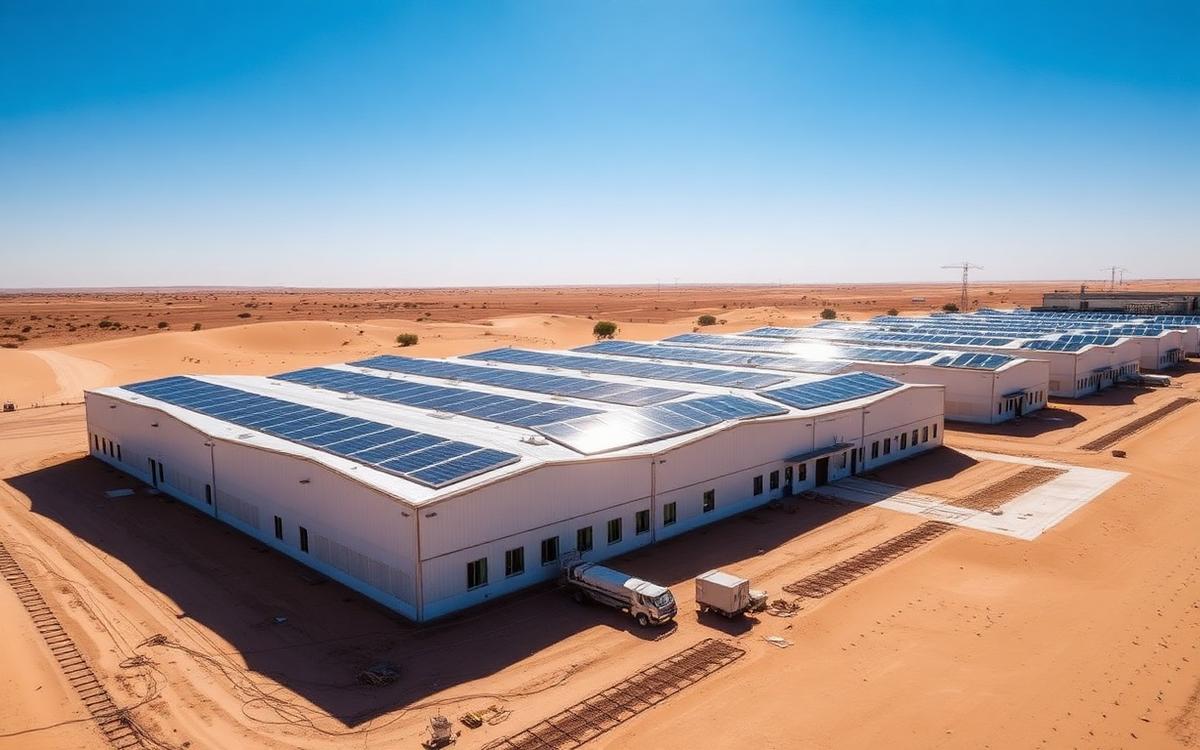
- Site
- 4 houses, 180,000 enriched-cage hens
- Baseline
- Grid tariff plus diesel standby
- PV
- 310 kWp rooftop
- Storage
- 240 kWh lithium
- Standby
- Existing 250 kVA genset, auto-sync
- Build time
- About 4 months, RFQ to PAC
What it cost
| Cost line | Scope | Indicative CAPEX |
|---|---|---|
| PV array | 310 kWp rooftop, 4 layer houses | USD 250,000 – 300,000 |
| Inverters & switchgear | Hybrid inverters, MCC tie-in, protection | USD 55,000 – 75,000 |
| Battery storage | 240 kWh lithium, night lighting + egg belts | USD 110,000 – 150,000 |
| Genset integration | Auto-sync with the existing 250 kVA standby set | USD 20,000 – 35,000 |
| Mounting, cabling, civil | Roof reinforcement, trenching, earthing | USD 60,000 – 85,000 |
| Engineering, commissioning, PAC | Design, supervision, testing, handover | USD 35,000 – 50,000 |
| Total installed | Supplied, installed and commissioned | USD 530,000 – 695,000 |
Bands reflect the spread between competing offers on the same scope, not a price list. Import duty, roof condition and grid-connection rules routinely move the total outside these bands.
What it returns
- Share of annual kWh from PV
Roughly 60% — daytime ventilation, cooling, pumps and belts
- Diesel hours
Cut to standby only; fuel spend falls with outage frequency, not with PV size
- Annual energy saving
Order of USD 95,000 – 130,000 at a USD 0.11/kWh blended tariff
- Simple payback
About 5 – 6 years on those assumptions; faster where tariffs or diesel prices are higher
Run the same arithmetic on your own tariff and sun hours in the solar ROI calculator above before you treat any payback figure as yours.
Which systems it actually runs
| System | Supplied from | Why |
|---|---|---|
| Ventilation | Hybrid — PV by day, battery + genset at night | The dominant load; solar alone never carries it |
| Cooling (pads and fogging) | PV direct | Peaks with the sun, so it is the best solar fit on the site |
| Lighting | Battery | Pre-dawn and post-dusk programme — a night load by definition |
| Feeding lines | PV with battery buffer | Short high-torque bursts; inverter rated for motor inrush |
| Drinking lines and pumps | PV direct | Daytime duty cycle, including the borehole pump |
| Egg collection | PV + battery | Must survive an outage mid-run, so storage covers a full cycle |
| Manure belts | PV direct | Runs are scheduled into the midday solar peak |
| Controls and biosecurity | Battery (UPS-backed) | Small continuous load that must never drop |
| Heating / brooding | Fuel, not solar | Electric heating is not a realistic commercial solar load |
To price the same scope for your site, send it through the managed solar RFQ or compare the architecture first on generator, battery, solar and hybrid. HatchMatch reviews each request internally before HatchMatch contacts any supplier on the buyer's behalf, does not supply or install power equipment, and does not guarantee performance or price.
Solar, standby or hybrid — the decision table
Pick the architecture before the ventilation and cooling equipment is specified: it changes the load schedule every supplier quotes against. Ranges below are planning guidance for scoping an RFQ, not prices.
| Power option | Cost profile | How the return behaves | Grid integration |
|---|---|---|---|
| Grid only | Lowest — connection, switchgear and distribution only | No payback to calculate; full exposure to tariff rises and outages | Requires a stable grid. One outage during tunnel ventilation is a mortality event. |
| Grid + standby generator | Generator, ATS, fuel storage and civil works; moderate CAPEX, ongoing fuel and service cost | Judged on avoided losses, not savings — a single prevented outage often covers the set | Grid remains the primary source; the set carries ventilation, cooling and hatchery loads during cuts. |
| Grid + PV (no storage) | PV array, inverters, mounting and protection; no battery cost | Daytime tariff offset only — usually the shortest payback where daytime ventilation load is high | Needs net metering or at least export-free self-consumption; gives no outage protection on its own. |
| Hybrid — PV + storage + generator | Highest CAPEX: PV, batteries, hybrid inverters with genset sync and controls | Combines tariff savings with sharply reduced generator run-hours and fuel spend | Works grid-tied, weak-grid or fully off-grid; the default where the grid is unreliable or absent. |
- Standby power comparison
Generator, battery, solar and hybrid behaviour during an outage and at transfer.
- Solar and hybrid RFQ
Send PV capacity, storage, inverter and load-integration requirements in one structured request.
- Layer house scope table
The 14 layer systems whose load profile decides PV and storage sizing.
- Broiler house scope table
Tunnel ventilation and cooling dominate broiler demand — scope them before power.
- Hatchery scope table
Setters and hatchers cannot tolerate transfer gaps; power architecture is part of the spec.
- Feed mill scope table
Hammer mill and pellet press motor loads rarely suit PV alone — check before sizing.
HatchMatch does not supply, install or guarantee power equipment and is not an energy contractor. Every request is reviewed internally before any supplier is approached.
Solar cluster — start where you need to
Reference builds across Africa, MENA and South Asia — off-grid, grid-tied and hybrid solar poultry farms.
Capability-researched suppliers for solar houses, PV, inverters, battery storage, hybrid controllers and diesel backup.
Diesel gensets, battery storage, ATS and UPS sizing for continuous production during outages.
Farm archetypes that convert well to solar or hybrid operation.
FAQ — solar poultry projects
Read this hub in your language
Move from research to a sourced project
Solar poultry projects convert faster when engineering, financing and supplier matching move in parallel. Pick your next step.
Pre-filled for solar poultry: PV, battery, hybrid genset and controls.
Engineering scope, budgetary CAPEX, timeline and supplier shortlist.
DFI, ECA and lease structures through independent partners — subject to approval.
Direct line to our sourcing desk — WhatsApp and email available on the contact page.
Financing pathways are handled by independent third-party partners and are subject to their own approval.