
Poultry Farm Generator Payback: How to Judge It With Your Own Numbers
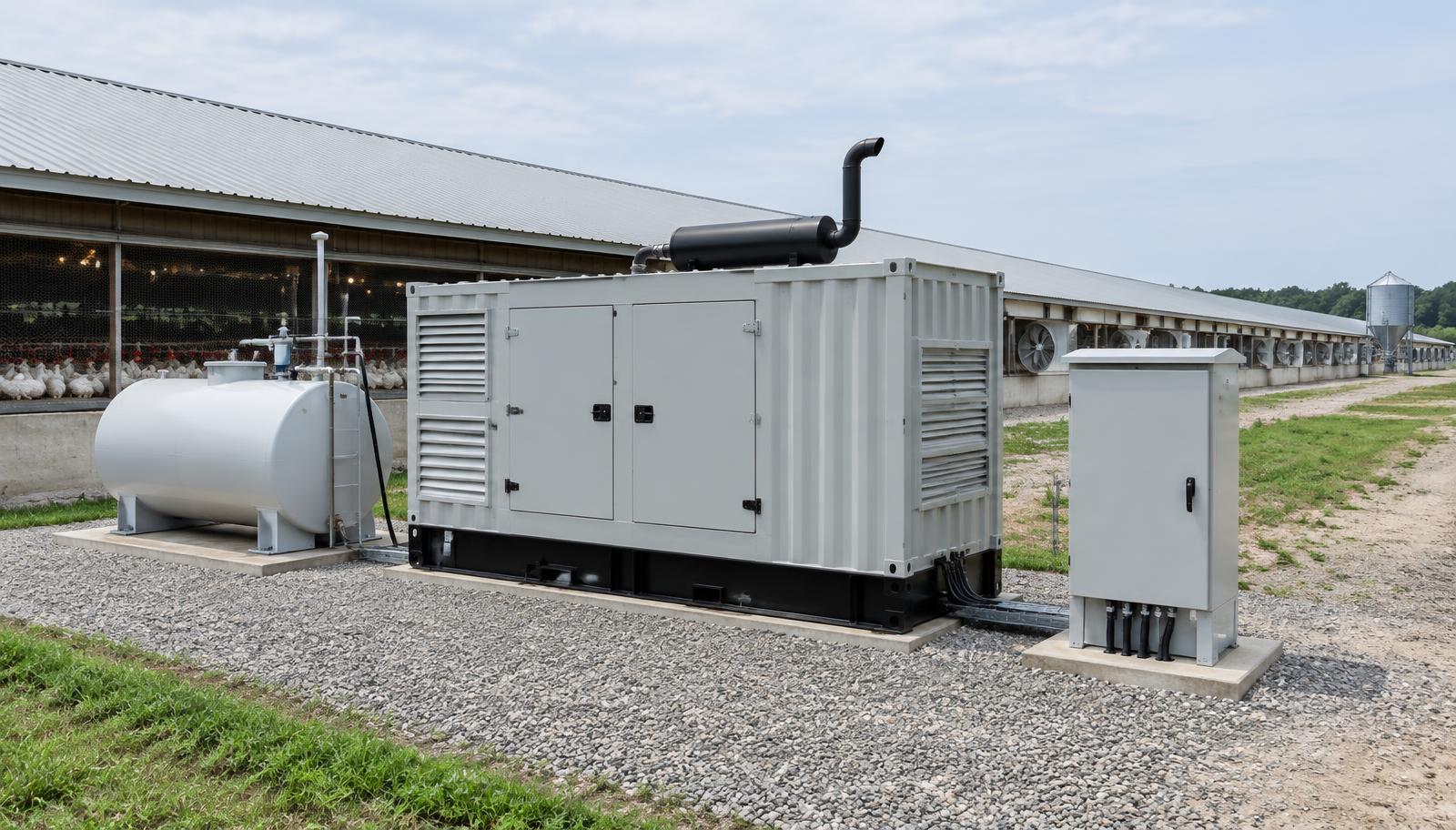
For poultry farms facing grid outages: which inputs decide generator payback, what to ask suppliers and where to calculate it.
By HatchMatch Group Editorial Desk · Last updated 2026-10-11
In short
Short answer: generator payback depends on how often your grid fails, how much a failure costs you in birds and production, and the quoted cost of the generator package. Calculate it with your own figures in the backup power section of the farm-cost calculator; this guide gives no generic prices.
Key takeaways
- Owners of commercial broiler, layer or hatchery operations deciding whether, and how large, a backup generator should be.
- - Outage frequency and duration, from your own power records.
- Rated and standby power, ability to start full ventilation load, automatic transfer time, fuel consumption at expected load, service intervals and local service coverage.
- Results are indicative planning estimates and only as good as your outage and loss records.
- Run the numbers in the farm-cost calculator, then send a backup-power request for the generator, transfer switch and UPS package, or a full project request, for human review.
Short answer: generator payback depends on how often your grid fails, how much a failure costs you in birds and production, and the quoted cost of the generator package. Calculate it with your own figures in the backup power section of the farm-cost calculator; this guide gives no generic prices.
Who this guide is for
Owners of commercial broiler, layer or hatchery operations deciding whether, and how large, a backup generator should be.
The inputs that decide payback
Want these figures for your own site, capacity and country? A HatchMatch specialist builds the budget with you — no buyer fees.
Start free- Outage frequency and duration, from your own power records. - Loss per outage: mortality, weight or egg loss and spoiled hatching eggs in a ventilation failure. - Generator package cost from supplier quotes: unit, transfer switch, enclosure, fuel tank and installation. - Running costs: fuel, servicing and testing.
What to ask suppliers
Rated and standby power, ability to start full ventilation load, automatic transfer time, fuel consumption at expected load, service intervals and local service coverage. Size the unit first with the generator sizing calculator and the sizing guide.
Limits
Results are indicative planning estimates and only as good as your outage and loss records.
Next step
Run the numbers in the farm-cost calculator, then send a backup-power request for the generator, transfer switch and UPS package, or a full project request, for human review.
From this article to a procurement-ready RFQ
HatchMatch Group is an independent sourcing desk — not a manufacturer or EPC contractor. These are the four steps we actually use with commercial poultry and hatchery buyers. If you are still deciding scope, start with what commercial poultry equipment includes and how suppliers are compared.
- 1. Plan the projectCapacity, climate and house layout in one guided workflowOpen
- 2. Build the RFQScope, specifications and comparable line itemsOpen
- 3. Submit the requestReviewed manually before HatchMatch contacts any supplier on the buyer's behalfOpen
- 4. Track and compareFollow status and normalise supplier responsesOpen
Prefer the numbers first? Start with the poultry project cost calculator or browse the project planning guides.